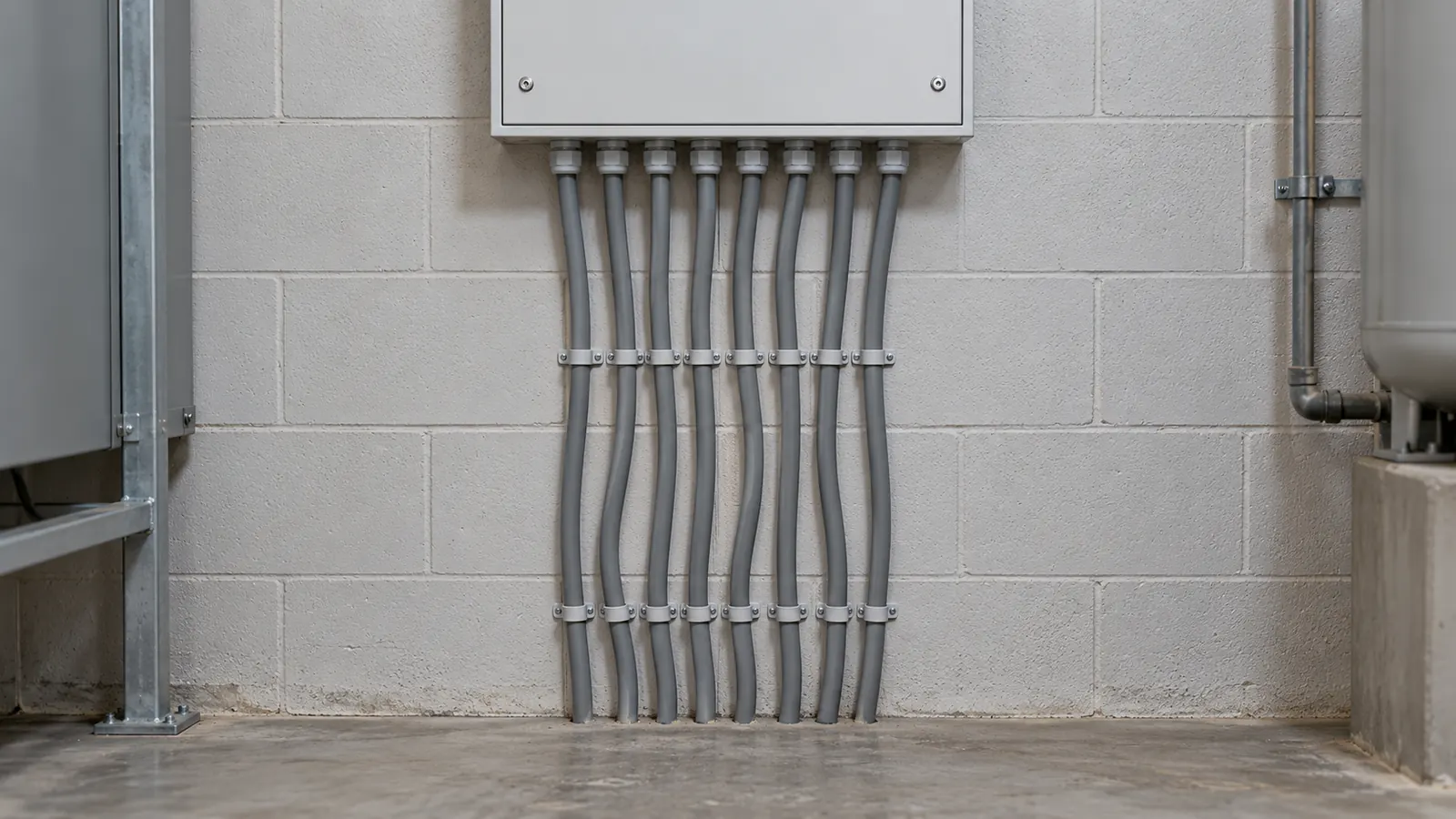
Table 22 of AS/NZS 3008.1 gives the correction factor (derating factor in 2017) for circuits that run bunched together. The cables of each circuit heat the others, so each circuit carries less.
The 2025 edition of the Australian part renumbers it. In AS/NZS 3008.1.1:2025 it is Table 3.33. AS/NZS 3008.1.2:2017, the New Zealand part, numbers it Table 22.
This page explains the table. It shows no values from it. The calculator reads the values for you.
Table 22 is not a temperature table
A search for "Table 22 temperature derating" mixes two tables.
- Table 22 is grouping. It corrects for other circuits on the same route. In 2025 it is Table 3.33.
- Table 27 is temperature. It corrects for the air or soil temperature. In 2025 it is Tables 3.44 and 3.45.
A cable in a hot, crowded riser needs both. The calculator multiplies the two factors.
What the rows and columns mean
Each row is one way to arrange the circuits:
- bunched on a surface, or enclosed;
- bunched in air;
- a single layer on a wall or floor, touching or spaced;
- a single layer under a ceiling, touching or spaced.
Each column is a number of circuits. The last column covers 20 or more circuits. A spaced single layer loses less than a bunch, because heat escapes between the cables.
Cl 3.5.2.8 counts each group of parallel cables as one circuit. It was Cl 3.5.2.7 in 2017.
Table 22 covers cables in air and in enclosures. Other tables cover other routes:
- cables on trays and ladders: Tables 3.34 and 3.35, which were Tables 23 and 24;
- cables buried direct: Tables 3.36 and 3.38, which were Tables 25(1) and 25(2);
- cables in underground enclosures: Tables 3.40 and 3.42, which were Tables 26(1) and 26(2).
How to read the table in the calculator
- Enter the number of circuits in Grouped circuits. One circuit takes no grouping factor.
- Pick the group arrangement. It selects the row.
- Pick the installation method and the air temperature as usual.
The result shows the grouping factor as a step, with the table it read. The candidate table shows each size before and after correction.
One group on both editions
The inputs are 400 V three phase, 36 A and 30 m. The cable is multicore copper with PVC insulation, at 40 °C. Eight circuits run in a single layer on a wall, touching.
- 2017: Table 22 gives a correction factor of 0.71. 10 mm² carries 36.21 A, so the calculator selects 10 mm².
- 2025: Table 3.33 gives 0.7. 10 mm² now carries 35.7 A, less than 36 A. The calculator selects 16 mm² at 47.6 A.
Open on 2017 and open on 2025.
Here the 2025 edition needs the larger cable. A circuit that sits close to a size boundary can move up.
What changed in 2025
- The number. Table 22 is now Table 3.33.
- Seven and eight circuits. At 7 and 8 circuits in one touching layer, the factors reduce a rating a little more. This applies on a wall and under a ceiling.
- d.c. circuits. The 2025 table applies to a.c. and d.c. circuits.
- The other rows. No change.
The table number map gives the 2025 number of every table that AmpSize reads. The learn page on derating explains how the factors combine.
For New Zealand, AmpSize reads AS/NZS 3008.1.2:2017, which numbers this table 22.
This page is a design aid. Verify every value against the current edition of the standard.