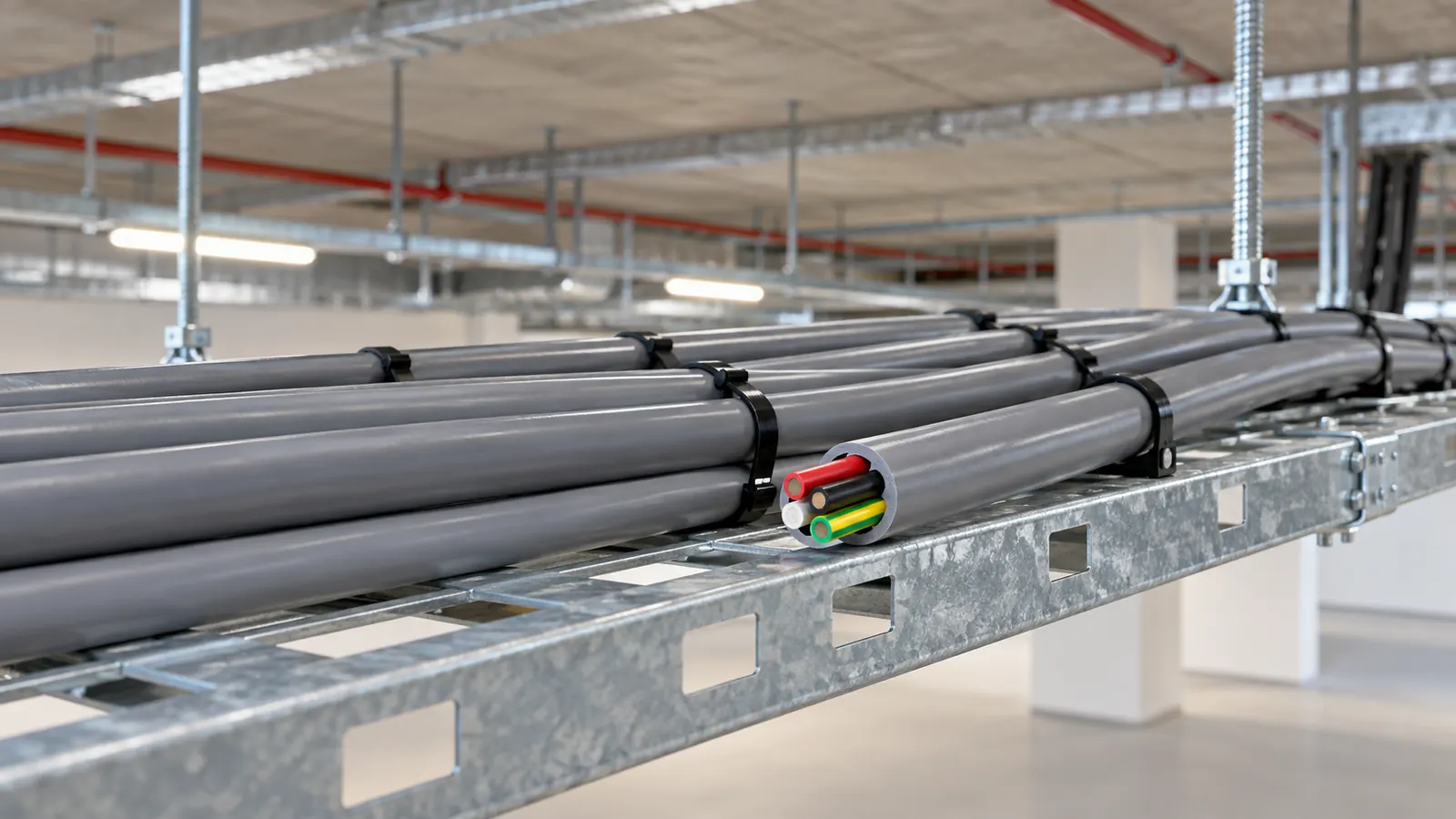
Table 13 of AS/NZS 3008.1 gives the current ratings of three-core and four-core cables with thermoplastic insulation. The conductor runs at up to 75 °C. Most PVC multicore circuits read this table.
The 2025 edition of the Australian part renumbers it. In AS/NZS 3008.1.1:2025 it is Table 3.18. AS/NZS 3008.1.2:2017, the New Zealand part, numbers it Table 13. The cross-linked twin at 90 °C is Table 14, now Table 3.19.
This page explains the table. It shows no values from it. The calculator reads the values for you.
What the columns mean
Each column is one installation method, first for copper and then for aluminium. The 2025 table has 20 columns: 10 methods, each for copper and aluminium.
The methods for a multicore cable are:
- in air: spaced, touching, and exposed to the sun;
- enclosed in air, such as in a conduit on a wall;
- partly surrounded by thermal insulation, unenclosed or enclosed;
- completely surrounded by thermal insulation, unenclosed or enclosed;
- underground: buried direct, or in an underground conduit.
Each row is one conductor size, from 1 mm² to 500 mm². A dash means the part gives no rating for that size and method.
The reference conditions
Each rating applies at one set of conditions. The Australian part assumes 40 °C air and 25 °C soil. The New Zealand part assumes 30 °C air and 15 °C soil. A buried rating also assumes a soil thermal resistivity and a depth of laying.
A site that differs needs a correction factor (derating factor in 2017). The correction factors for air and soil are in Tables 3.44 and 3.45, which were Table 27. The current-carrying capacity page explains how the factors combine.
How to read the table in the calculator
- Set the Standard select. AU reads AS/NZS 3008.1.1, and NZ reads AS/NZS 3008.1.2:2017.
- For AU, set the Edition select to 2017 or 2025.
- Set Cores to multicore and Insulation to PVC. XLPE reads Table 14, now Table 3.19.
- Pick the installation method. The method selects the column.
- Enter the air or soil temperature and the number of grouped circuits.
The candidate table in the result lists each size. It shows the rating from the table and the rating after correction. Each result step names the table it read.
Two circuits on both editions
In air, no change. The inputs are 400 V three phase, 50 A and 30 m. The cable is multicore copper with PVC insulation, unenclosed and touching, at 40 °C. Both editions select 10 mm² at 51 A, with a drop of 1.33 %. Open on 2017 and open on 2025.
Buried direct, a smaller cable. The inputs are 400 V three phase, 40 A and 30 m. The same cable is buried direct in soil at 25 °C.
- 2017: Table 13 gives 6 mm² at 42 A. The calculator selects 6 mm².
- 2025: Table 3.18 gives 4 mm² at 44 A. The calculator selects 4 mm², with a drop of 2.65 %.
- The 2025 result adds a note. Check that the protective device lets the cable reach its rating.
Open on 2017 and open on 2025.
What changed in 2025
- The number. Table 13 is now Table 3.18.
- Buried direct up to 10 mm². A calculation to the IEC 60287 series now sets these ratings. They rise at every size from 1 mm² to 10 mm².
- Large enclosed cables. Ratings for enclosed in air and partly in insulation now reach 300, 400 and 500 mm². The 2017 edition printed a dash there. The table still stops at 500 mm².
- Small sizes. New rows at 0.5 mm² and 0.75 mm². AmpSize does not read them.
- The other columns. No change.
The table number map gives the 2025 number of every table that AmpSize reads. The current rating tables guide covers the whole family on the NZ part.
For New Zealand, AmpSize reads AS/NZS 3008.1.2:2017, which numbers this table 13.
This page is a design aid. Verify every value against the current edition of the standard.