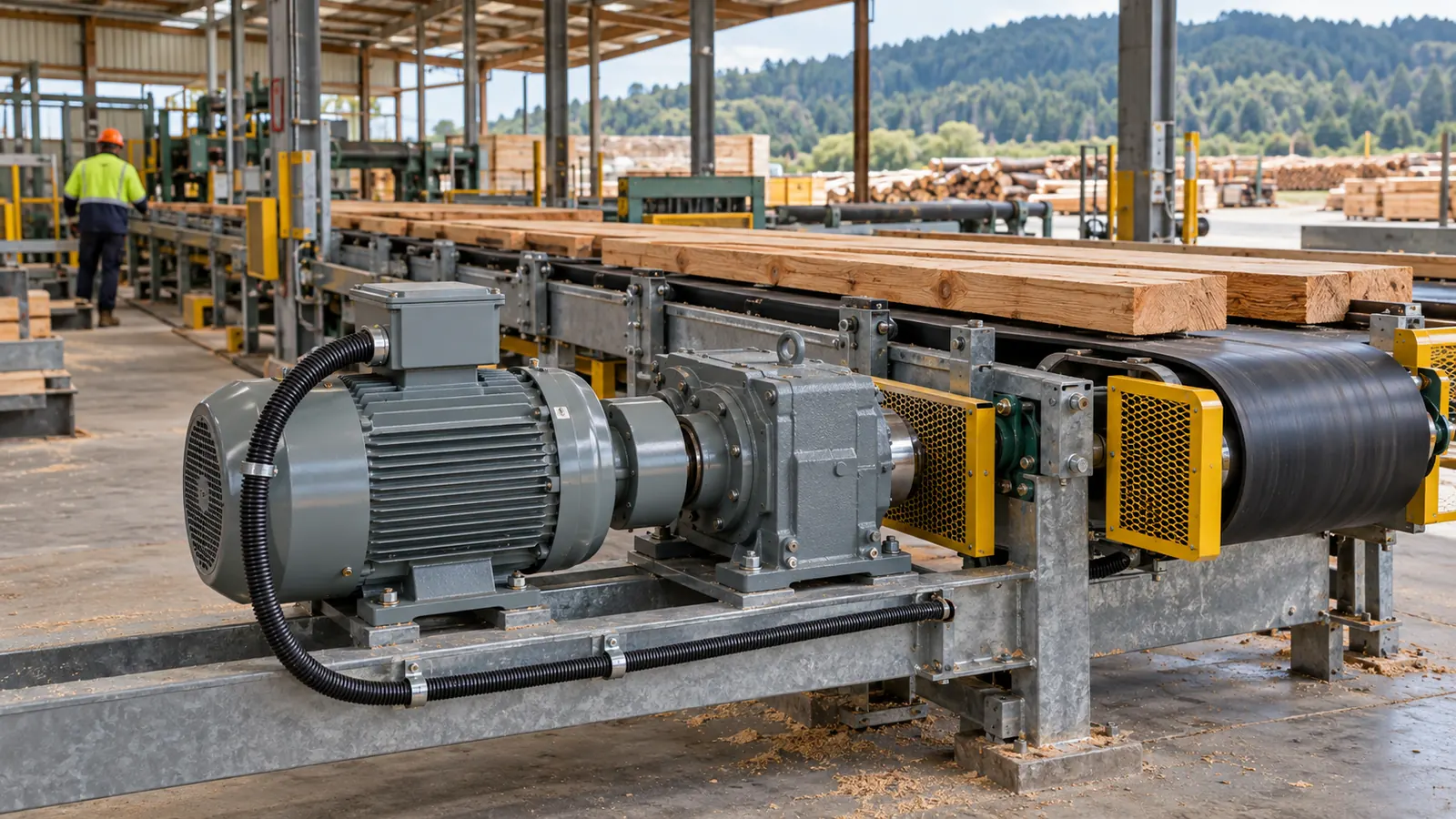
A motor circuit starts with one number: the full load current of the machine. The cable, the device and the starter all follow from it. A nameplate gives it directly. Where there is no nameplate, the shaft rating and four machine details give it instead.
The inputs
An 11 kW pump motor on a 400 V three-phase supply.
- Shaft power: 11 kW
- Phases: 3, supply 400 V
- Power factor: 0.85
- Efficiency: 0.9
- Poles: 4
- Frequency: 50 Hz
- Slip: 3 %
The 11 kW figure is shaft power, not input power. The motor draws more than 11 kW from the supply, because the losses sit between the two. Efficiency and power factor both raise the current for the same shaft rating.
The clause and the tables
Cl 2.5.3.1 of AS/NZS 3000:2018 is the coordination rule between the load, the protective device and the cable. The full load current is the design current in that rule.
Table C1 group L of AS/NZS 3000:2018 covers motors in a domestic demand assessment. Table C2 group D covers them elsewhere. Current ratings for the motor cable come from Tables 4 to 21 of AS/NZS 3008.1.2:2017.
The steps
The tool converts the shaft rating into an input power, then into a current at 400 V three-phase. Power factor and efficiency both divide into the result.
That gives a full load current of 20.75 A.
The machine figures follow from the pole count and the slip. Four poles at 50 Hz give a synchronous speed of 1500 rpm. A slip of 3 % puts the shaft at 1455 rpm. The shaft speed and the shaft power give a full load torque of 72.2 Nm.
The result
- Full load current: 20.75 A
- Starting current, direct on line: 124.53 A
- Synchronous speed: 1500 rpm
- Shaft speed: 1455 rpm
- Full load torque: 72.2 Nm
The 124.53 A figure assumes a direct on line start at six times the full load current. The tool states that assumption with every result. A soft starter, a star delta starter or a variable speed drive gives a different figure. Use the machine data sheet where it gives a starting current or a locked rotor code.
Two currents, two jobs
The two currents do different work in the design.
The full load current sets the cable. 20.75 A is the design current for the cable size tool. It runs continuously, so the derating factors on the route apply to it in full.
The starting current sets the device and the starter. 124.53 A flows for a few seconds at each start. A device that trips on it is unusable, even when the cable is right. The device has to ride through the start and still protect the cable afterwards.
Starting current also affects voltage drop. 124.53 A on a long run drops far more than 20.75 A does. A motor that sees too little voltage at the terminals may not accelerate its load. Check the drop at the starting current as well as at the running current on a long feeder.
The torque figure matters for the driven machine rather than the cable. 72.2 Nm at 1455 rpm is the rated output. A load that needs more torque to break away lengthens the start.
This page is a design aid. Verify every value against the current edition of the standard.