Homeowner aratohu
He rahi taura e hiahiatia ana e tētahi shed, tētahi hot water cylinder, tētahi EV charger rānei.
- 3 meneti te pānuiHomeowner shed supply voltage drop over 60 mA 20 A single-phase supply running 60 m to a shed on 6 mm² copper, with the drop, the percentage and the maximum length the AmpSize voltage drop engine returns.
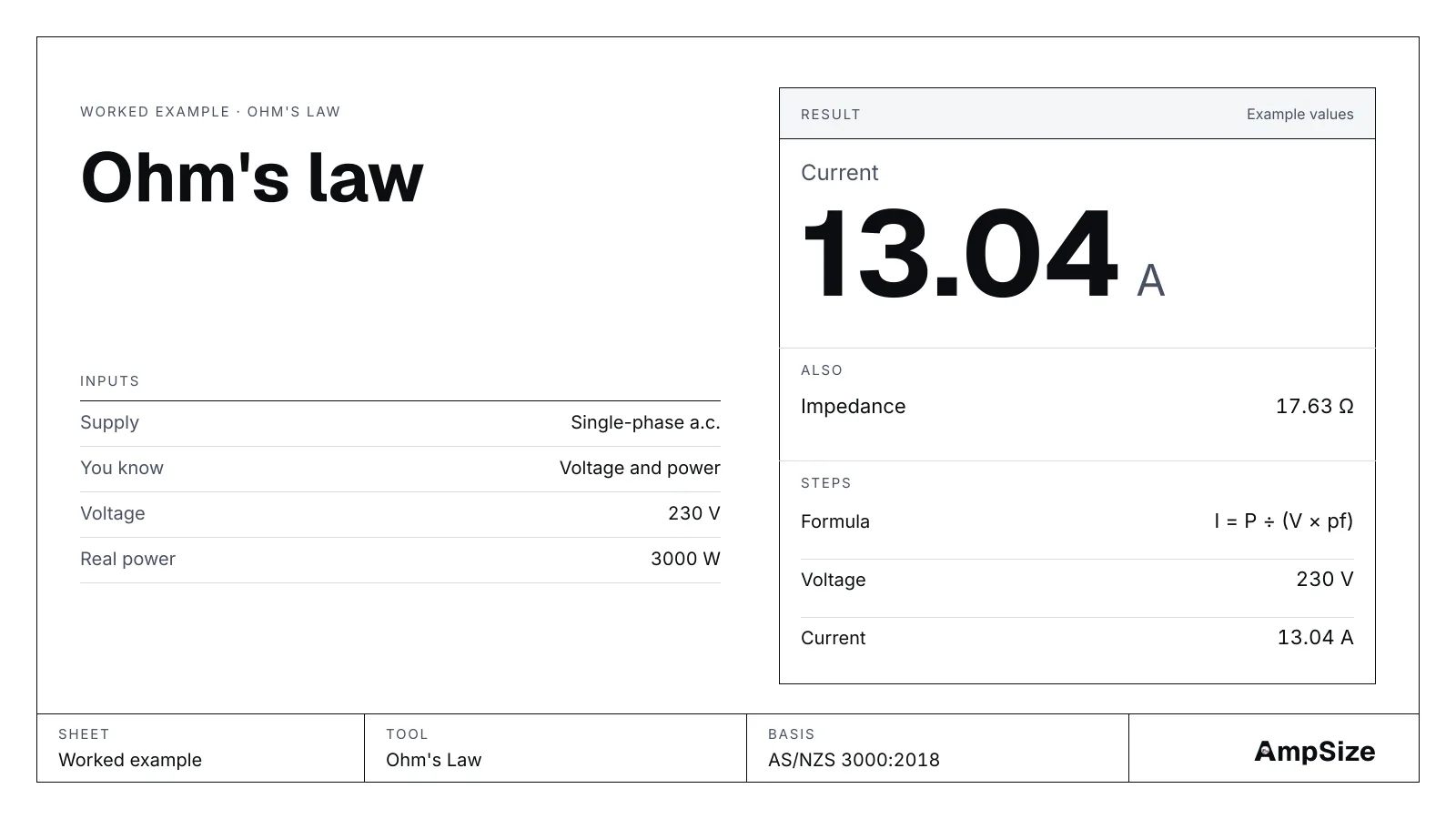
- 5 meneti te pānuiOhm's law on a 3 kW water heater elementWork the current and working resistance of a 3 kW, 230 V water heater element with Ohm's law, why a cold meter reading is lower, then a 9 kW three-phase bank.
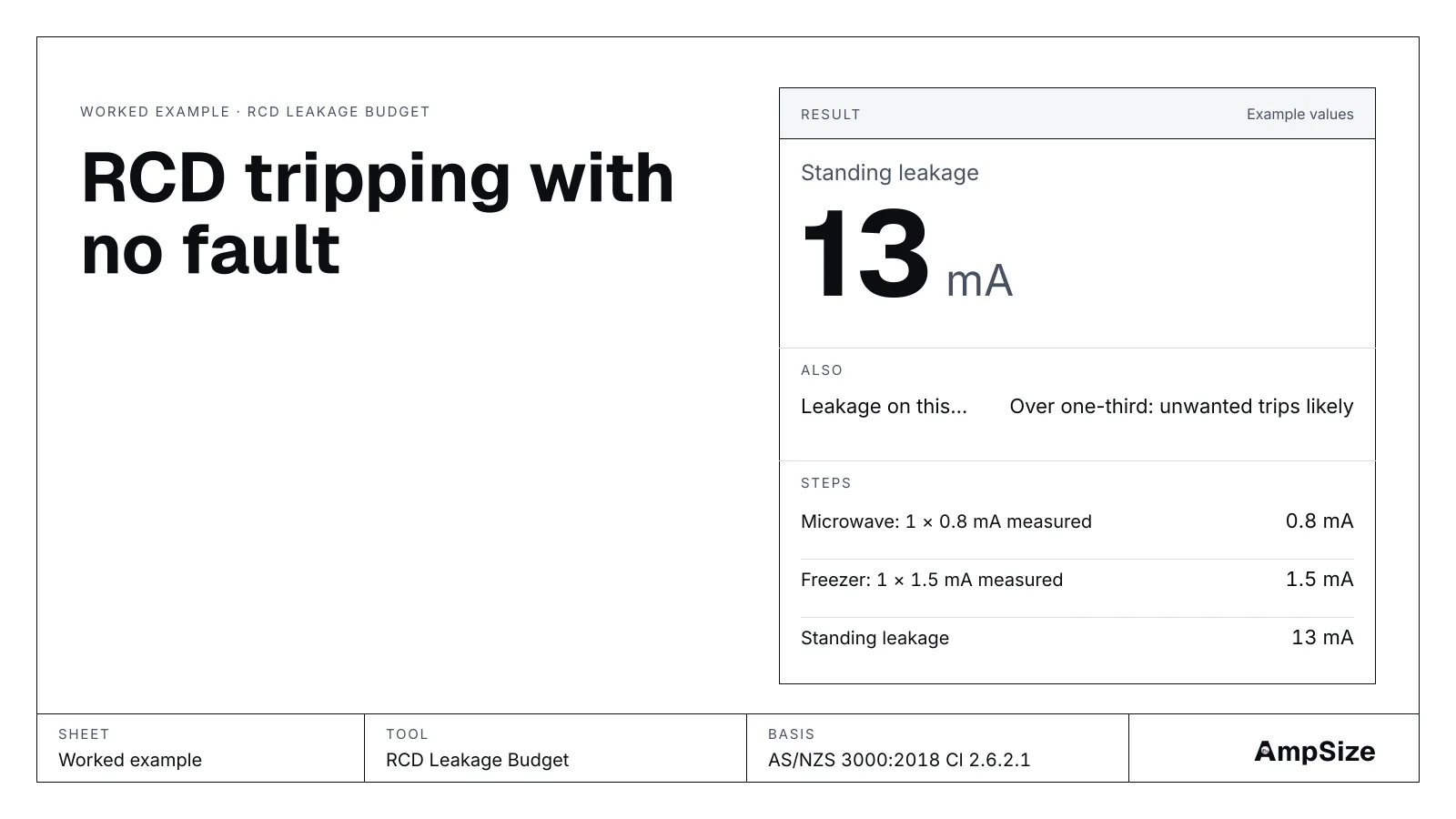
- 5 meneti te pānuiRCD tripping with no fault: add up the leakageAn RCD on a home office and kitchen trips with no fault found. Add up the standing leakage, check it against a third of 30 mA, and split it over two RCDs.
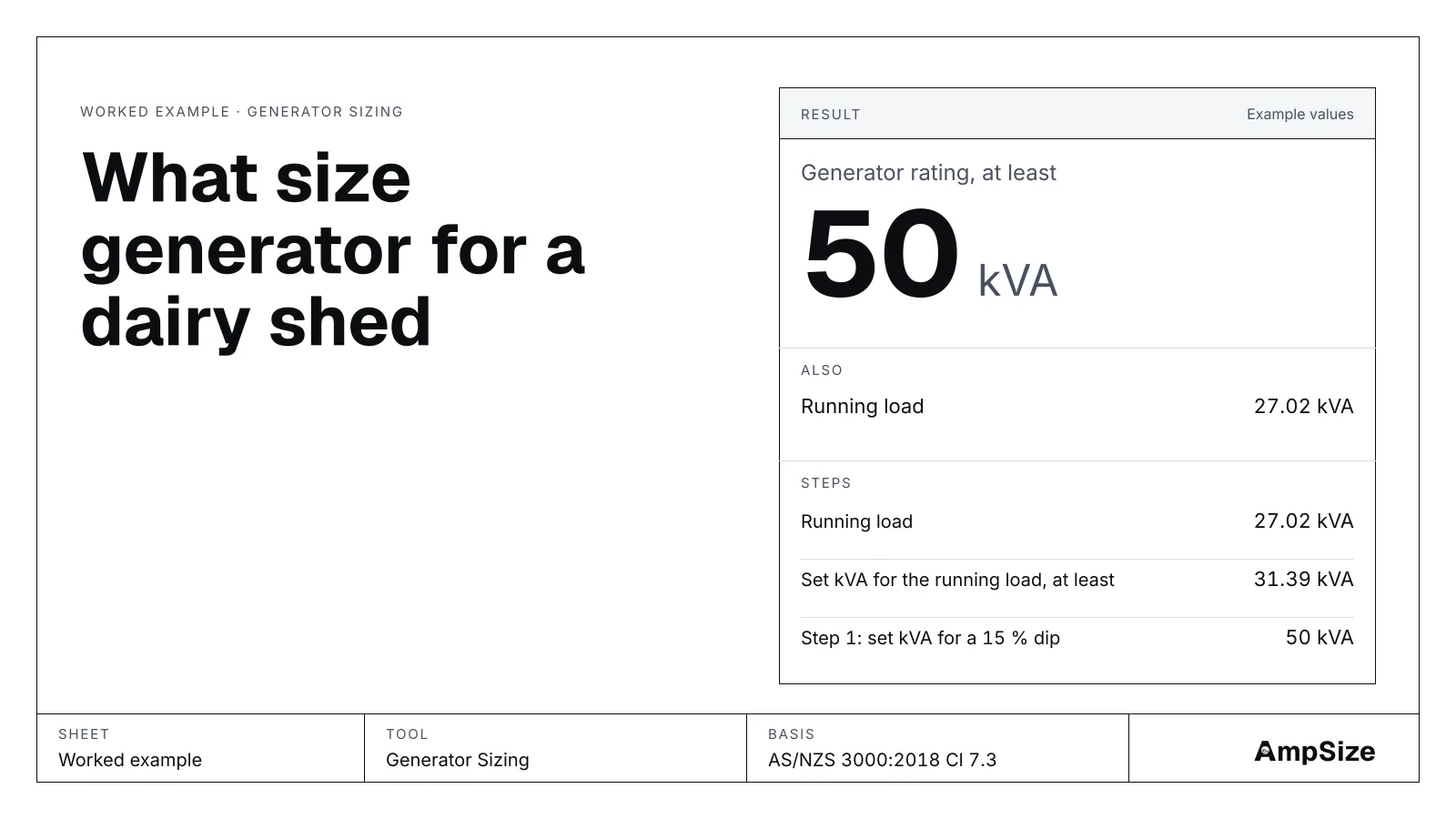
- 5 meneti te pānuiWhat size generator for a dairy shedSize a standby set for a dairy shed from its load list. The vacuum pump's start sets the size, then staggered steps, a drive and a soft starter shrink it.
- 3 meneti te pānuiFixed heating maximum demand with Table C1Adding 7.5 kW of fixed heating to a house under Table C1 group D, the demand each group contributes, and the 80 A line that reg 59 draws.
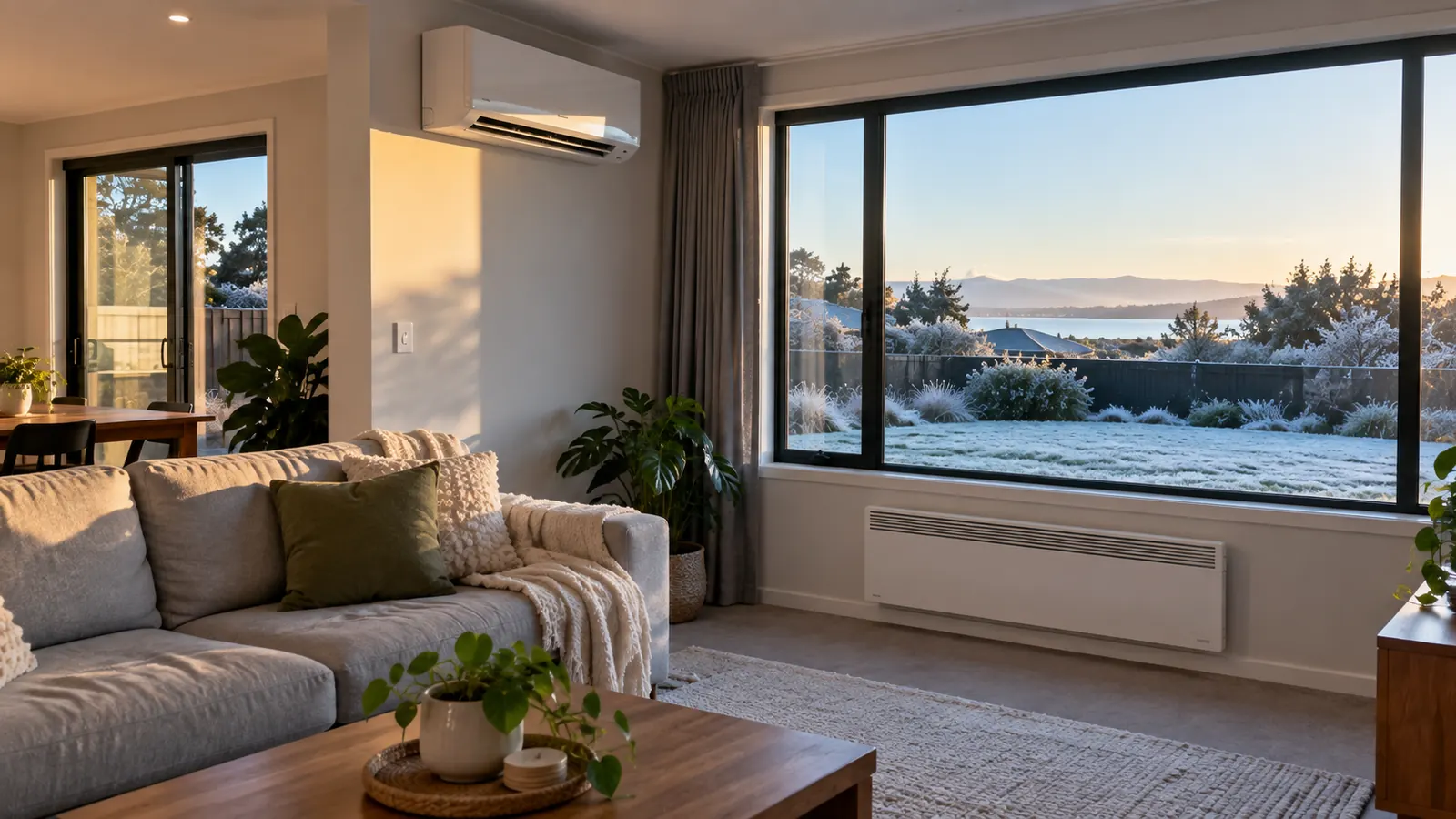
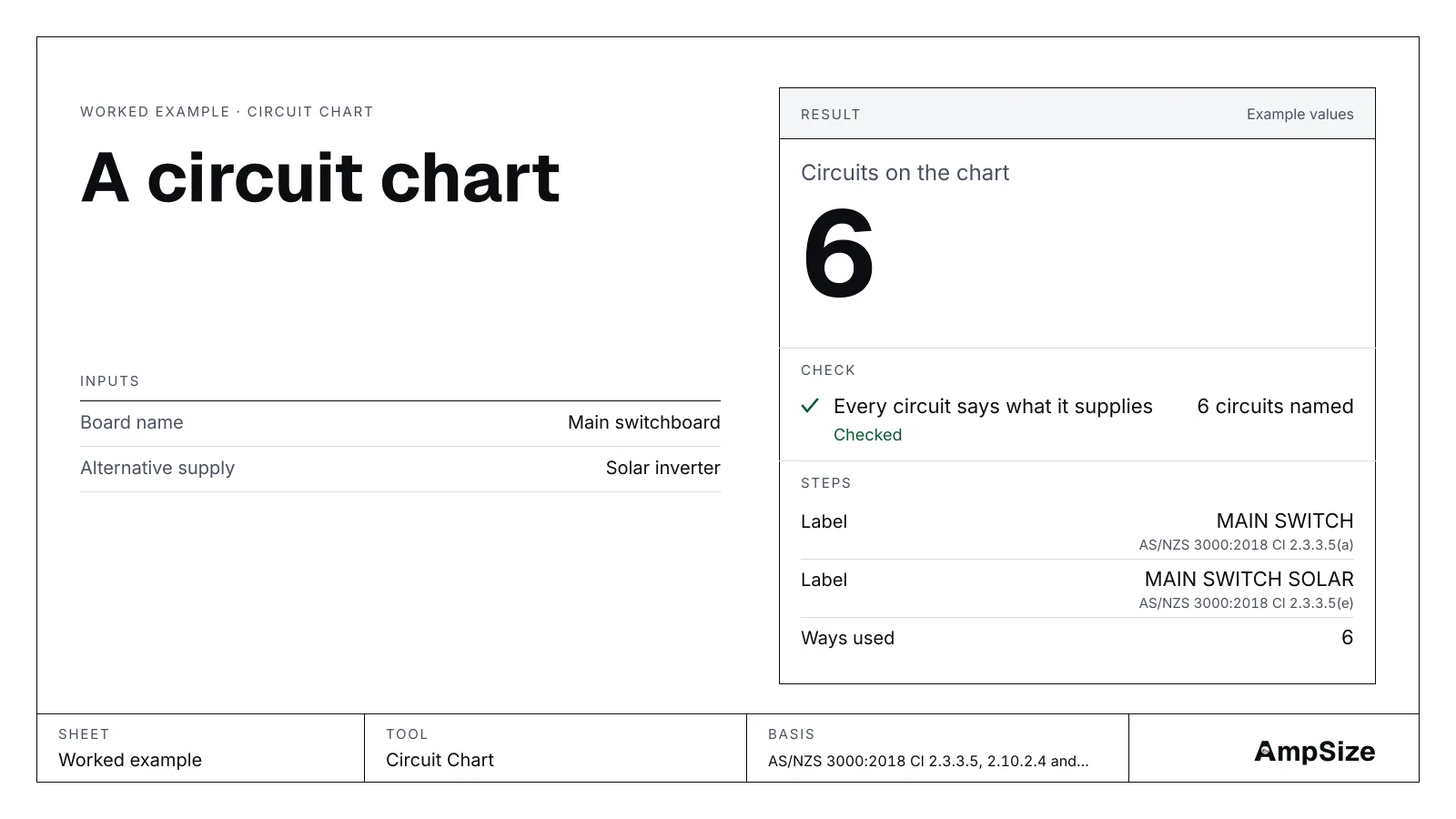
- 2 meneti te pānuiA circuit chart for a house board with solarThe circuit chart and labels for a six-circuit house board with a solar inverter: ways, devices, RCDs, MAIN SWITCH, MAIN SWITCH SOLAR and a shared neutral.
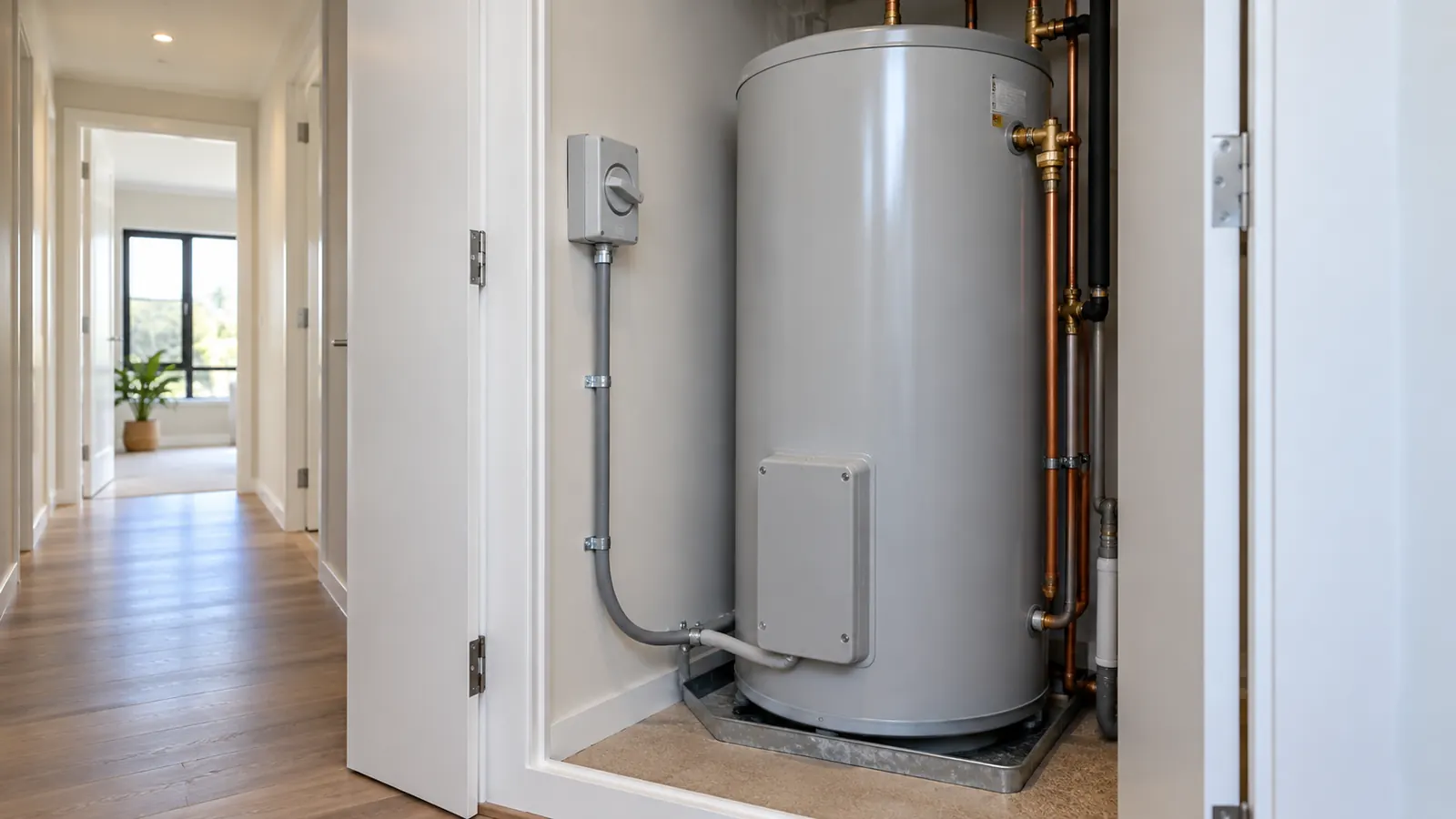
- 3 meneti te pānuiHot water cylinder cable size for a 3 kW elementA 16 A hot water circuit run 20 metres through wall insulation at 35 degrees, sized to 2.5 mm² with 17.86 A of derated capacity and 2.27 percent voltage drop.
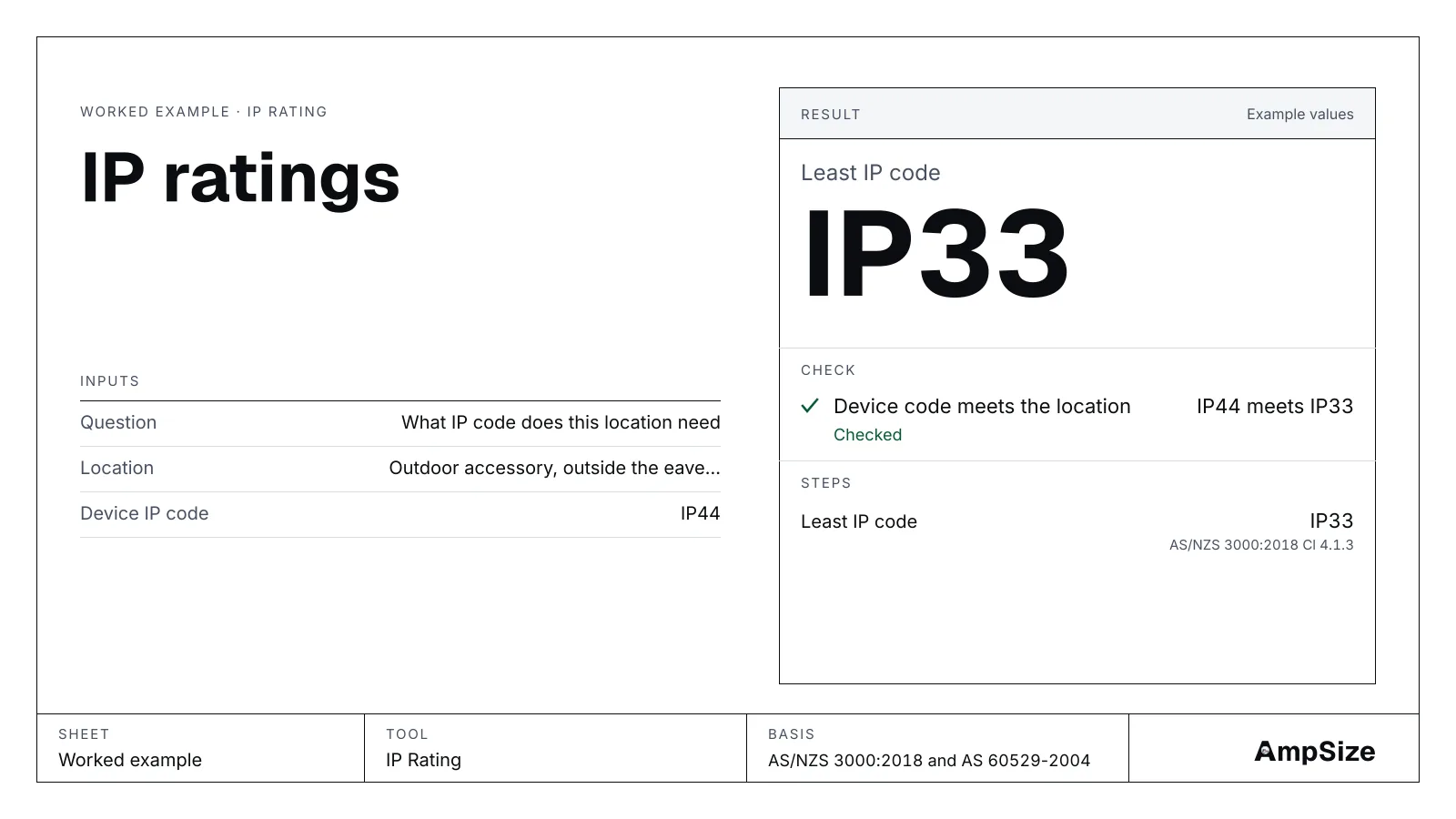
- 2 meneti te pānuiIP ratings for an outdoor point and a hosed shedWhich IP code an outdoor power point, a milking shed light and a hosed switchboard need, and why an IP67 light can fail where IP65 passes.
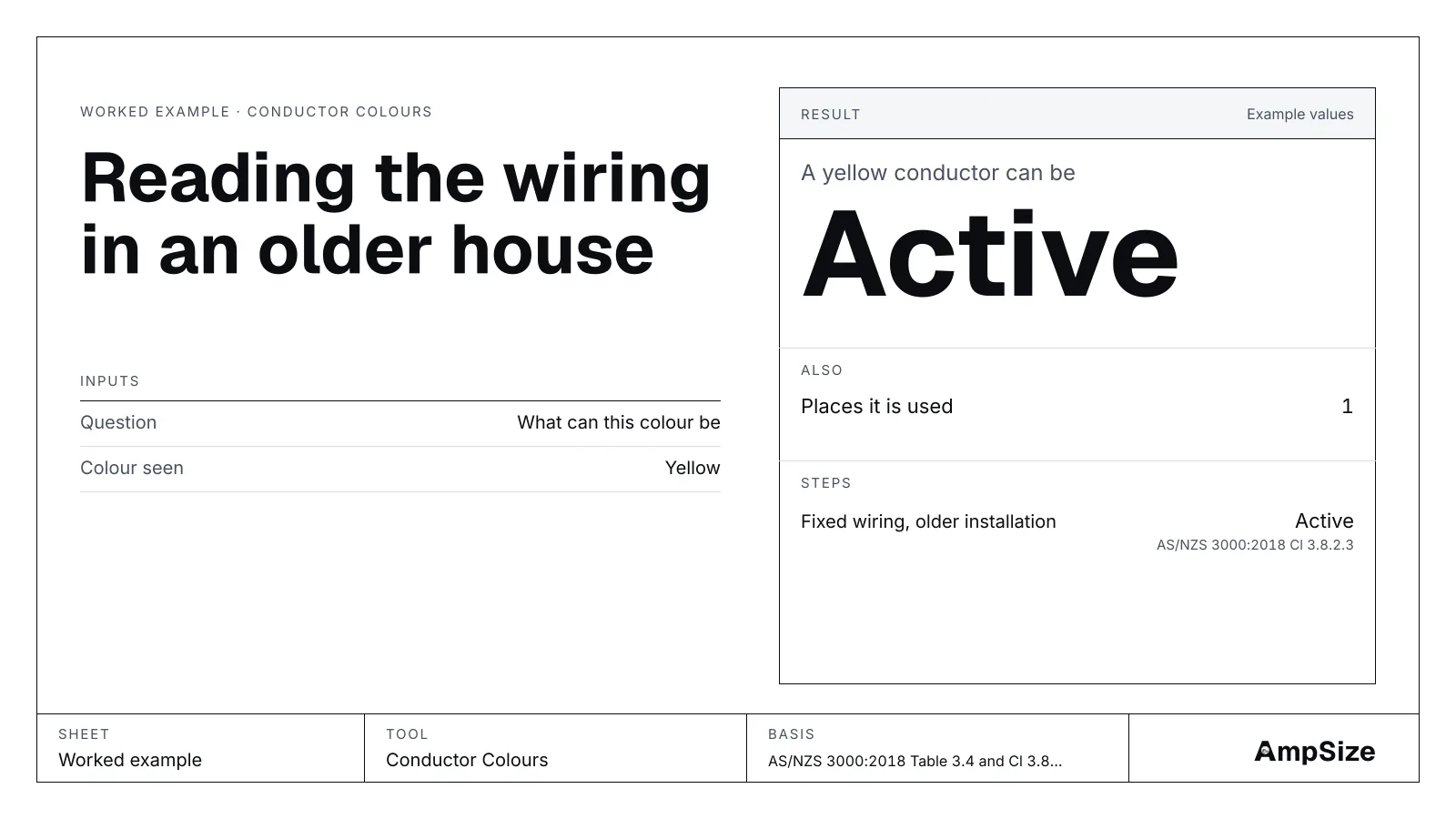
- 3 meneti te pānuiReading the wiring in an older houseA 1970s New Zealand house with yellow actives, a green earth and a black neutral. What each colour can be, what may stay, and how to sleeve new terminations.
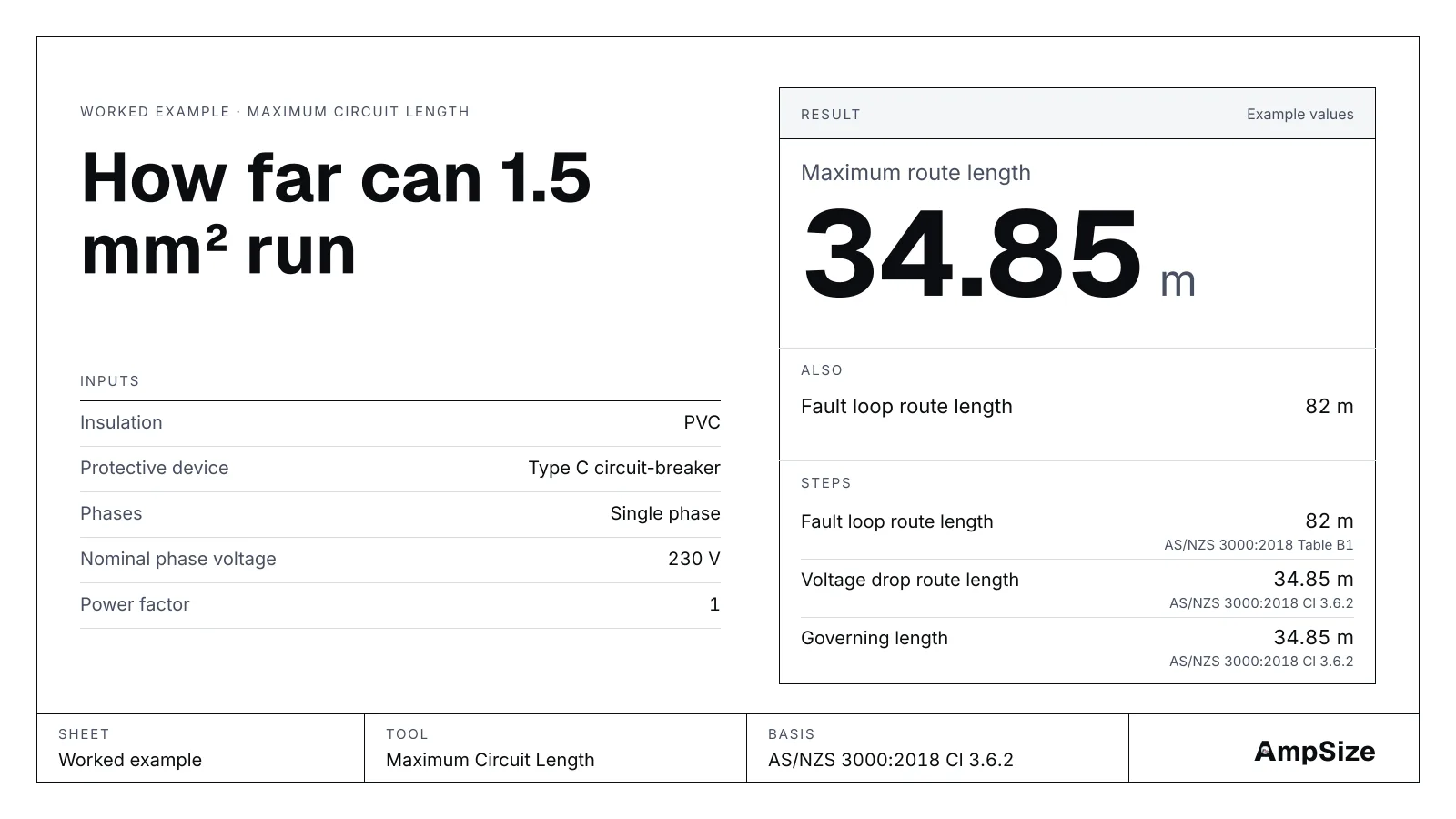
- 1 meneti te pānuiHow far can 1.5 mm² run on a 10 A circuit?1.5 mm² copper on a 10 A curve C circuit can run 34.85 m before it reaches the 5 % voltage drop limit. The fault loop alone would allow 82 m.
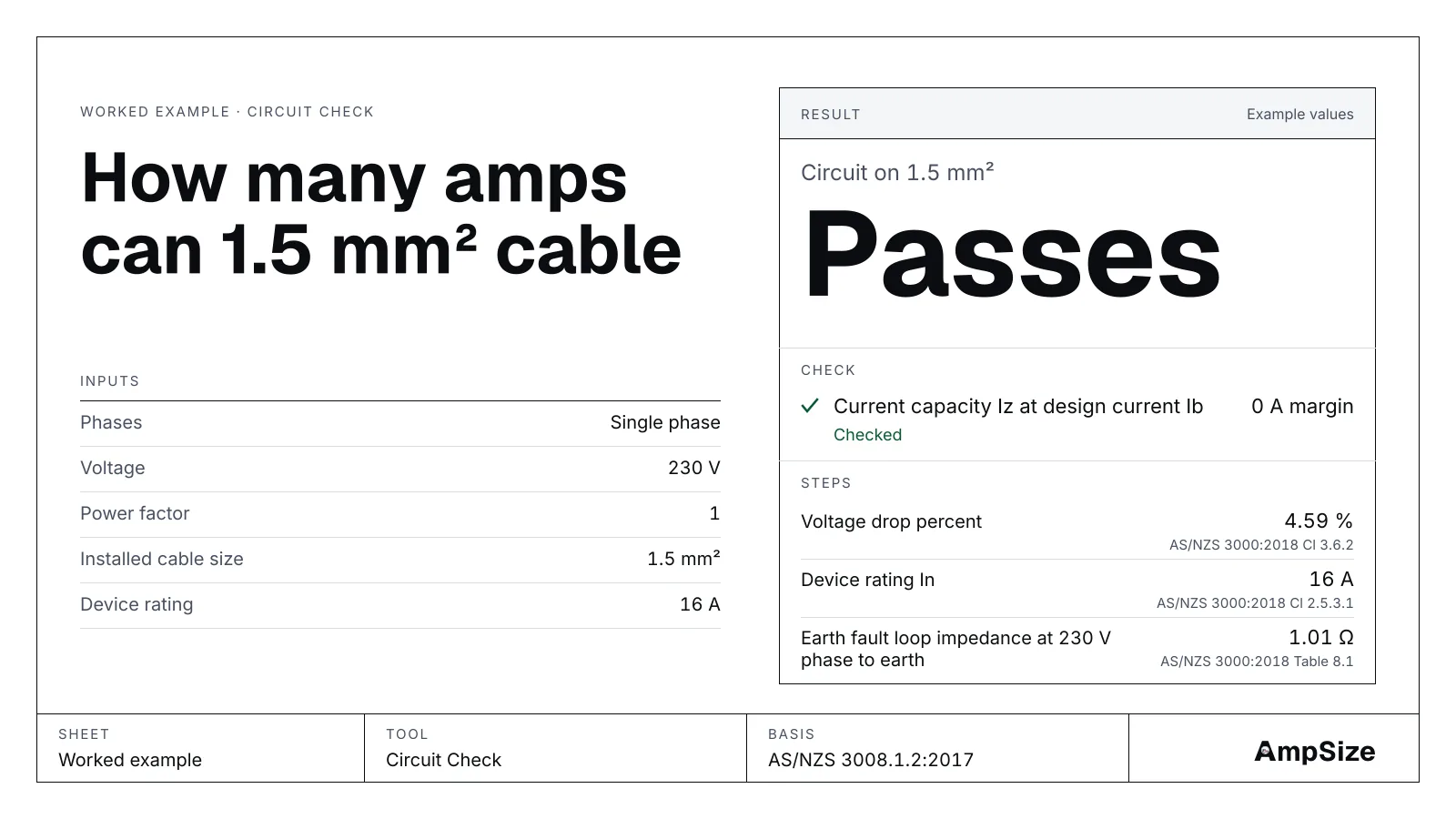
- 1 meneti te pānuiHow many amps can 1.5 mm² cable carry?1.5 mm² copper multicore PVC cable carries 16 A enclosed in air at 30 °C in NZ, so it takes a 16 A breaker. Clipped direct, it carries 17 A.
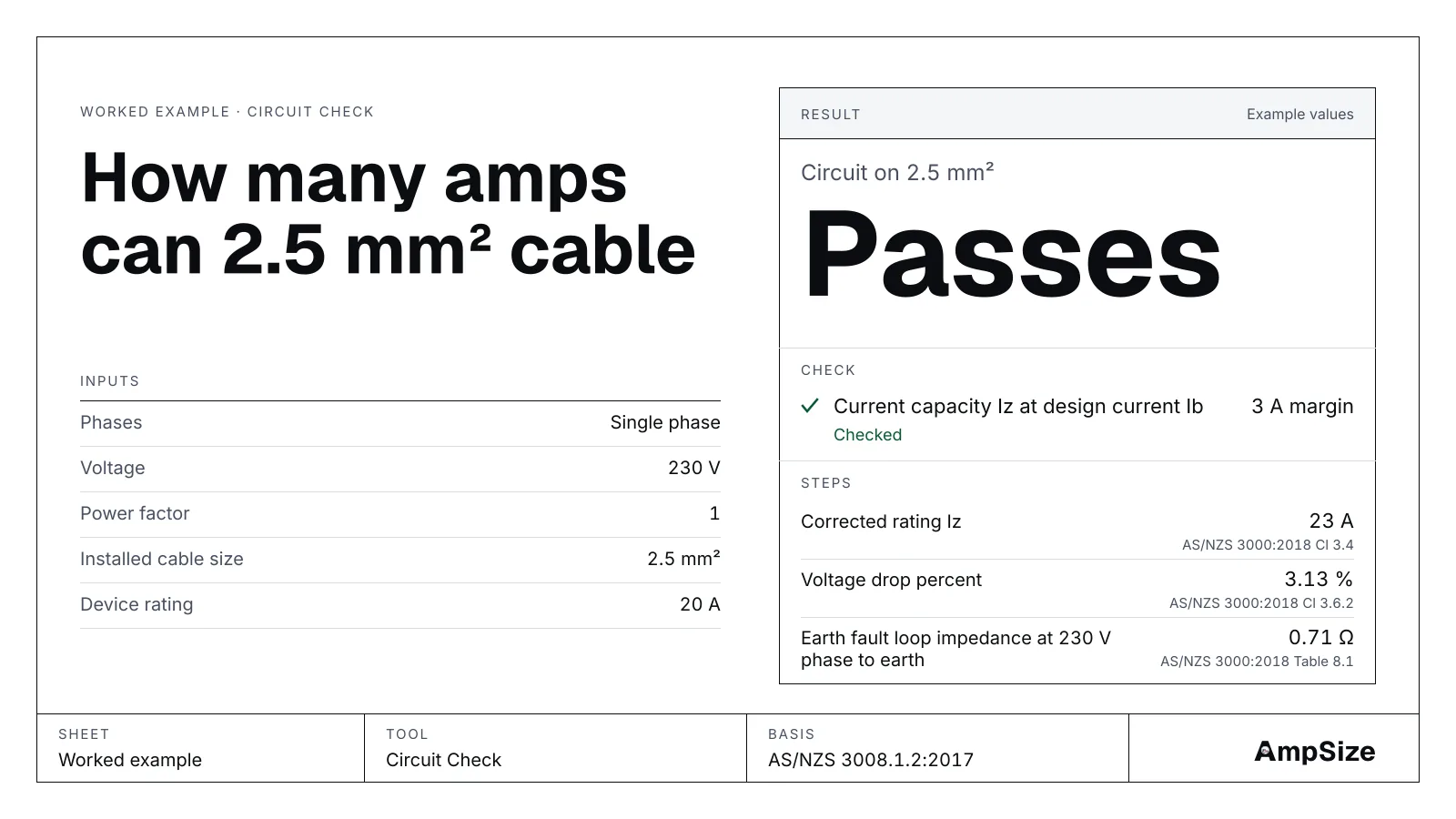
- 1 meneti te pānuiHow many amps can 2.5 mm² cable carry?2.5 mm² copper multicore PVC cable carries 23 A enclosed in air at 30 °C in NZ, so a 20 A breaker protects it. Grouped with two circuits, it carries 16.1 A.
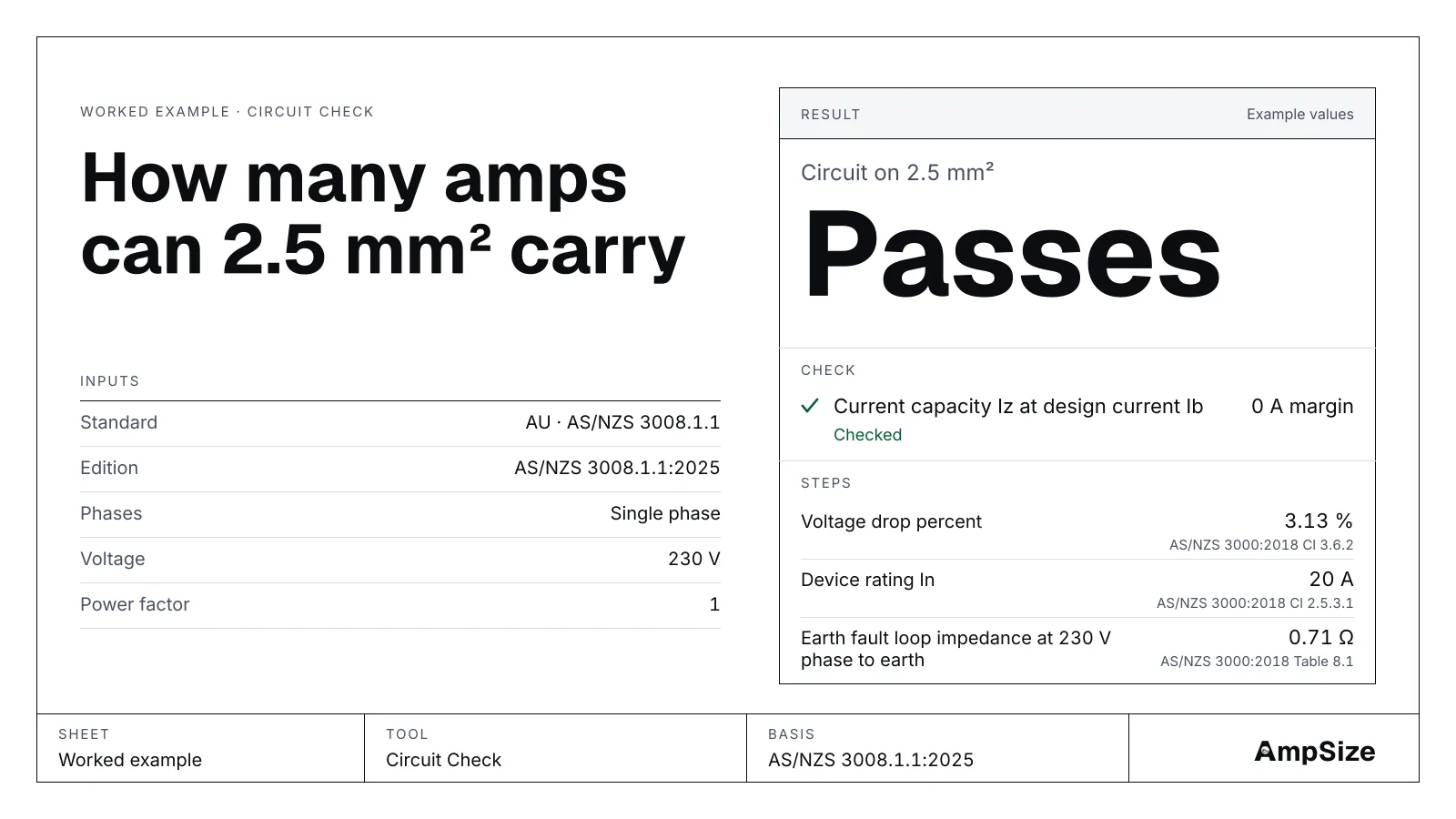
- 1 meneti te pānuiHow many amps can 2.5 mm² carry in Australia?2.5 mm² copper multicore PVC cable carries 20 A enclosed in air at 40 °C on AS/NZS 3008.1.1:2025, exactly a 20 A breaker. Clipped direct, it carries 22 A.
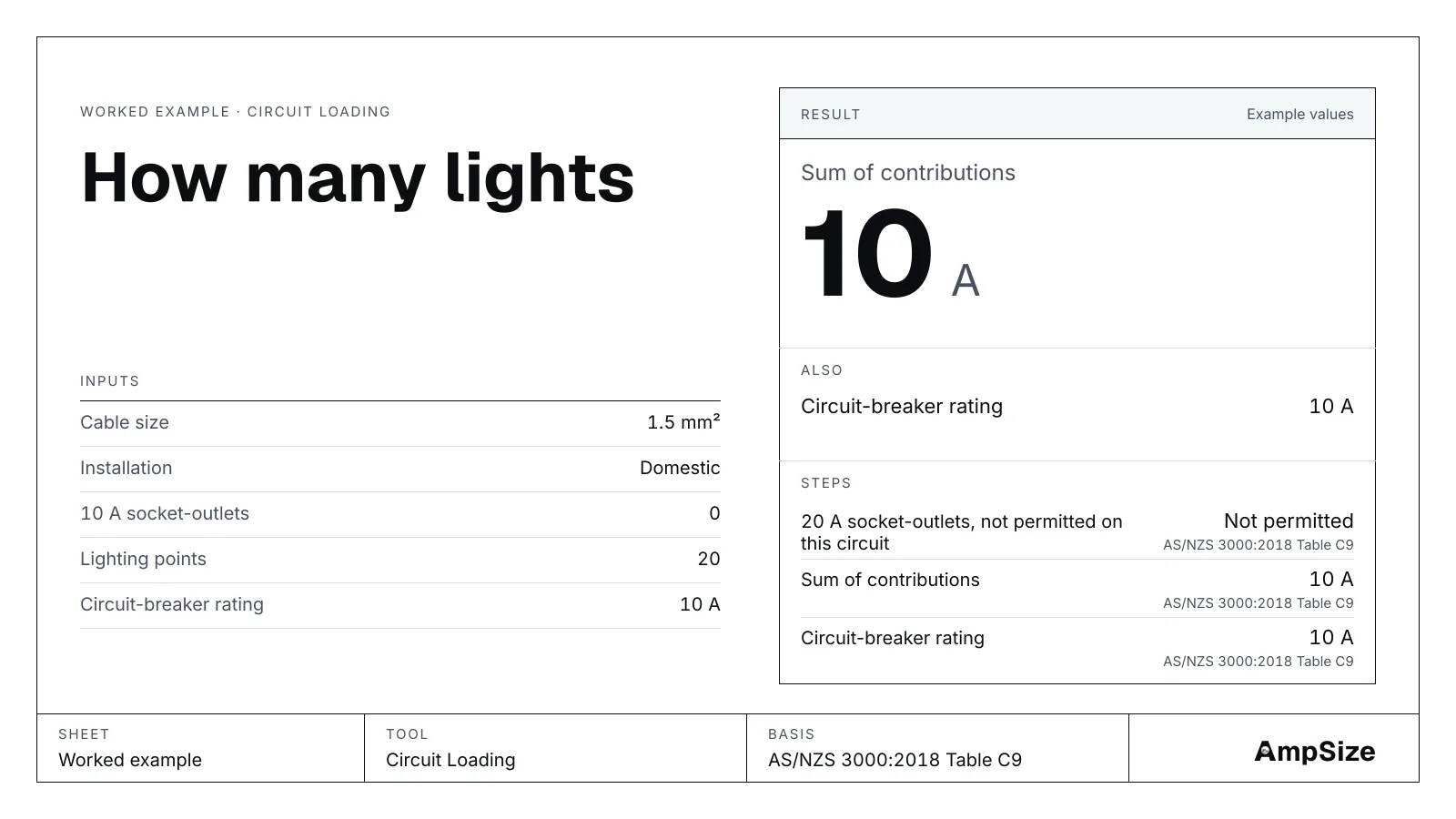
- 1 meneti te pānuiHow many lights on a 10 A circuit?In a home, AS/NZS 3000 Table C9 fills a 10 A circuit at 20 lighting points. A 21st point takes the sum over the circuit-breaker rating.
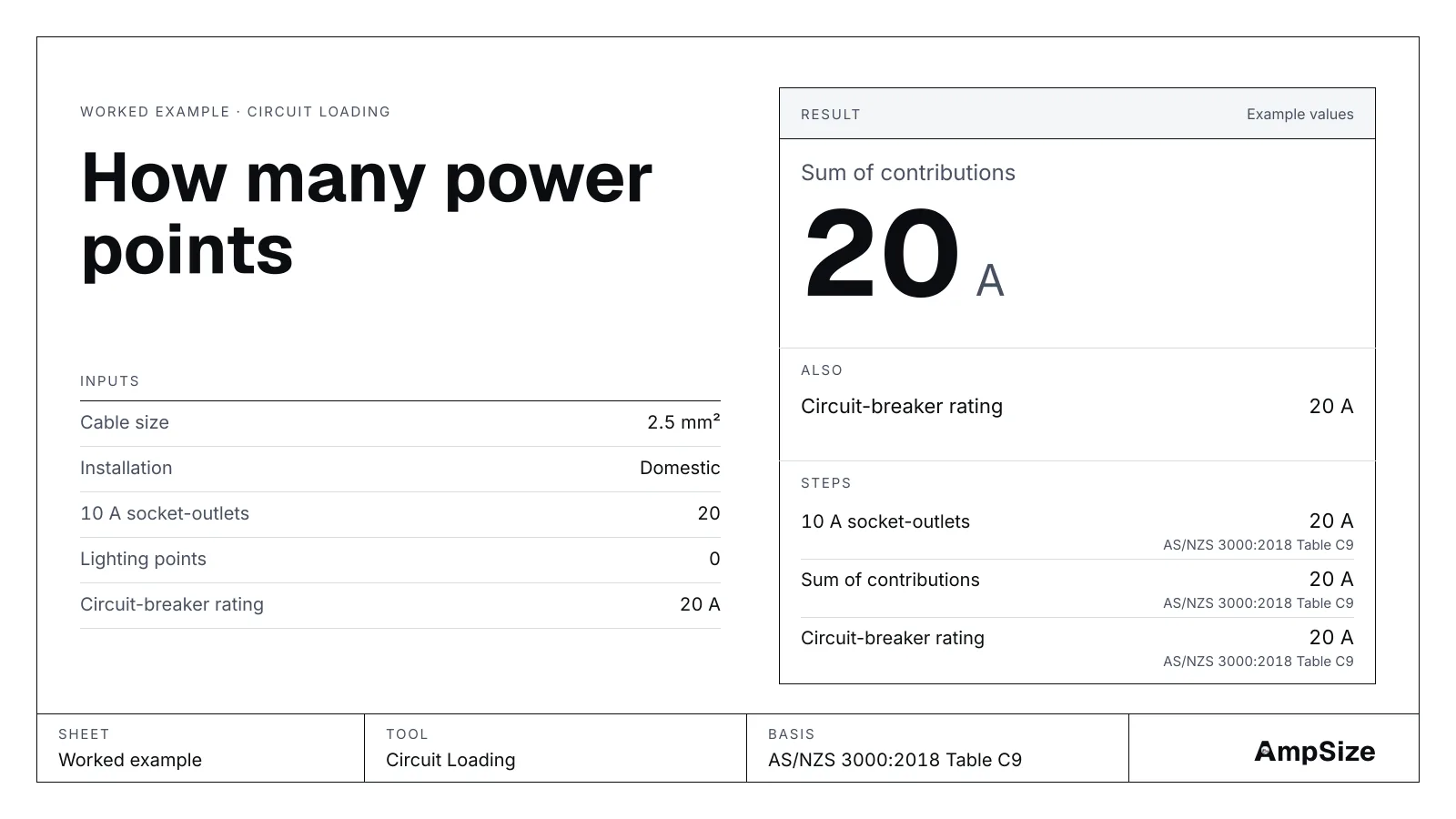
- 1 meneti te pānuiHow many power points on a 20 A circuit?In a home, AS/NZS 3000 Table C9 fills a 20 A circuit at 20 single 10 A socket-outlets. A non-domestic installation counts each one at twice that.
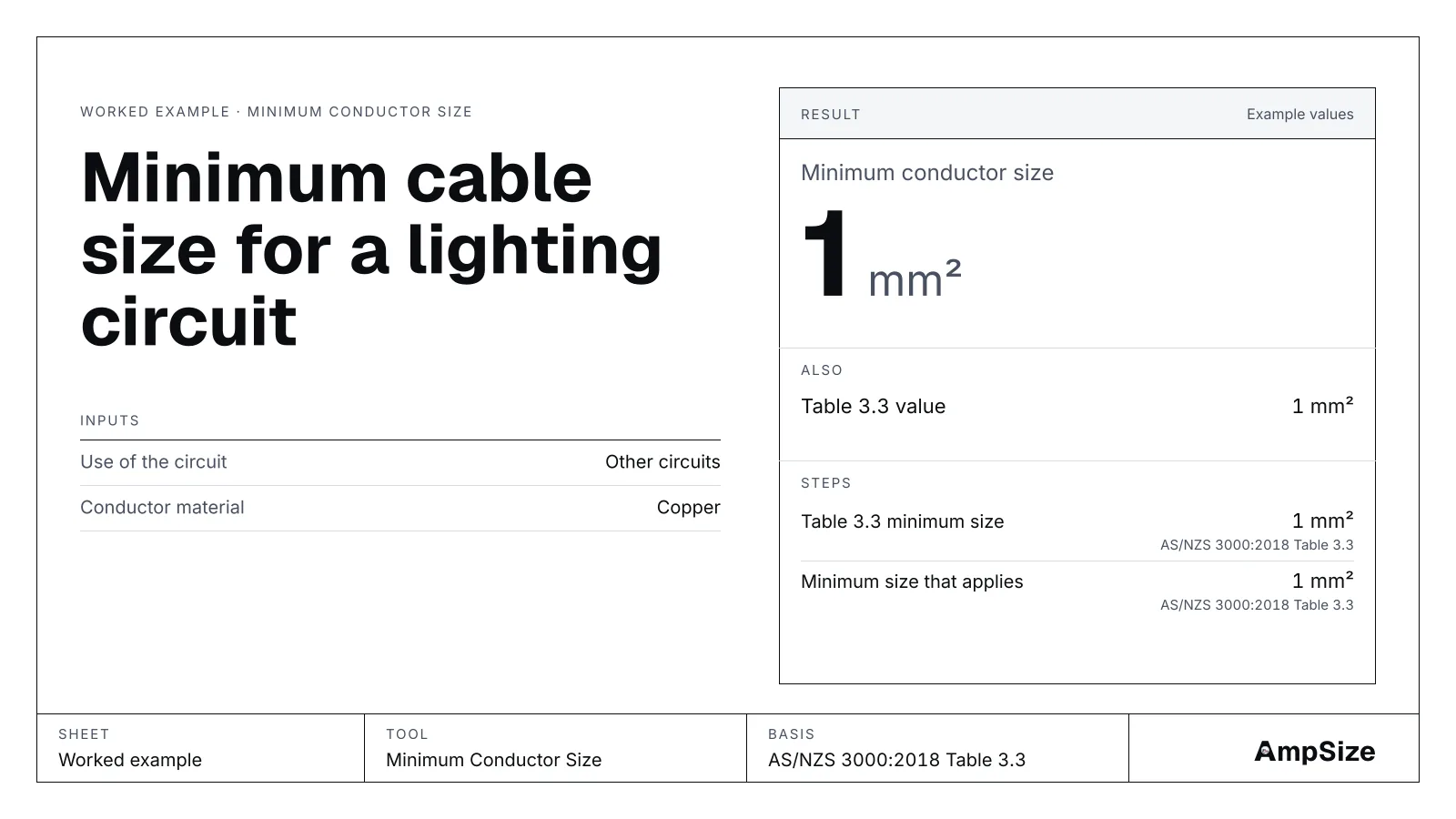
- 1 meneti te pānuiMinimum cable size for a lighting circuitAS/NZS 3000 Table 3.3 sets a minimum of 1 mm² copper for circuits other than socket-outlets, lighting included. The load and the run often need more.
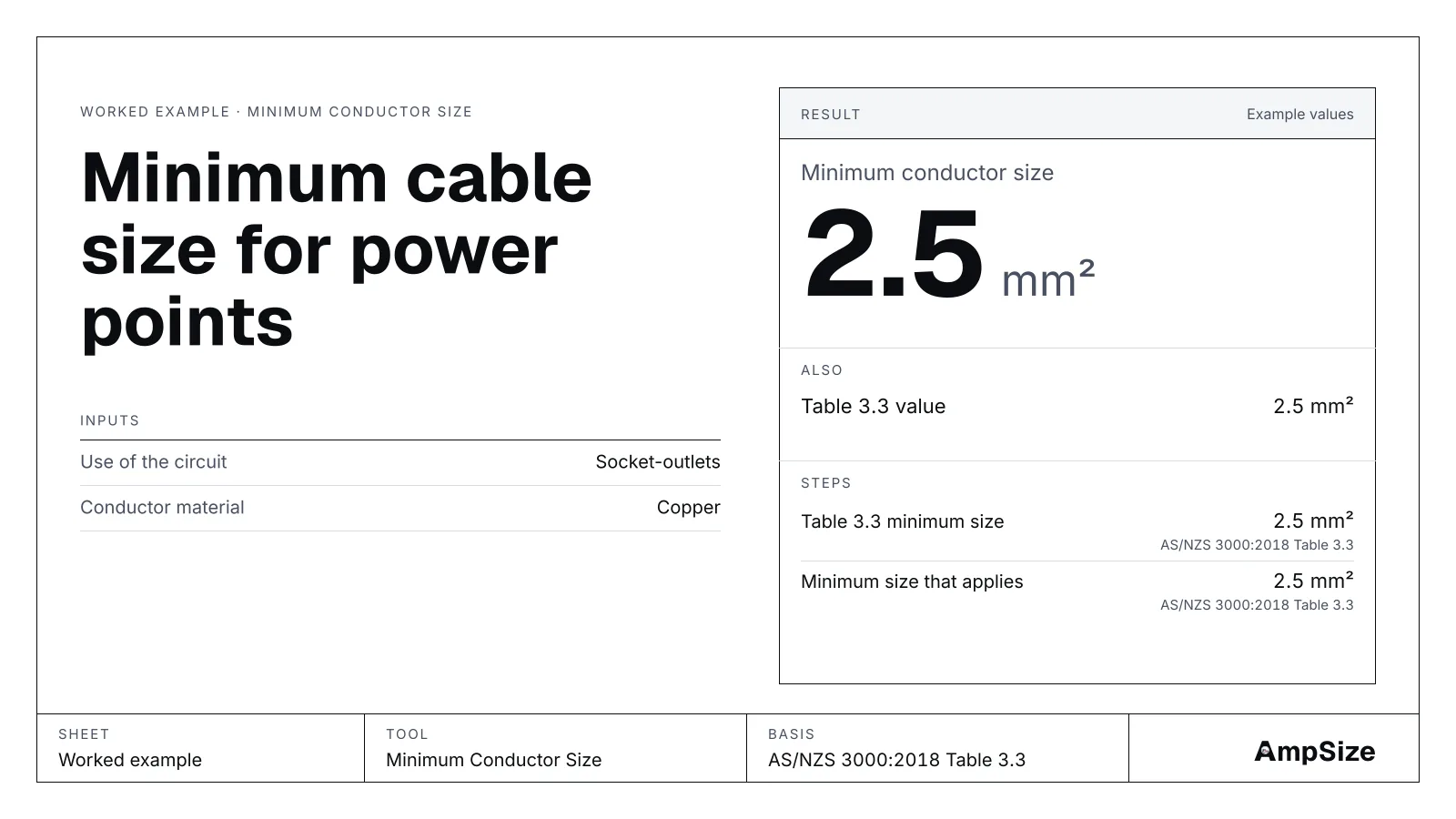
- 1 meneti te pānuiMinimum cable size for power pointsAS/NZS 3000 Table 3.3 sets a minimum of 2.5 mm² copper for a socket-outlet circuit. An exception can allow less, under conditions you must meet first.
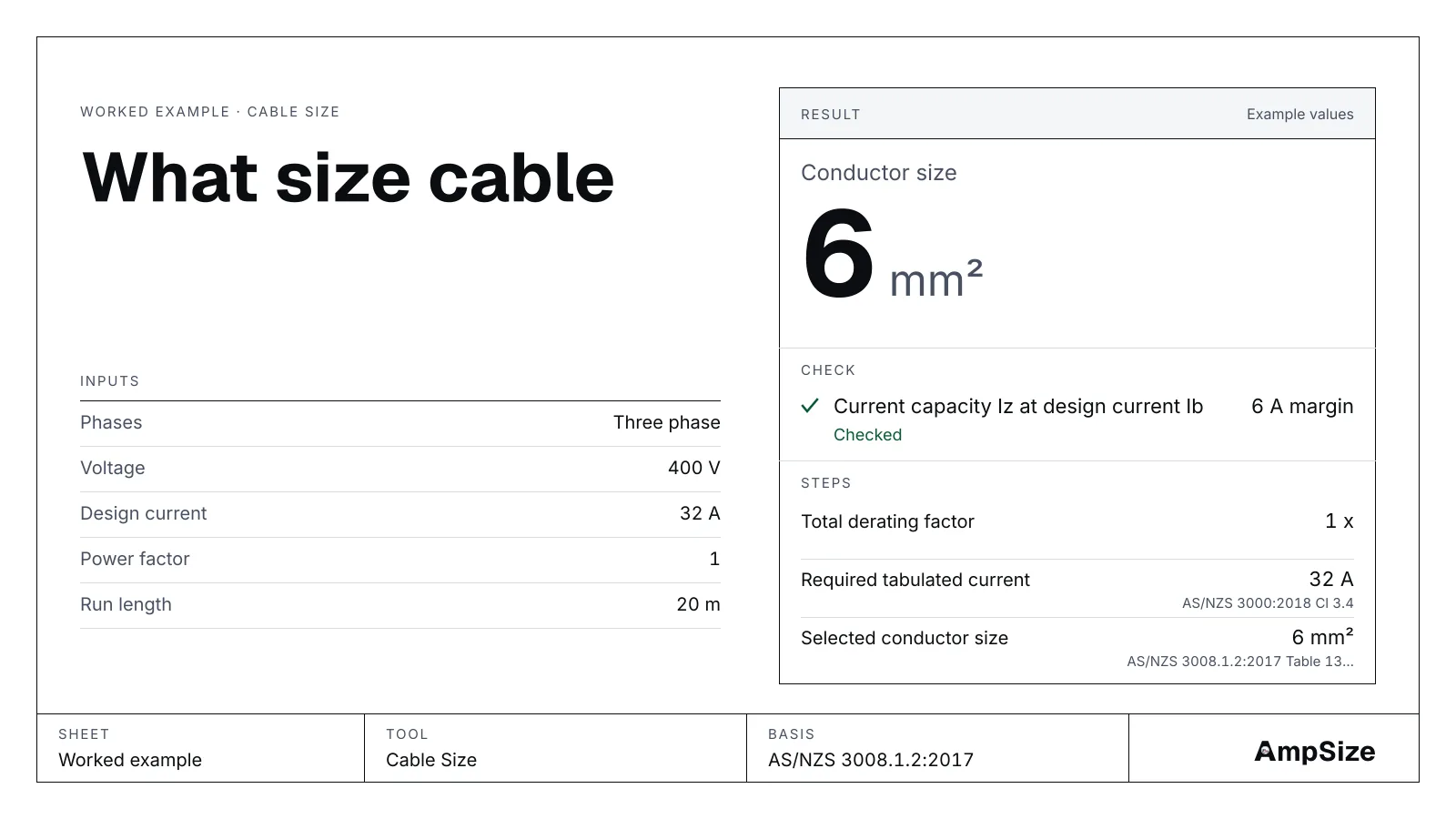
- 1 meneti te pānuiWhat size cable for a 22 kW EV charger?A 22 kW three-phase EV charger on a 32 A circuit takes 6 mm² copper over 20 m, with 38 A of derated capacity and a 1.04 % drop. At 60 m it takes 10 mm².
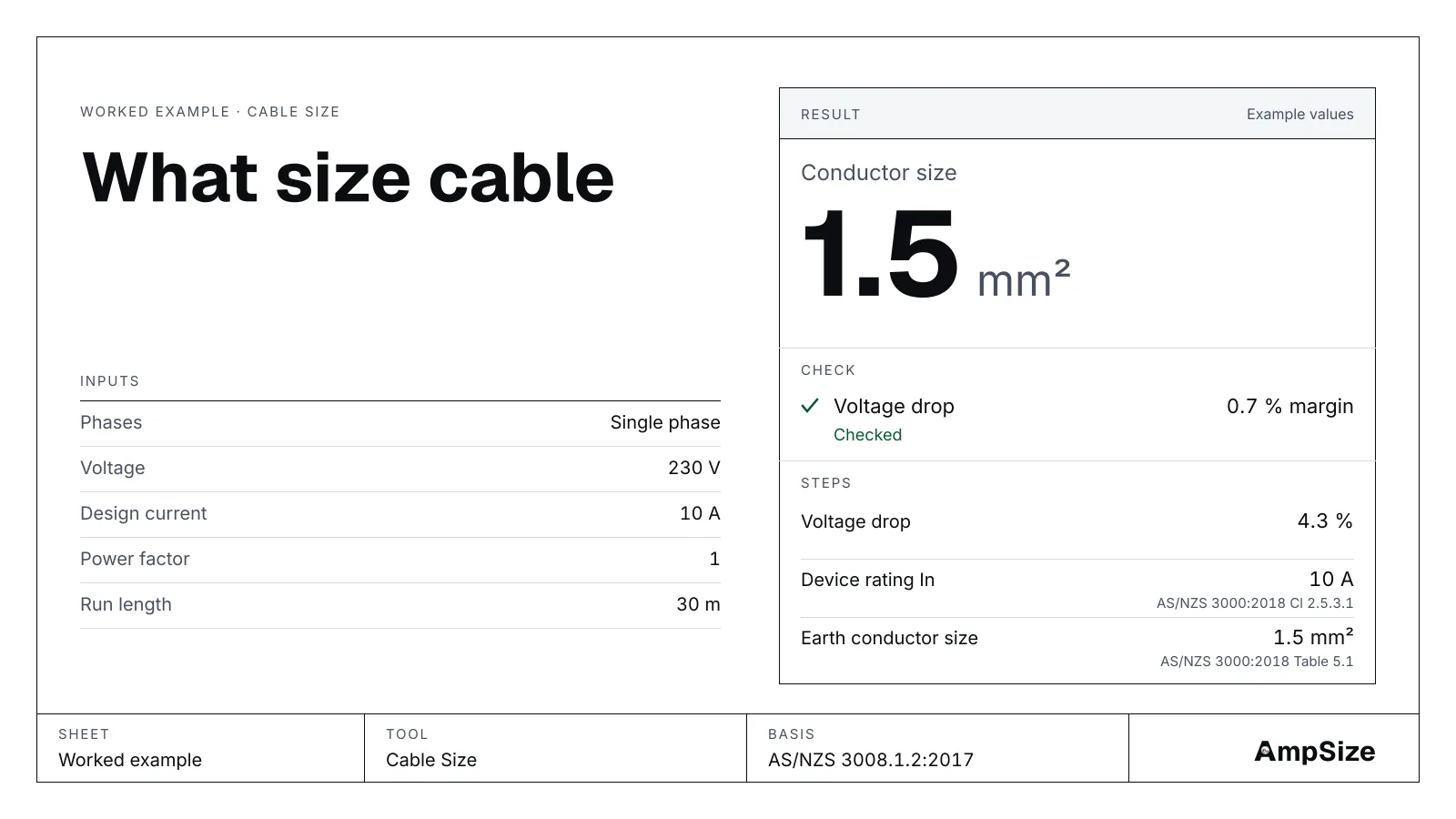
- 1 meneti te pānuiWhat size cable for a lighting circuit in NZ?A 10 A lighting circuit in New Zealand takes 1.5 mm² copper over 30 m, with 16 A of derated capacity and a 4.3 % drop. A 16 A circuit takes 2.5 mm².
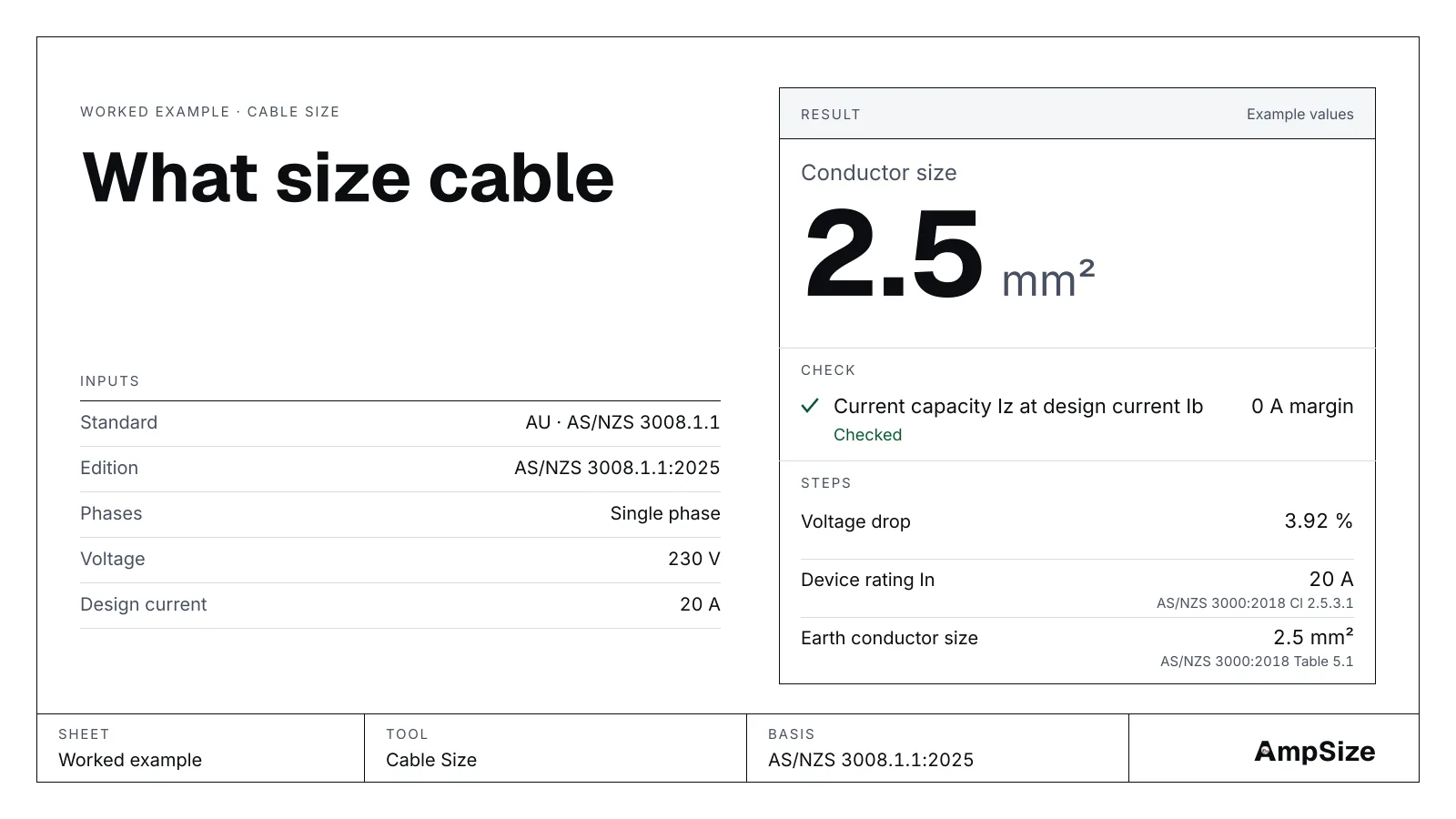
- 1 meneti te pānuiWhat size cable for power points in Australia?A 20 A power point circuit in Australia takes 2.5 mm² copper on AS/NZS 3008.1.1:2025, rated 20 A enclosed in air at 40 °C. Grouping pushes it to 6 mm².
- 1 meneti te pānuiWhat size cable for power points in NZ?A 20 A power point circuit in New Zealand takes 2.5 mm² copper enclosed in air, with 23 A of derated capacity. Ceiling insulation moves it to 4 mm².
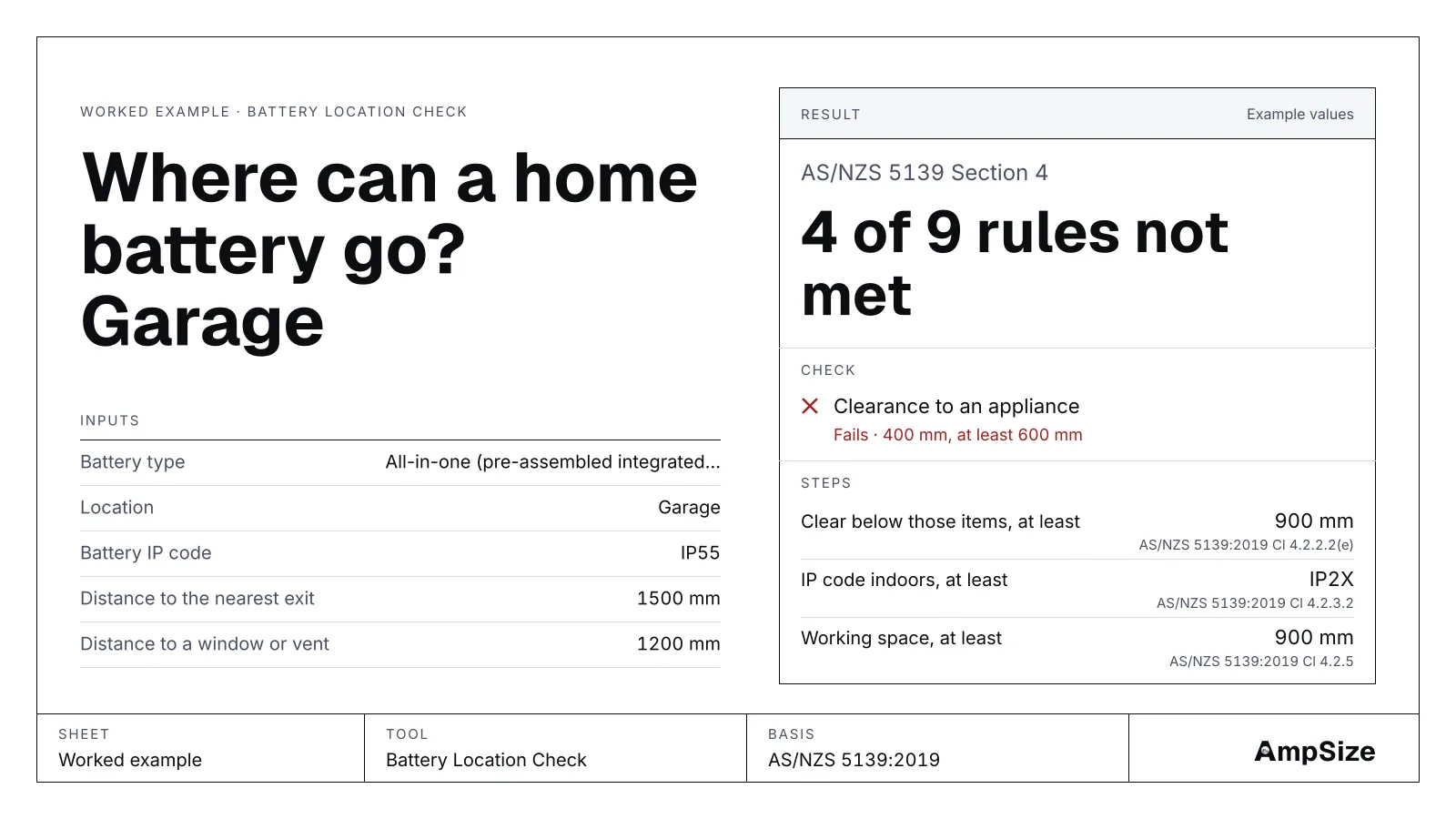
- 3 meneti te pānuiWhere can a home battery go? Garage wallsA garage wall that backs onto a bedroom, with a hot water cylinder nearby. See which AS/NZS 5139 location rules fail for a home battery, then fix each one.
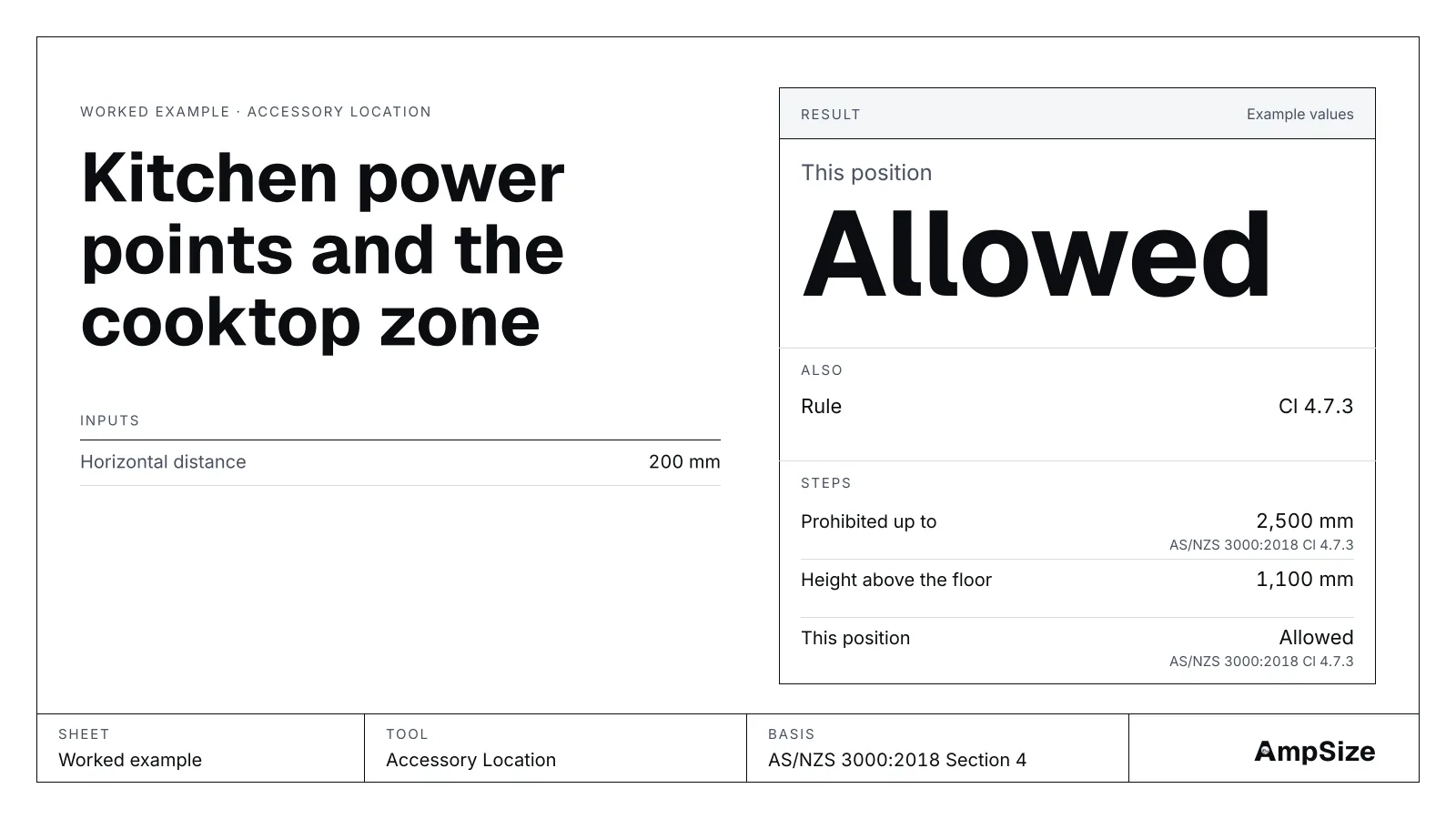
- 5 meneti te pānuiKitchen power points and the cooktop zonePlace power points and switches near a cooktop, an outdoor gas bottle and a gas vent. Check each distance to AS/NZS 3000 and hand the sink to the wet area tool.
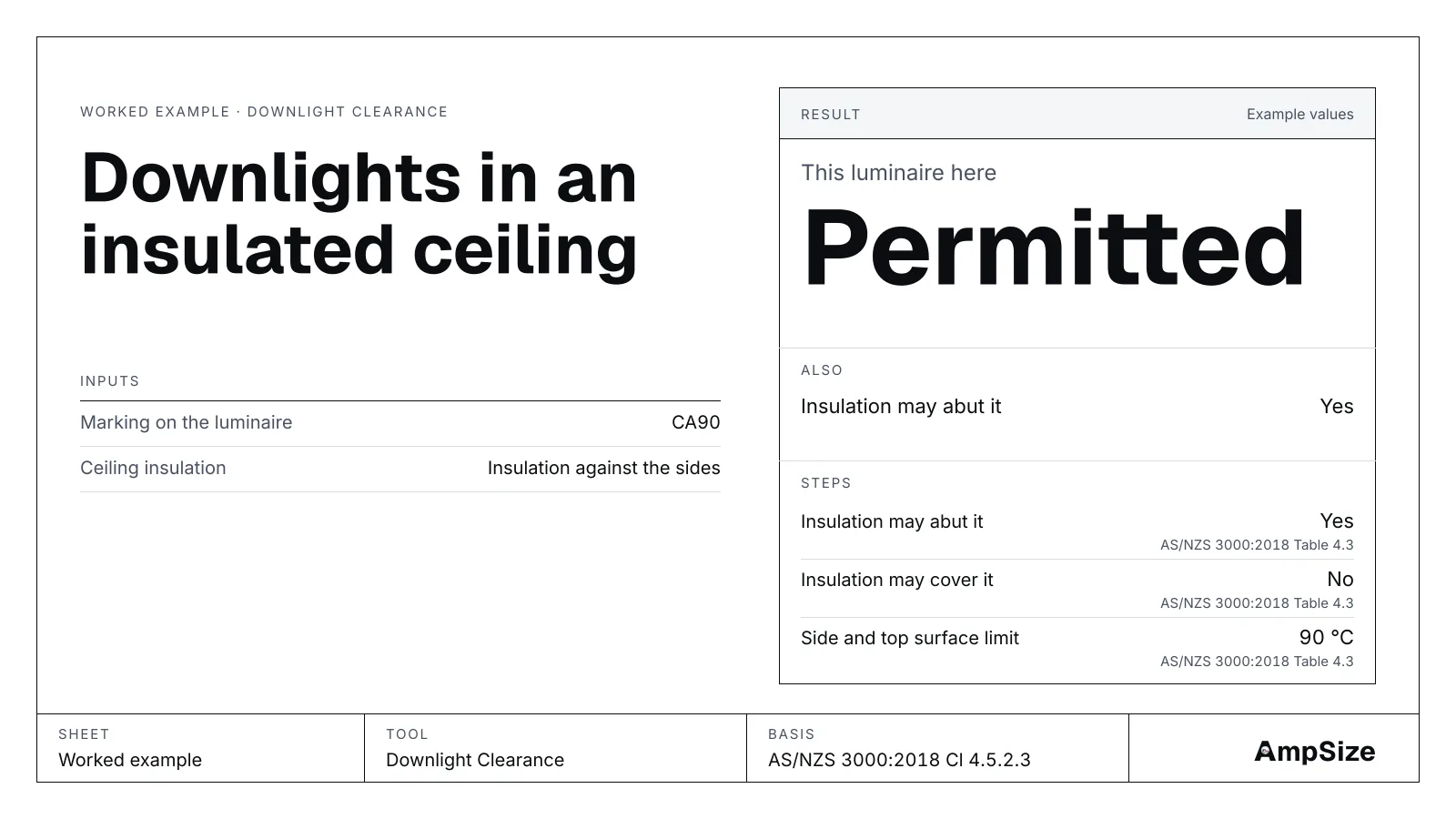
- 4 meneti te pānuiDownlights in an insulated ceilingRe-insulate a NZ ceiling with downlights in it. Check which may be covered, which only abutted, which must come out, and the clearances and roof space sign.
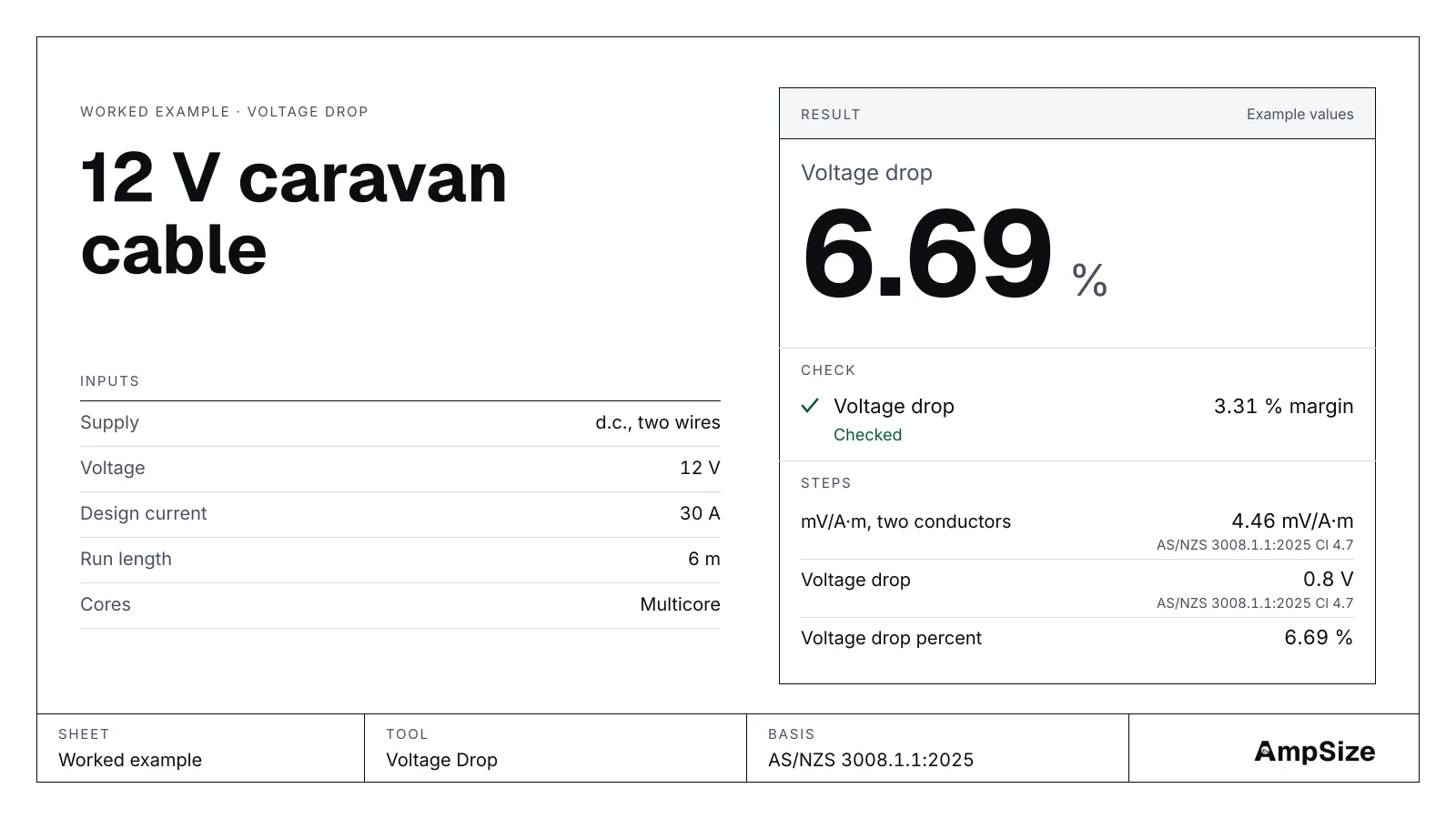
- 5 meneti te pānui12 V caravan cable: d.c. voltage dropA 12 V caravan feed at 30 A over 6 m, checked on 4, 6 and 10 mm² twin against the 10 % ELV limit, then a 48 V battery-to-inverter run.
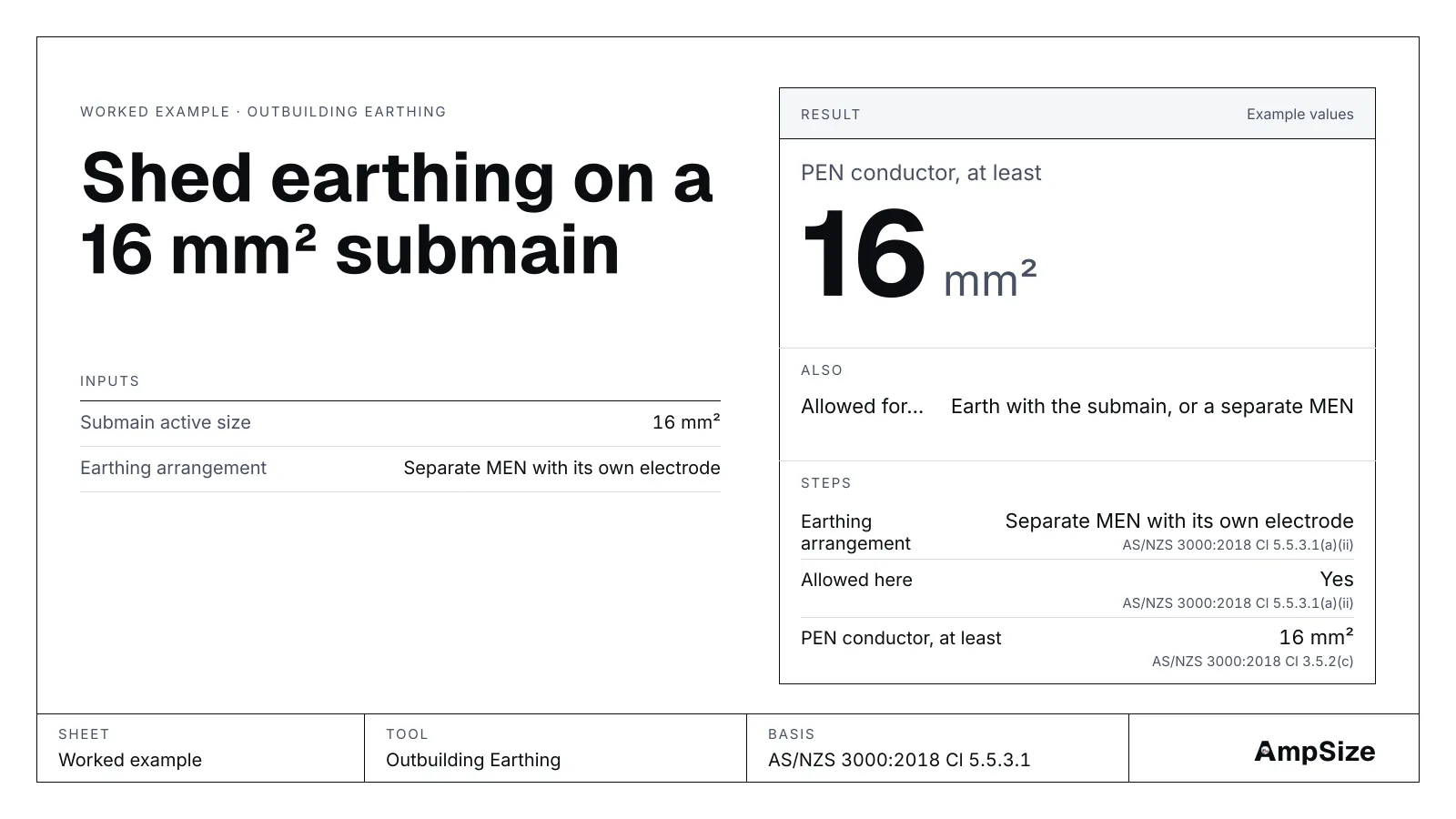
- 3 meneti te pānuiShed earthing on a 16 mm² submainEarth a NZ shed 30 m from the house on a 16 mm² submain. Compare an earth with the submain and a separate MEN with its own rod, and when each is allowed.
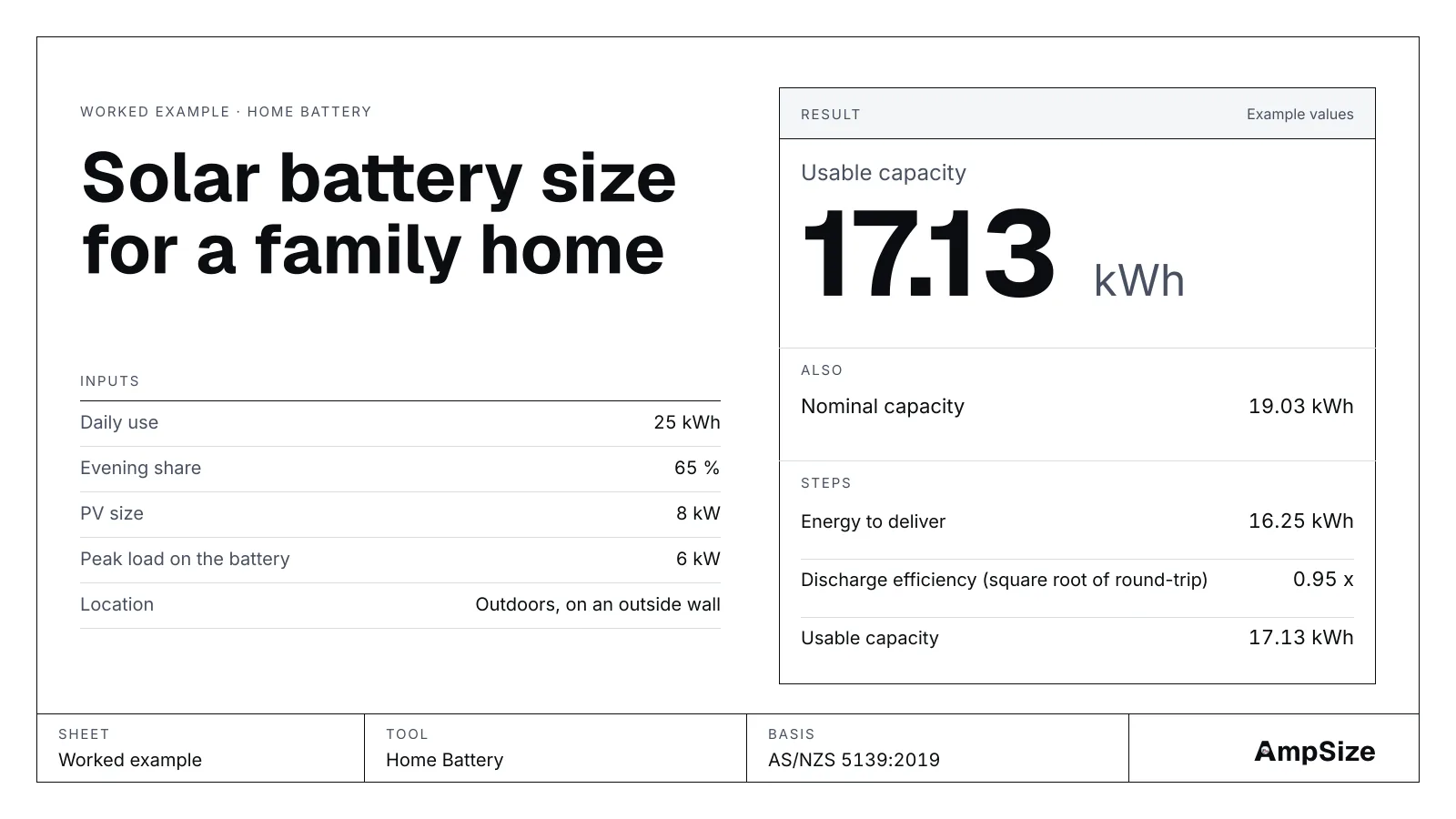
- 4 meneti te pānuiSolar battery size for a family home: 25 kWh a daySize a solar battery for a home that uses 25 kWh a day with an 8 kW array. Usable and nominal kWh, the bank, the inverter, winter solar and where it can go.
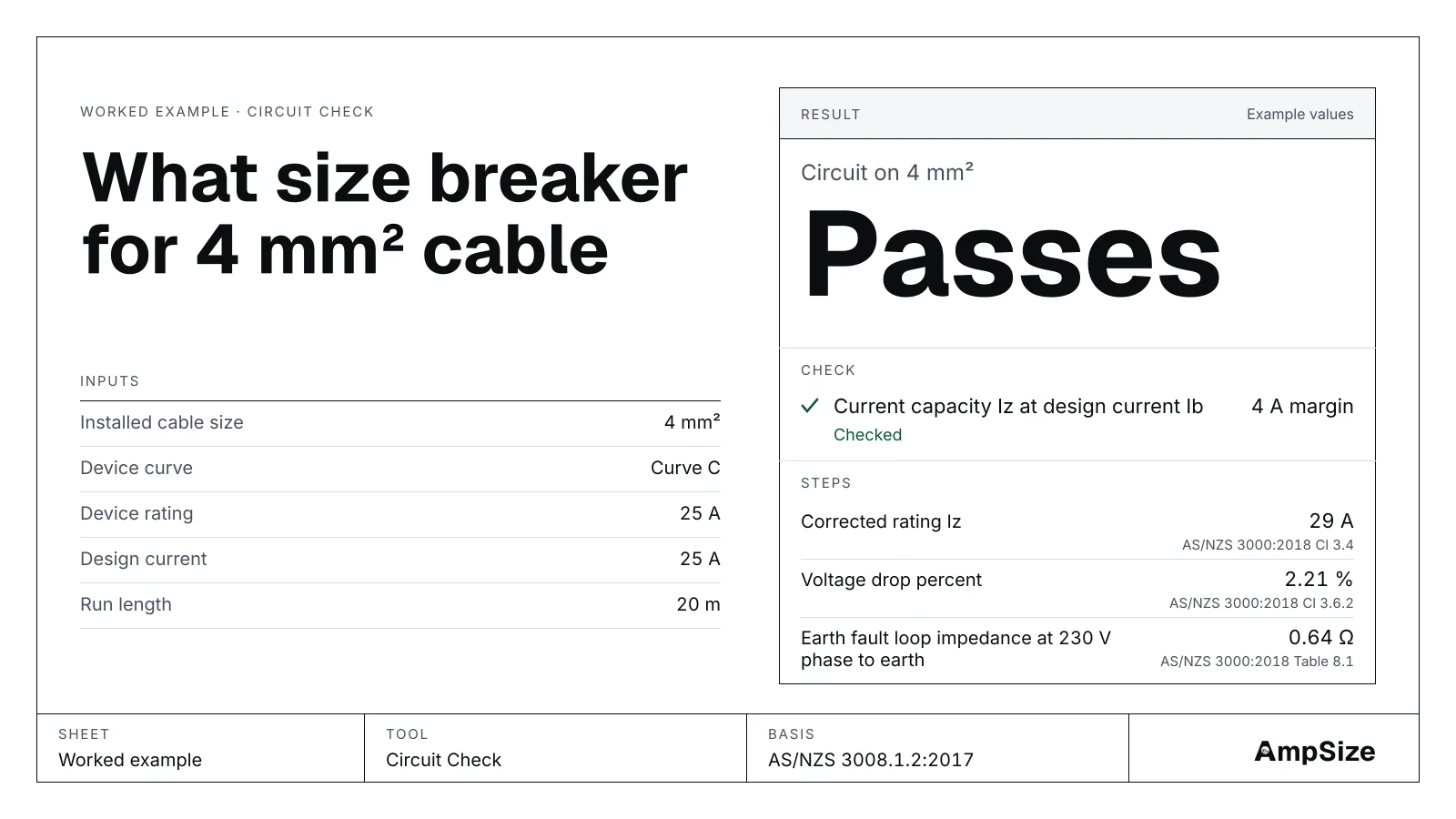
- 5 meneti te pānuiWhat size breaker for 4 mm² cable4 mm² copper enclosed in air takes a 25 A breaker, and 32 A fails at an Iz of 29 A. Grouping, a hot ceiling, insulation and a long run lower it.
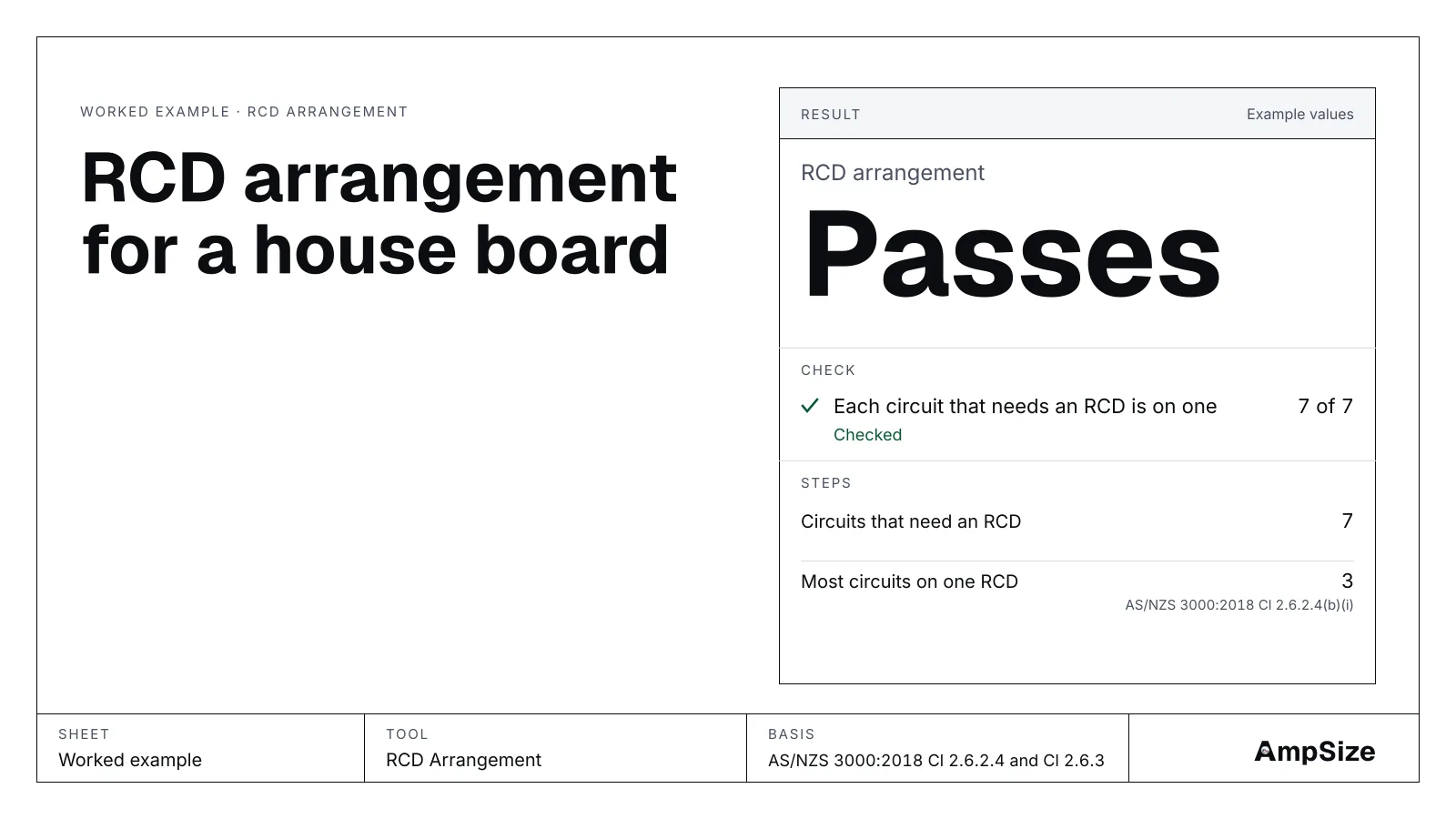
- 4 meneti te pānuiRCD arrangement for a house boardCheck a New Zealand house board of eight circuits on two RCDs. See what fails with a fourth circuit on one RCD or both lights on one, and the AU change.
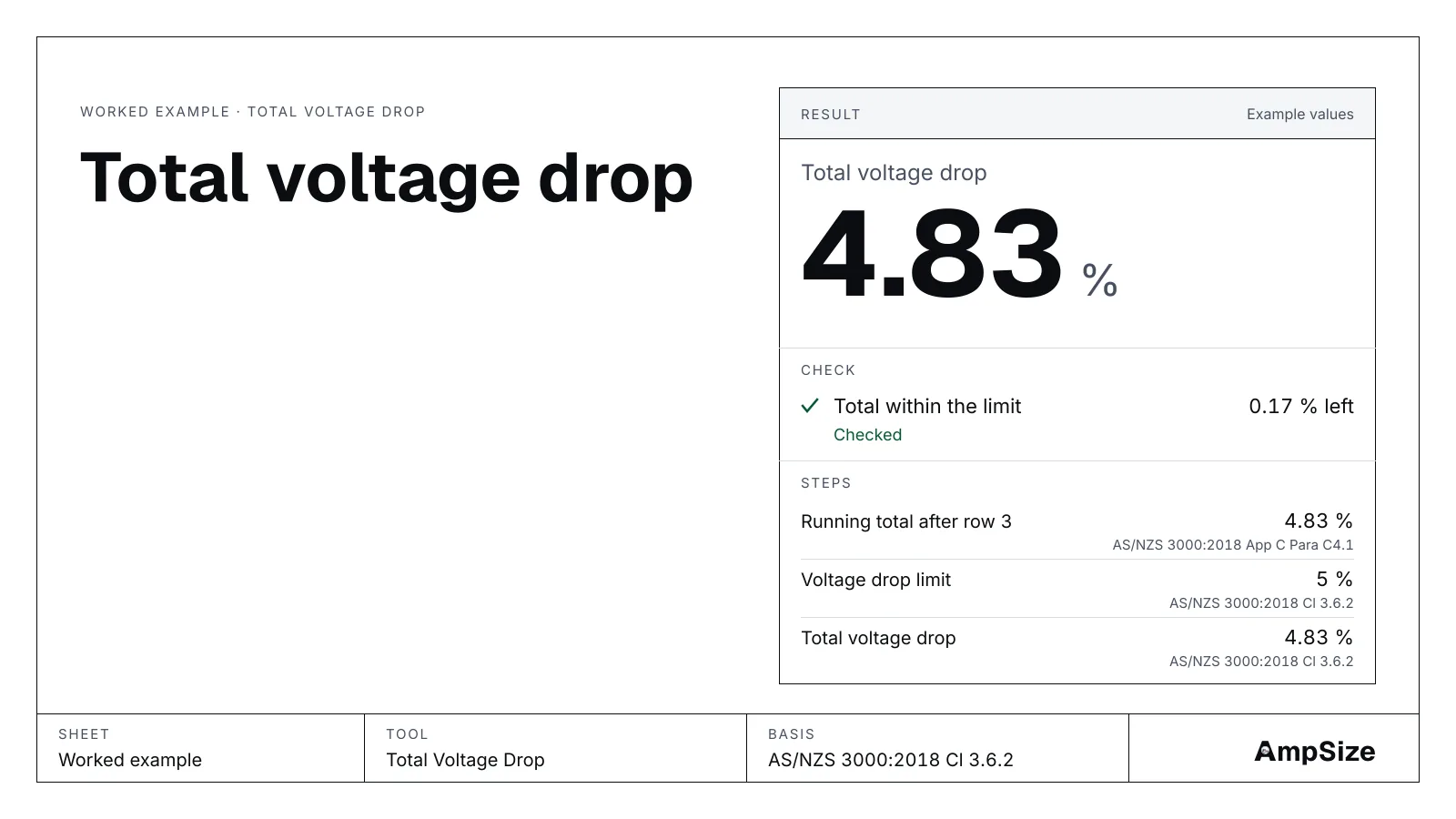
- 4 meneti te pānuiTotal voltage drop: mains, submain and finalAdd the voltage drop of the consumer mains, a shed submain and a final subcircuit against the 5 % limit, and fix a long submain before the shed circuits fail.
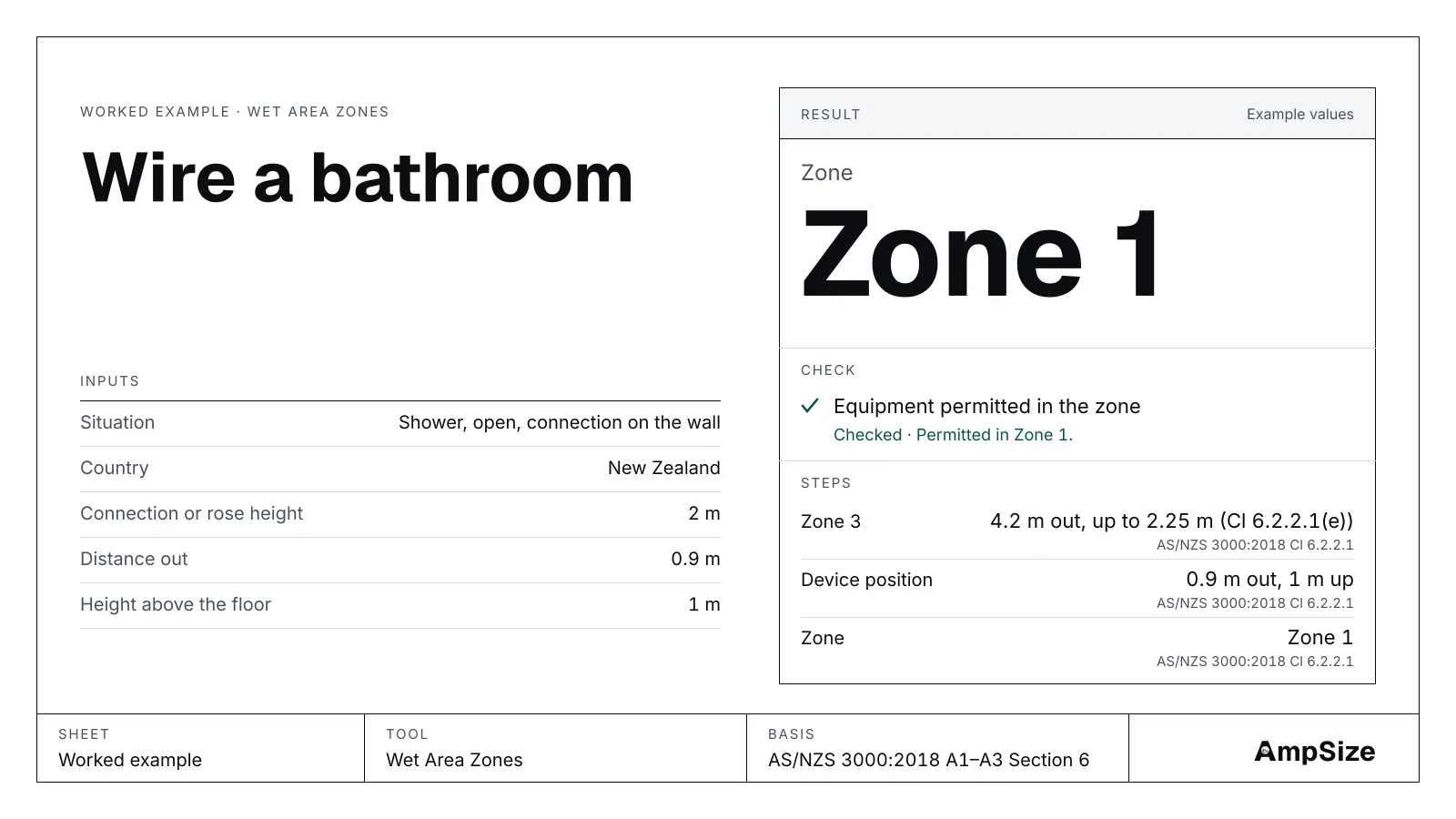
- 5 meneti te pānuiWire a bathroom: zones, IP ratings and the RCDA New Zealand bathroom with a 1.6 m bath and an open shower, worked through the AS/NZS 3000 Section 6 zones, the IP each item needs, the RCD and bonding.
- 3 meneti te pānuiOff-grid battery bank autonomy at 48 VA bach load list of 7600 Wh per day at 48 V needs 703.7 Ah of battery for two days of autonomy at 0.5 depth of discharge, worked step by step.
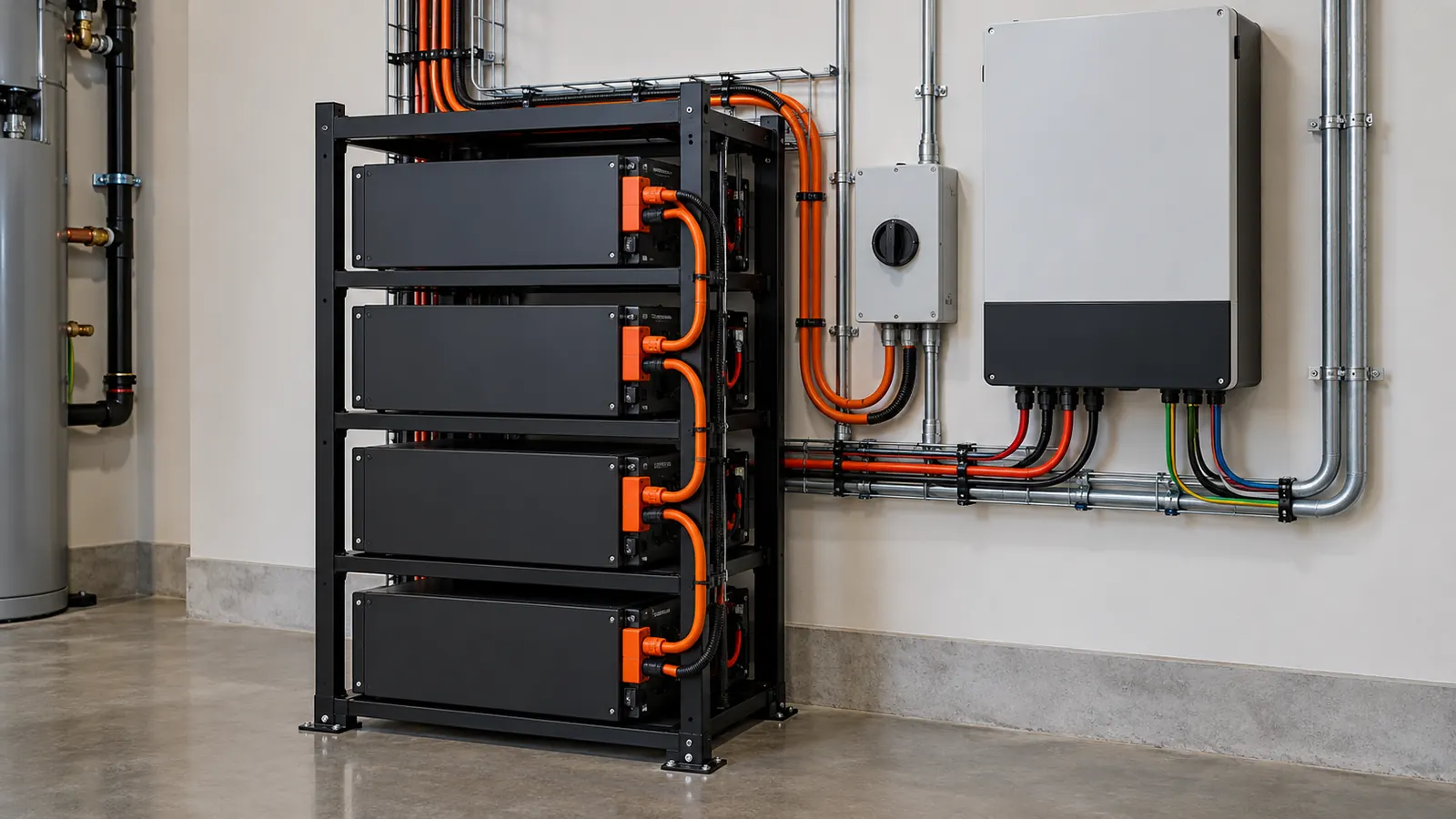
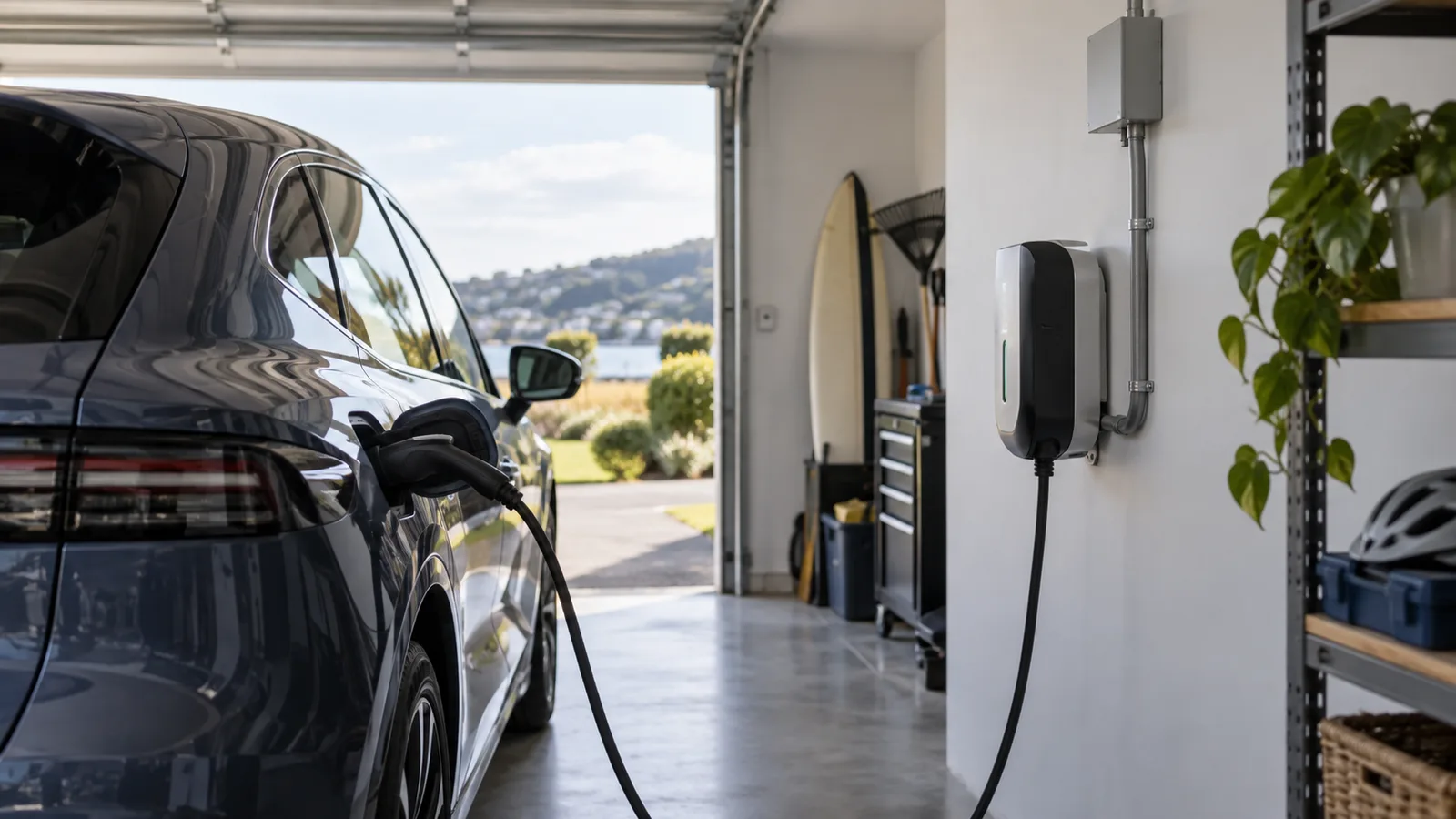
- 3 meneti te pānuiEV charger cable size for a 7 kW 32 A circuitA 7 kW EV charger on a 32 A dedicated circuit over 30 m needs 6 mm², with 38 A derated capacity, 2.85 percent voltage drop and 0.73 Ω loop impedance.
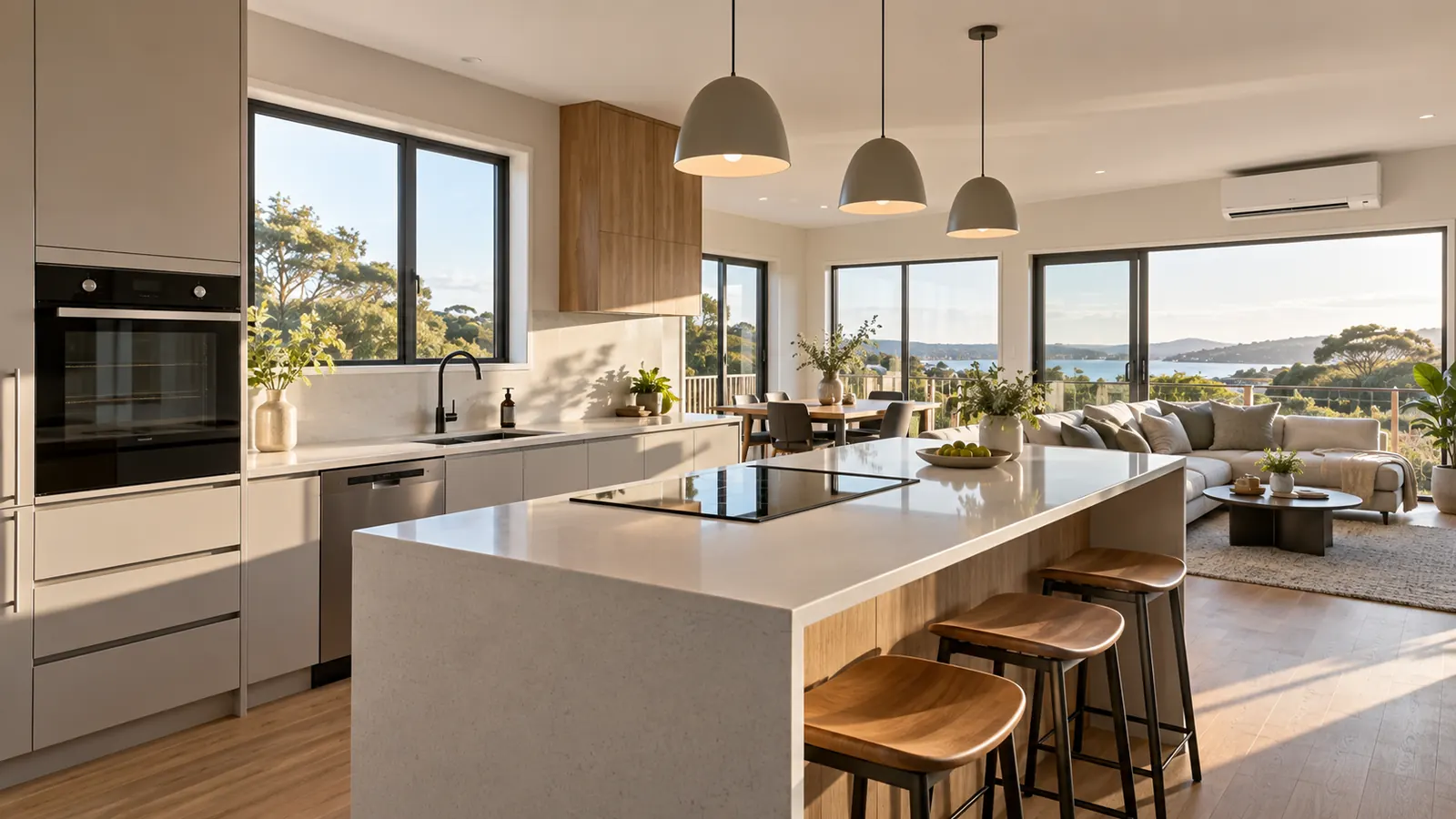
- 4 meneti te pānuiDomestic maximum demand with Table C1Assess the maximum demand of a New Zealand house from Table C1, group by group, with a worked example that lands on 52.61 A on a single-phase supply.
Ngā tātaitai e whakamahia ana e ēnei aratohu
- Tātaitai heke voltageTātaitia te heke voltage i tētahi ara taura, ā, tirohia te rohe.
- Ohm's Law me te powerKo ngā mea e rua o V, I, R me P ka whakahoki i ētahi atu e rua.
- Tahua rerenga tūturu RCDHe pēhea te rerenga tūturu ka taea e tētahi RCD te kawe.
- Rahi generator mai i tētahi Rārangi UtaWhakaritea te rahi o tētahi generator mai i tētahi rārangi uta me te tīmatanga mōtā.
- Tātaitai Maximum DemandTātaungia te maximum demand mō ngā uta kāinga, uta kāore kāinga rānei.
- Tūtohi ara iahiko papa hikoHangahia he tūtohi ara iahiko papa me ngā tohu e hiahiatia ana.
- Tātaitai rahi tauraKimihia te rahi taura iti rawa e pass ana i ia arotake.
- Tūtohi me te whakamārama IP ratingWetekina tētahi waehere IP, ā, kimihia te iti rawa mō tētahi wāhi.
- Aratohu tae waea hikoKimihia ngā tae waea mō ngā waea whakatū me ngā taura, tawhito me te hou.
- Tātaitai Te Roa Nui Rawa o te Ara IahikoTe ara roa rawa e whakaaetia ana e te heke voltage me te fault loop.
- Arotake ara iahiko o nāianeiTirohia tētahi ara iahiko kua whakatūria: te taura, te taputapu, te heke me te Zs.
- Tātaitai Te Uta o te Ara IahikoTatau ngā pointi e taea ai e te final subcircuit te kawe.
- Rapu rahi kaikawe iti rawaRapua te kaikawe iti rawa e whakaaetia ana mō tētahi ara iahiko.
- Kaitirotiro wāhi pākahikoTirohia ngā wāhi ka taea te whakanoho i tētahi pākahiko kāinga i raro i AS/NZS 5139.
- Arotake wāhi power pointNgā power point tata ki te kaupoi kai, te ipu gas, te kōrere, te tōrino rānei.
- Arotake downlight clearanceIC, CA90, Non‑IC rānei: ka pā te insulation ki te rama?
- Whakawhenua whare o wahoWhakawhenuatia he whare iti: he whenua me te submain, he MEN motuhake rānei.
- Tātaitai pākahiko solarWhakaritea te rahi o tētahi pākahiko kāinga mō te uta ahiahi solar.
- Arotake whakaritenga RCDTirohia ngā ara iahiko ia RCD me te wehenga rama.
- Tātaitai heke voltage katoaTāpirihia te heke o ngā mains, submain me te final ki te 5 %.
- Arotake Wet Area ZonesKimihia te rohe Section 6, te IP me te RCD tata ki te wai.
- Tātaitai battery bankTātaitia te kaha battery bank me te autonomy mō tētahi uta.