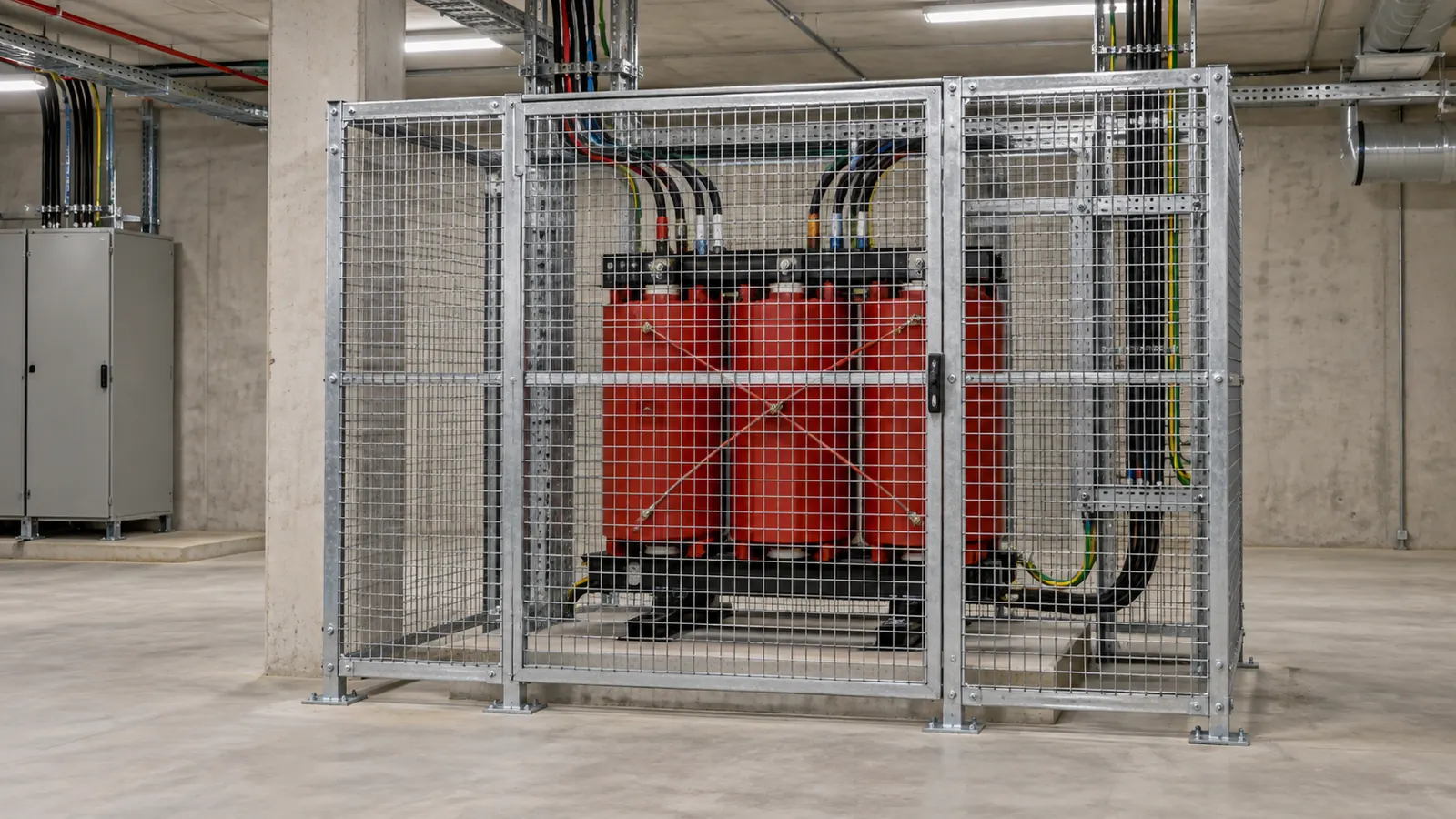
A commercial building gets a dedicated 750 kVA kiosk transformer. The main switchboard specification needs two numbers from it: a current rating and a fault rating. This page produces both.
The inputs
- Rating: 750 kVA
- Phases: 3
- Primary voltage: 11000 V
- Secondary voltage: 400 V
- Impedance: 5 %
The impedance percent comes off the transformer nameplate or the network operator data sheet. A 5 % figure is common for a distribution unit of this size. It is the single input that sets the fault current.
The clause
AS/NZS 3000:2018 Cl 2.5.4.1 covers the fault current rating of equipment and conductors. Every device on the main switchboard has to withstand the prospective fault current at that point.
The current conversions cite no table. Divide the apparent power by the voltage. Then divide it by the square root of three. That gives the line current on each winding.
The steps
The tool divides 750 kVA by the primary voltage and by the square root of three. It repeats that on the secondary side. It then divides the secondary full load current by the per unit impedance of 0.05.
- Primary full load current: 39.36 A
- Secondary full load current: 1,082.53 A
- Secondary fault current: 21,650.64 A
The result
The secondary full load current is 1,082.53 A. The main switchboard incomer and the main switch sit above that figure. Take the next standard frame size above 1,082.53 A.
The secondary fault current is 21,650.64 A, which is 21.65 kA. The board and every device in it need a fault rating above that figure. A board rated below 21.65 kA does not qualify.
The fault current assumes an infinite upstream source. The tool says so with every result. The real figure at the board is lower. The network impedance upstream of the transformer reduces it. So does the cable between the transformer and the board. The infinite bus value is the worst case, and it is the right value for a board specification.
Impedance drives this number more than the rating does. Drop the impedance to 4 % and the fault current rises by a quarter. Raise it to 6 % and it falls. Take the figure from the nameplate of the chosen unit, not from a typical value.
Two tools continue from here. The fault rating tool checks whether the incoming cable withstands 21.65 kA for the clearing time of the protection. The arc flash tool takes the same fault current and the upstream clearing time. It returns the label energy.
A note on the primary side. 39.36 A at 11 kV looks small next to the secondary figure. The high voltage switchgear, the fuse and the cable all work at that current. Apparent power is the same on both sides, so the current follows the voltage ratio.
The secondary full load current also sets the busbar rating inside the board. A busbar has a continuous rating and a short time withstand rating. The first comes from 1,082.53 A. The second comes from 21.65 kA held for the rated short time of the board.
This page is a design aid. Verify every value against the current edition of the standard.
See also: 1000 kVA transformer amps at 11 kV, Transformer secondary fault current for 500 kVA and Short-circuit withstand and the k factor.