Foundation level
Ngā whakaaro e hiahiatia ana e te kaipānui i mua i te tātaitanga tuatahi: iahiko, heke voltage me te pūnaha MEN.
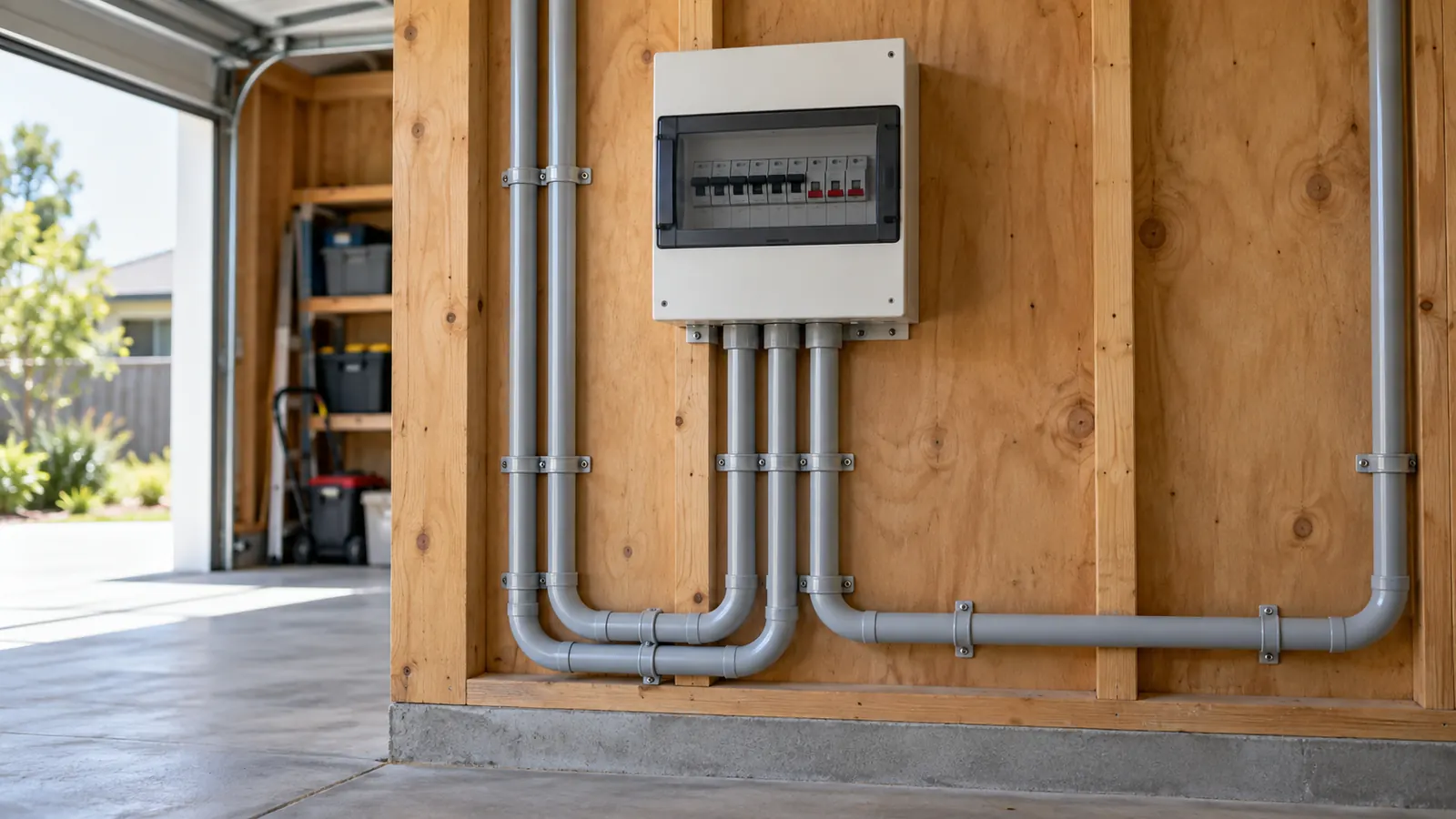
- 4 meneti te pānuiConduit fill and installation methodsHow the conduit space factor works, what the fill percent means against the 40 percent limit, and how the install method names on site map to the 3008 columns.
- 5 meneti te pānuiCurrent-carrying capacity and deratingWhy one cable size has many ratings. Install method, ambient, grouping, soil and depth, with a 25 A circuit that needs 10 mm² once the factors apply.
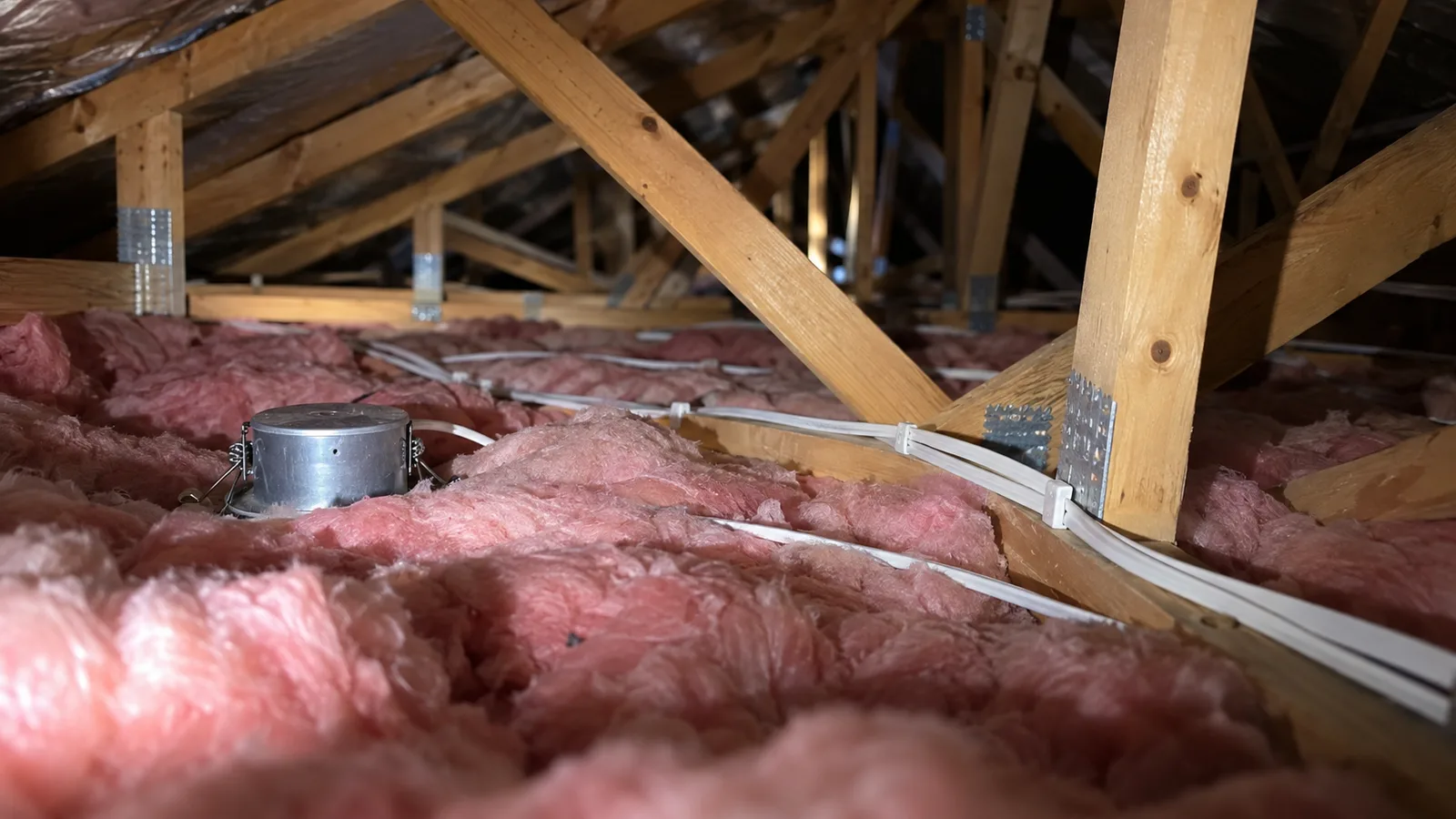
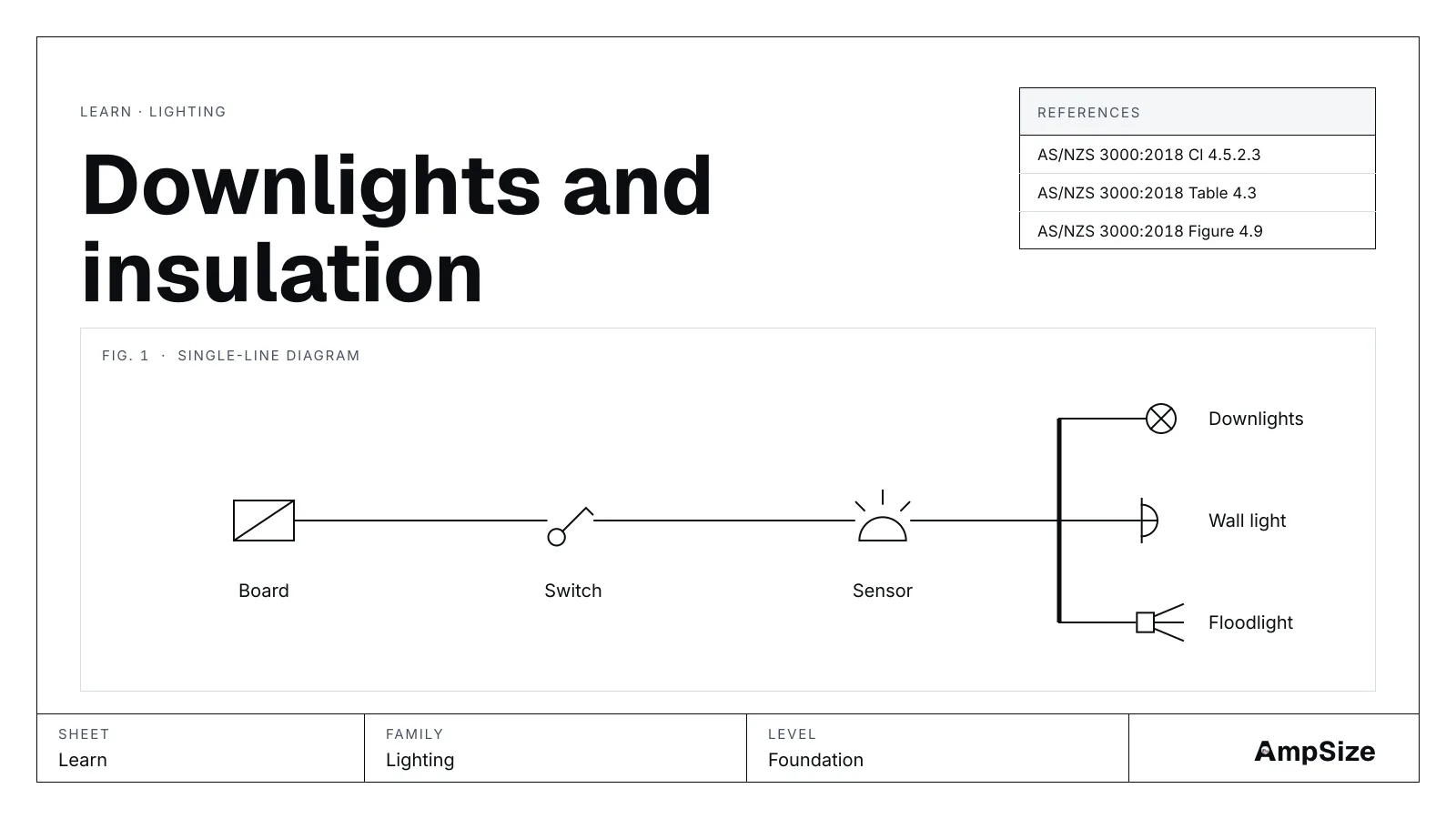
- 3 meneti te pānuiDownlights and insulation: IC-4, CA90 and Non‑ICThe six recessed luminaire classes, what insulation may do around each, which a NZ or AU home may have, the default clearances, and the roof space warning sign.
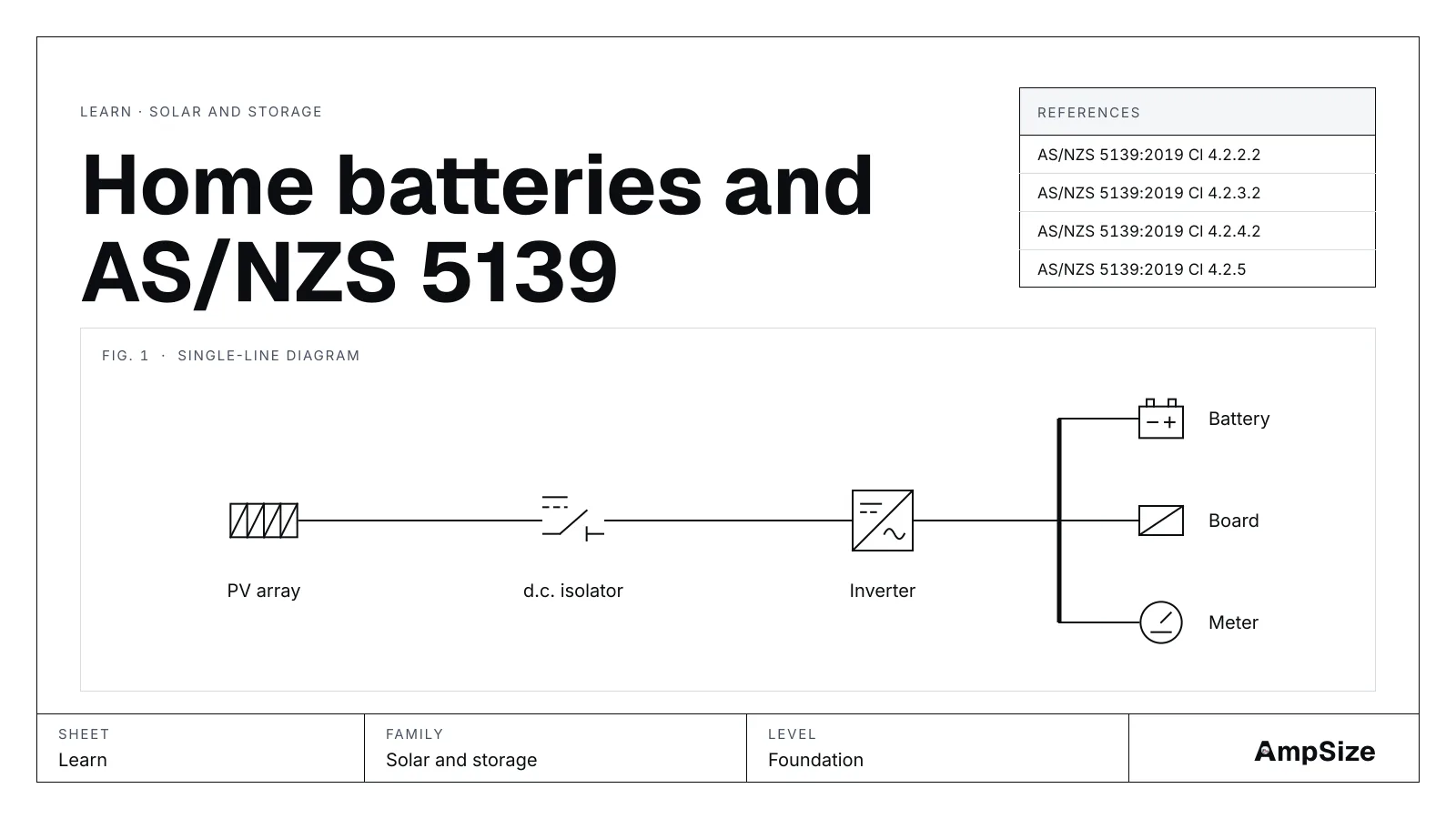
- 3 meneti te pānuiHome batteries and AS/NZS 5139How a home solar battery is sized in kWh, what usable, nominal, depth of discharge and round-trip efficiency mean, and where AS/NZS 5139 lets one go.
- 4 meneti te pānuiHome battery location and clearancesWhere AS/NZS 5139 lets an all-in-one home battery go. Restricted places, 600 and 900 mm zones, the habitable room barrier, ceiling, IP codes and working space.
- 3 meneti te pānuiHow many circuits can go on one RCDThe AS/NZS 3000 Cl 2.6.2.4 arrangement rules in plain words, which circuits need a 30 mA RCD in NZ and AU homes, how RCBOs count, and why the rules exist.
- 3 meneti te pānuiIP ratings explained: each digit and letterWhat the two numerals of an IP code mean, what X, the letters A to D and H, M, S, W add, why IP67 is not better than IP65 for jets, and where 3000 sets a code.
- 4 meneti te pānuiMEN system: multiple earthed neutral explainedMEN means multiple earthed neutral. In NZ, earth and neutral join at the main switchboard. A fault on a 32 A C curve circuit then draws 343.8 A and clears.
- 6 meneti te pānuiOhm's law and power on d.c. and a.c.Ohm's law and the power formulas on d.c., single-phase and three-phase a.c.: how power factor and impedance change them, and how any two values give the rest.
- 3 meneti te pānuiPower points near a cooktop, gas bottle and sinkThe AS/NZS 3000 zones that keep power points, switches and lights away from cooktops, gas cylinders, gas vents and regulators, and where sinks are checked.
- 2 meneti te pānuiSwitchboard labels and circuit chartsWhat AS/NZS 3000 asks a switchboard to carry: a chart tying each device to what it supplies, MAIN SWITCH, MAIN SWITCHBOARD, solar labels and marked neutrals.
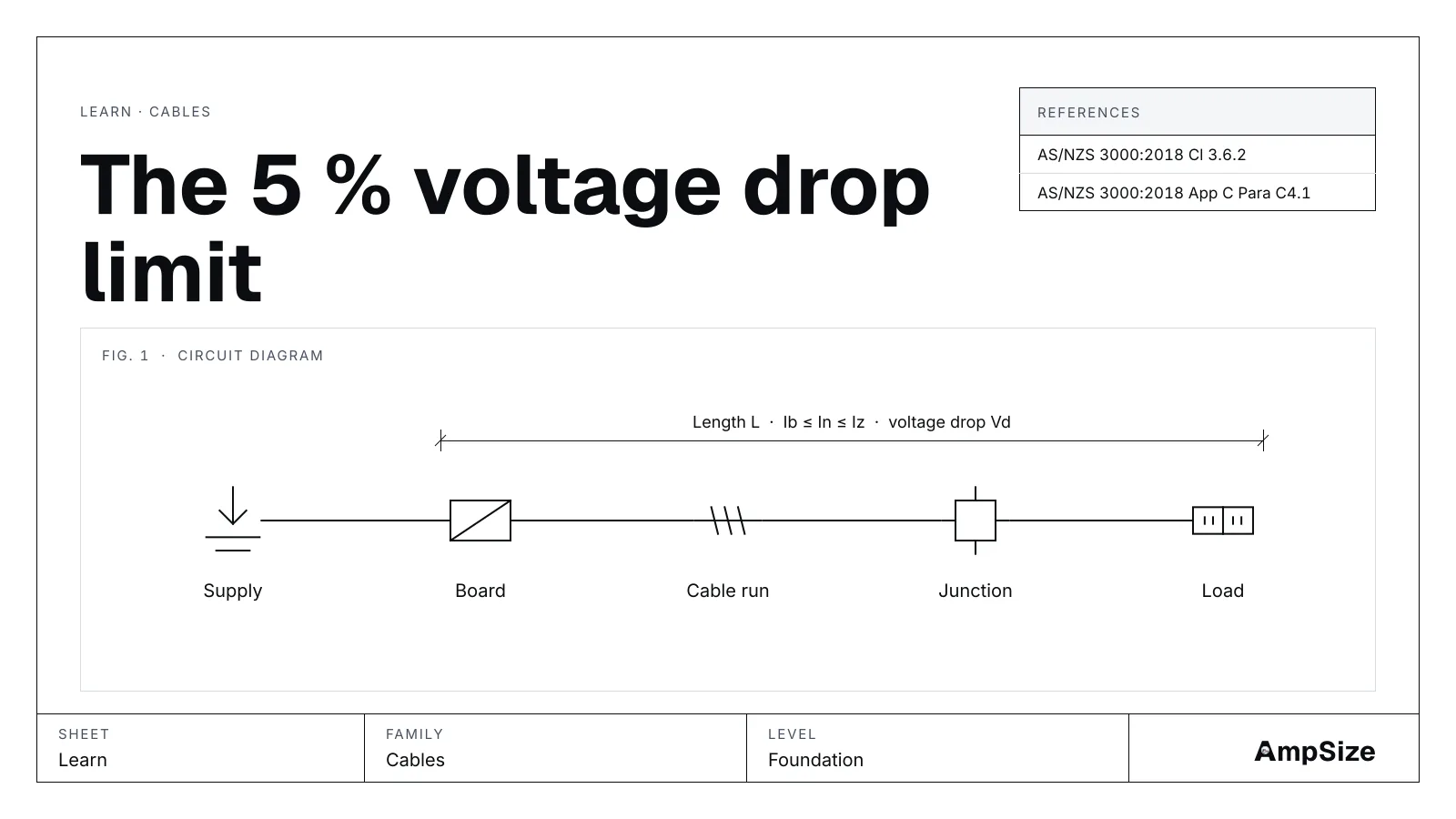
- 3 meneti te pānuiThe 5 % voltage drop limit from supply to loadWhat AS/NZS 3000 Cl 3.6.2 limits, how the drop of the mains, submains and final subcircuits adds by percent, the four exceptions and why any split is yours.
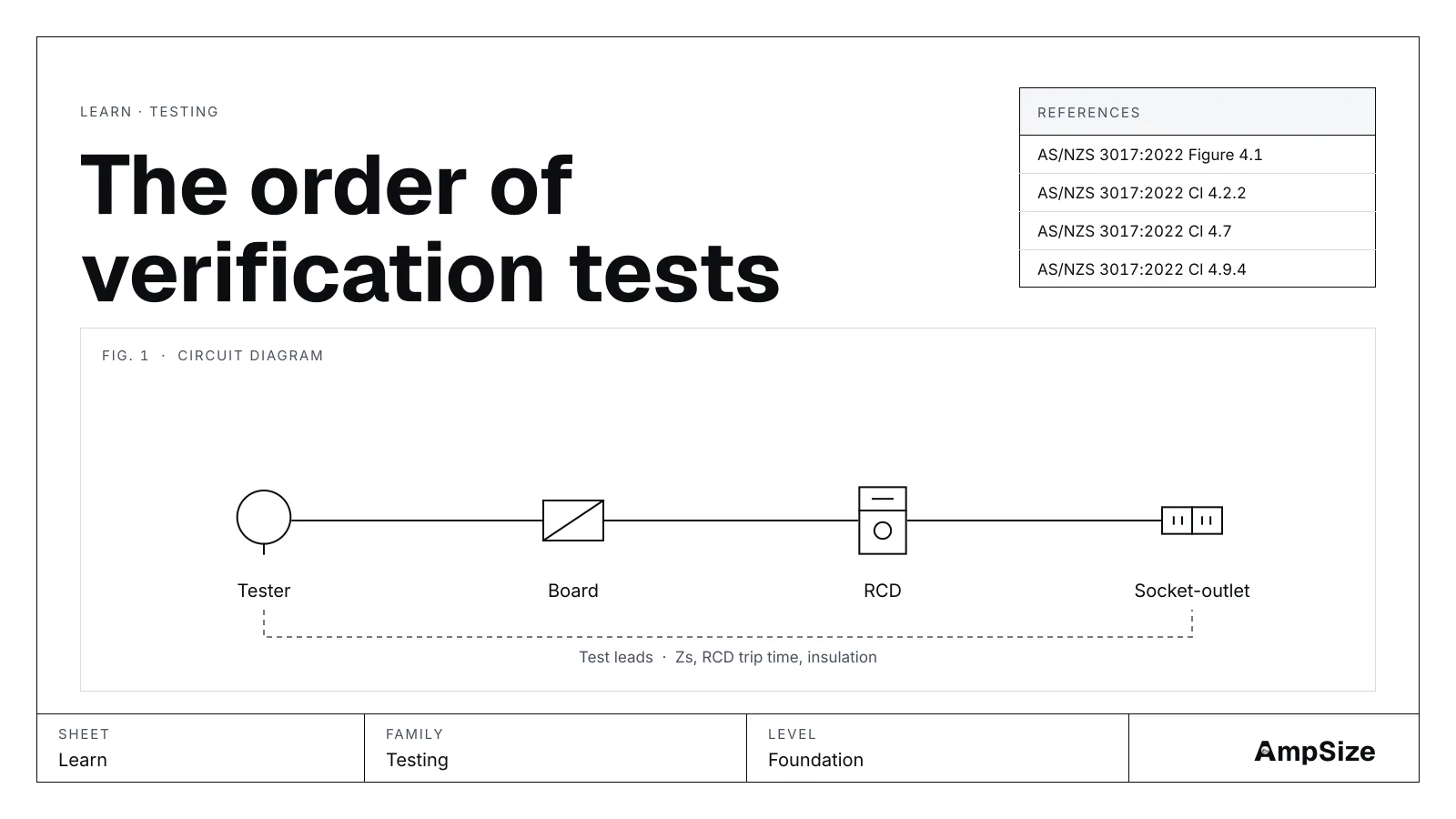
- 2 meneti te pānuiThe order of verification testsWhy AS/NZS 3017 tests earth continuity before insulation and loop impedance before RCDs, which circuits take which test, and where each limit comes from.
- 4 meneti te pānuiVoltage drop basicsOhm's law on a cable, the mV/A·m shortcut, the percent limit and the maximum length, worked on a 25 A run over 35 m of 4 mm² copper.
- 4 meneti te pānuiWho may do electrical work in NZThe regulations that govern prescribed electrical work and its certification in New Zealand, named by number, with the paperwork abbreviations explained.
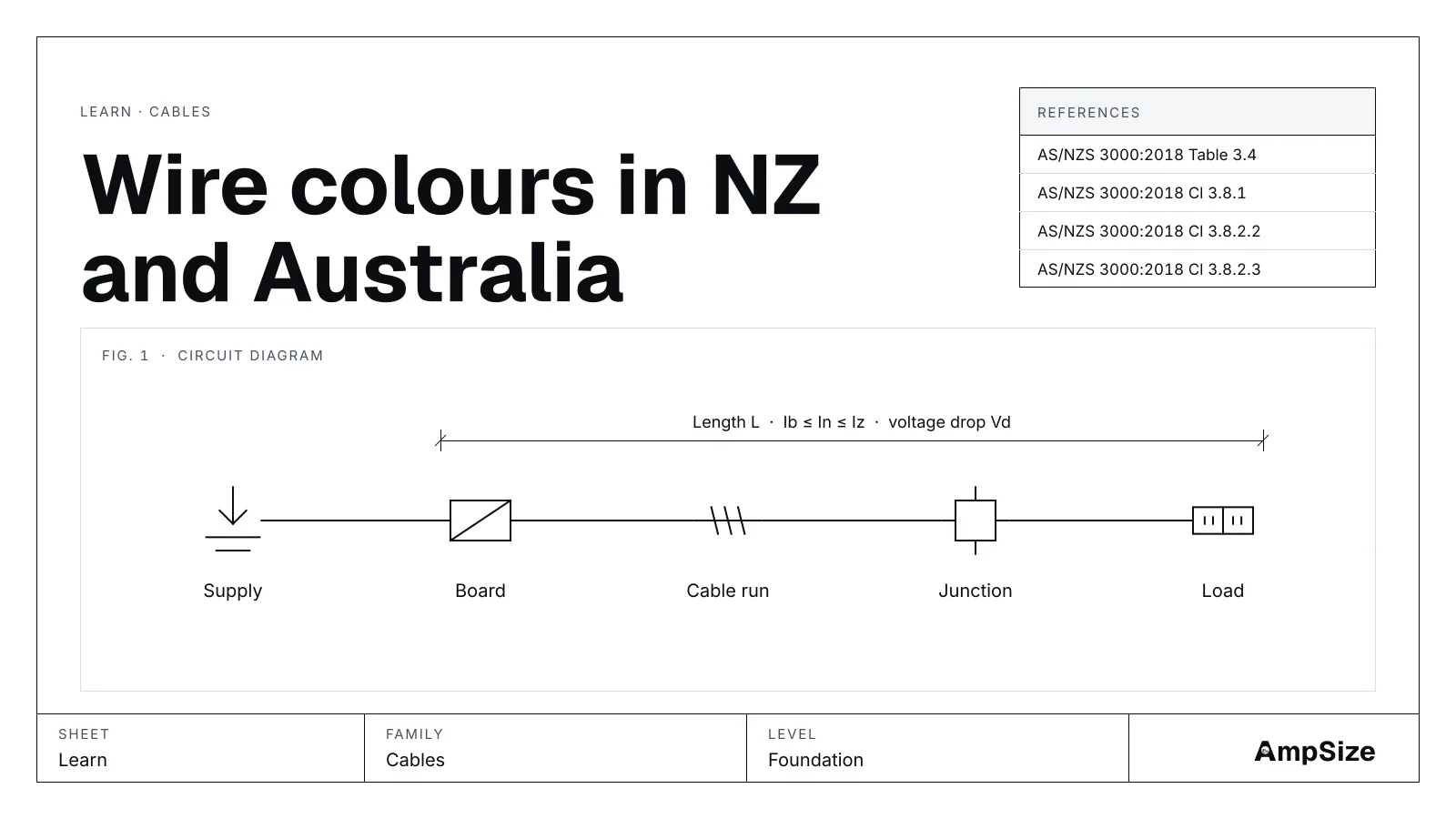
- 2 meneti te pānuiWire colours in NZ and Australia, old and newThe active, neutral and earth colours of AS/NZS 3000 Table 3.4, the NZ black neutral, older yellow and green conductors, and flexible cord colours.
Ngā tātaitai e whakamahia ana e ēnei aratohu
- Tātaitai Whakakī ConduitTirohia mēnā ka uru tētahi paihere taura ki tētahi conduit.
- Tātaitai rahi tauraKimihia te rahi taura iti rawa e pass ana i ia arotake.
- Arotake downlight clearanceIC, CA90, Non‑IC rānei: ka pā te insulation ki te rama?
- Tātaitai correction factorPānuitia ia tauwehe whakatika me te reiti e hiahiatia ana e tētahi taura.
- Tātaitai pākahiko solarWhakaritea te rahi o tētahi pākahiko kāinga mō te uta ahiahi solar.
- Tātaitai battery bankTātaitia te kaha battery bank me te autonomy mō tētahi uta.
- Tātaitai rahi taura DCWhakaritea te rahi o tētahi taura d.c. tae atu ki te 1500 V mō te iahiko me te heke voltage.
- Kaitirotiro wāhi pākahikoTirohia ngā wāhi ka taea te whakanoho i tētahi pākahiko kāinga i raro i AS/NZS 5139.
- Arotake whakaritenga RCDTirohia ngā ara iahiko ia RCD me te wehenga rama.
- Tātaitai kōwhiri RCDTirohia mēnā e hiahiatia ana he RCD, ā, whakamātauria te wā tuku.
- Tūtohi me te whakamārama IP ratingWetekina tētahi waehere IP, ā, kimihia te iti rawa mō tētahi wāhi.
- Arotake Wet Area ZonesKimihia te rohe Section 6, te IP me te RCD tata ki te wai.
- Tātaitai earth fault loop impedanceTirohia te earth fault loop impedance ki te Zs nui rawa.
- Tātaitai fault rating tauraTirohia mēnā ka ū tētahi kaikawe ki te iahiko hapa.
- Ohm's Law me te powerKo ngā mea e rua o V, I, R me P ka whakahoki i ētahi atu e rua.
- Tātaitai Power Wāhanga ToruHurihia i waenga i te power, te iahiko, te voltage me te power factor.
- Tātaitai Iahiko Uta KatoaTātaitia te iahiko uta katoa mai i te mana, te voltage me te wāhanga.
- Arotake wāhi power pointNgā power point tata ki te kaupoi kai, te ipu gas, te kōrere, te tōrino rānei.
- Tūtohi ara iahiko papa hikoHangahia he tūtohi ara iahiko papa me ngā tohu e hiahiatia ana.
- Arotake form o te papa hikoTirohia te wehenga, te uru me ngā clearance mō tētahi papa hiko.
- Tātaitai heke voltage katoaTāpirihia te heke o ngā mains, submain me te final ki te 5 %.
- Tātaitai heke voltageTātaitia te heke voltage i tētahi ara taura, ā, tirohia te rohe.
- Rārangi whakamātautau mō tētahi papa hikoTā i tētahi pepa whakamātautau papa me te rohe mō ia whakamātautau.
- Arotake Ngā Hua WhakamātautauTirohia ngā hua whakamātautau ine ki ngā rohe Section 8.
- Tātaitai Piki VoltageTātaitia te piki voltage mō te whakatipu hiko kua whakaurua, mō te PV rānei.
- Huarahi tiwhikete hikoKimihia ngā pepa mō tētahi mahi i NZ, i Ahitereiria rānei.
- Tātaitai Maximum DemandTātaungia te maximum demand mō ngā uta kāinga, uta kāore kāinga rānei.
- Aratohu tae waea hikoKimihia ngā tae waea mō ngā waea whakatū me ngā taura, tawhito me te hou.
- Ngā wā Test and TagNgā wā whakamātau anō me ngā rohe pass mō ngā taputapu kawe.