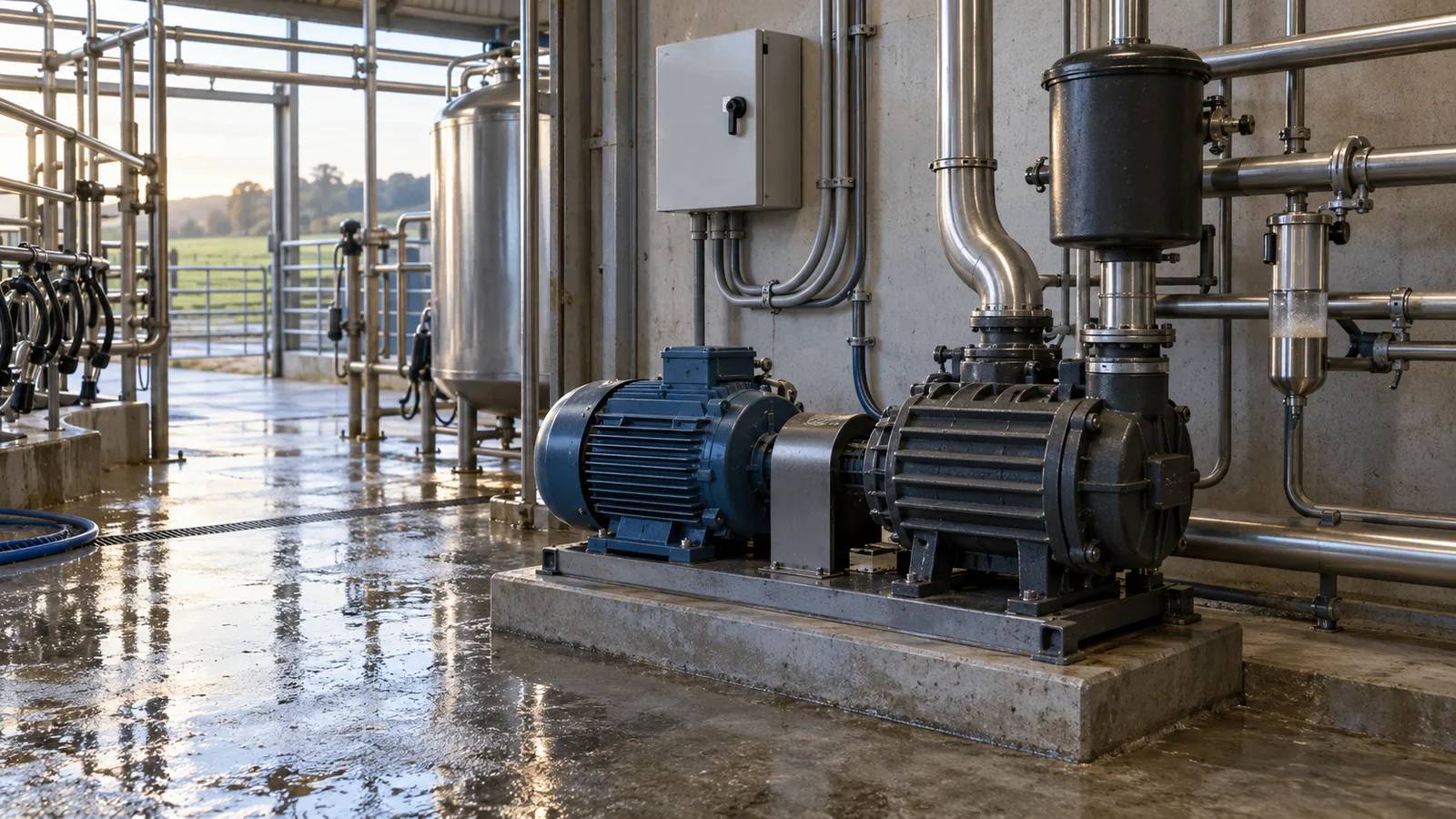
The dry season is when a shed gets its motor work done. A vacuum pump motor comes off the plinth, and a replacement goes on. The nameplate gives a shaft rating in kilowatts. The cable, the starter and the maximum demand entry all need a current instead.
The inputs
The replacement pump motor is a 15 kW four‑pole induction machine. The supply is 400 V three phase at 50 Hz. The nameplate power factor is 0.85. The nameplate efficiency is 0.91. The motor runs at 2.5 % slip.
Every one of those values comes off the plate. None of them are guesses. Two motors with the same shaft rating can draw different currents. The one with the lower efficiency draws more.
The clause
Cl 2.5.3.1 of AS/NZS 3000:2018 sets the rule for the protective device and the cable. The device rating must not exceed what the cable can carry. The design current for that chain is the motor full load current. It is not the shaft kilowatts.
Table C2 group D of AS/NZS 3000:2018 is the maximum demand entry for motor loads. It applies to a non‑domestic installation, and it also works in current.
The steps
The engine converts the shaft rating to an input power using the efficiency. It then divides by the line voltage, by root three and by the power factor.
- Full load current: 27.99 A
- Synchronous speed: 1500 rpm
- Shaft speed: 1462.5 rpm
- Full load torque: 97.95 Nm
- Starting current, direct on line: 167.94 A
The synchronous speed follows from the pole count and the frequency. Four poles at 50 Hz give 1500 rpm. The 2.5 % slip takes the shaft to 1462.5 rpm. The torque then follows from the shaft power and that speed.
The result
The design current for the pump circuit is 27.99 A. A 32 A device covers it. The cable has to carry 32 A after every derating factor on the route. In a shed that means ambient temperature and grouping in the duct.
The starting figure is 167.94 A. That is the engine assumption of six times full load current for a direct on line start. The result panel states the assumption on every run. A star-delta starter, a soft starter or a variable speed drive all change it. The starter data sheet is the source for those.
The starting current does not size the cable. It does set the voltage dip the rest of the shed sees. A plate cooler or a controller on the same board feels that dip when the pump starts.
The torque figure is 97.95 Nm at the shaft. Compare it against the pump curve before the replacement goes on. A motor that matches the old current draw can still be wrong for the load.
Take 27.99 A into the cable size tool as the design current. Use the real route length and the real ambient temperature. A shed plant room in February runs hot.
Then put the same current into the maximum demand sheet under the group D entry. A new pump motor changes the shed total, and the total decides the supply cable.
This page is a design aid. Verify every value against the current edition of the standard.
See also: Motor starting current for a 55 kW DOL start, Motor full load current: 11 kW 400 V DOL and Motor circuits and starting.