व्यावहारिक स्तर
किसी असली जॉब के पीछे के विचार: अधिकतम मांग, लूप इम्पीडेंस और केबल चयन Tables।
- 4 मिनट पढ़ने मेंAS/NZS 3008.1.1:2025: what the AU part coversWhat AS/NZS 3008.1.1:2025 covers, a.c. to 0.6/1 kV and d.c. to 1500 V at 40 °C air and 25 °C soil, how its sections run, and where the d.c. tables are.
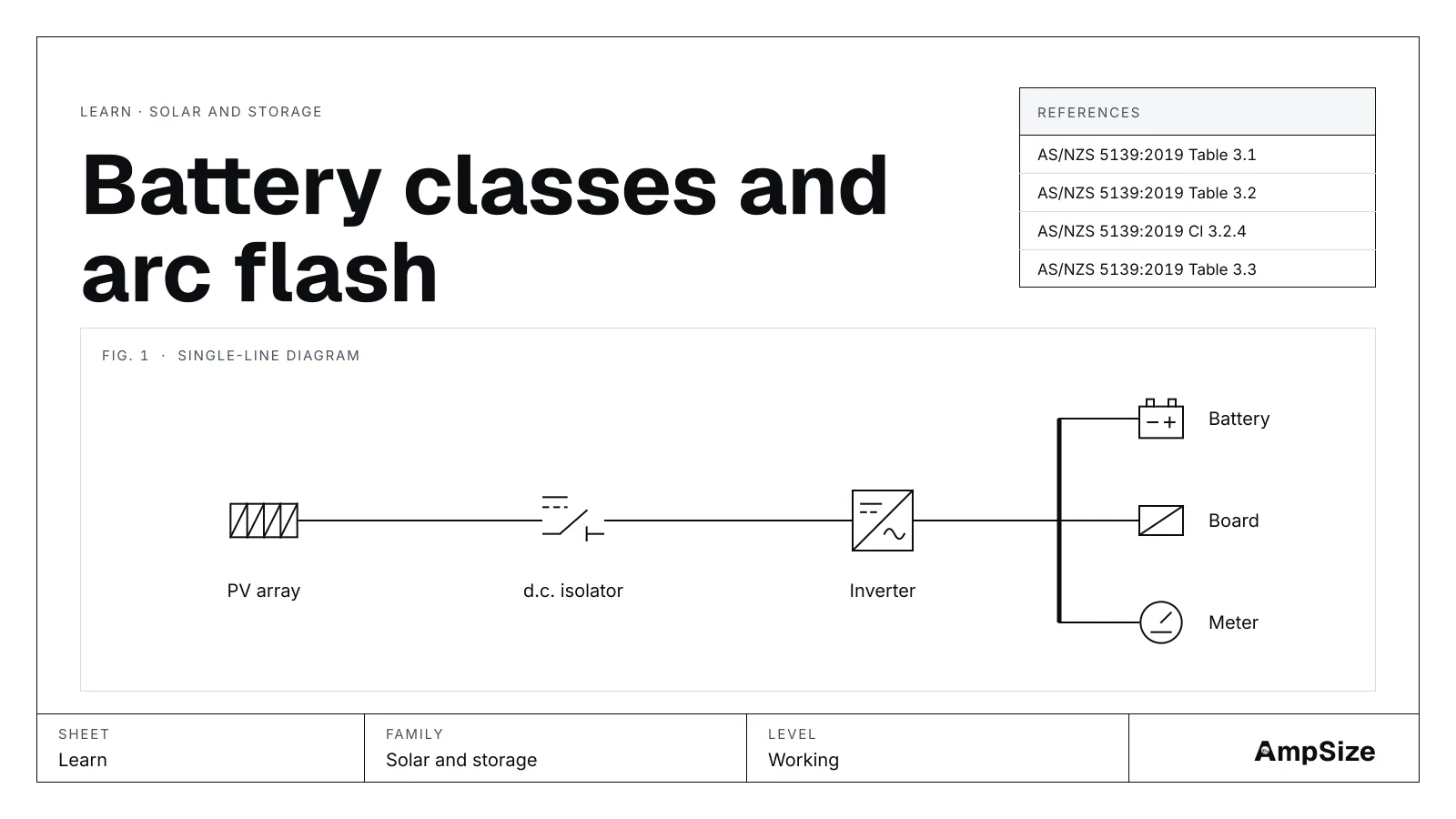
- 5 मिनट पढ़ने मेंBattery classes and arc flash in AS/NZS 5139How AS/NZS 5139 classes a battery system by hazard and decisive voltage class, works its arc flash energy, and sets the PPE, consequence and home limits.
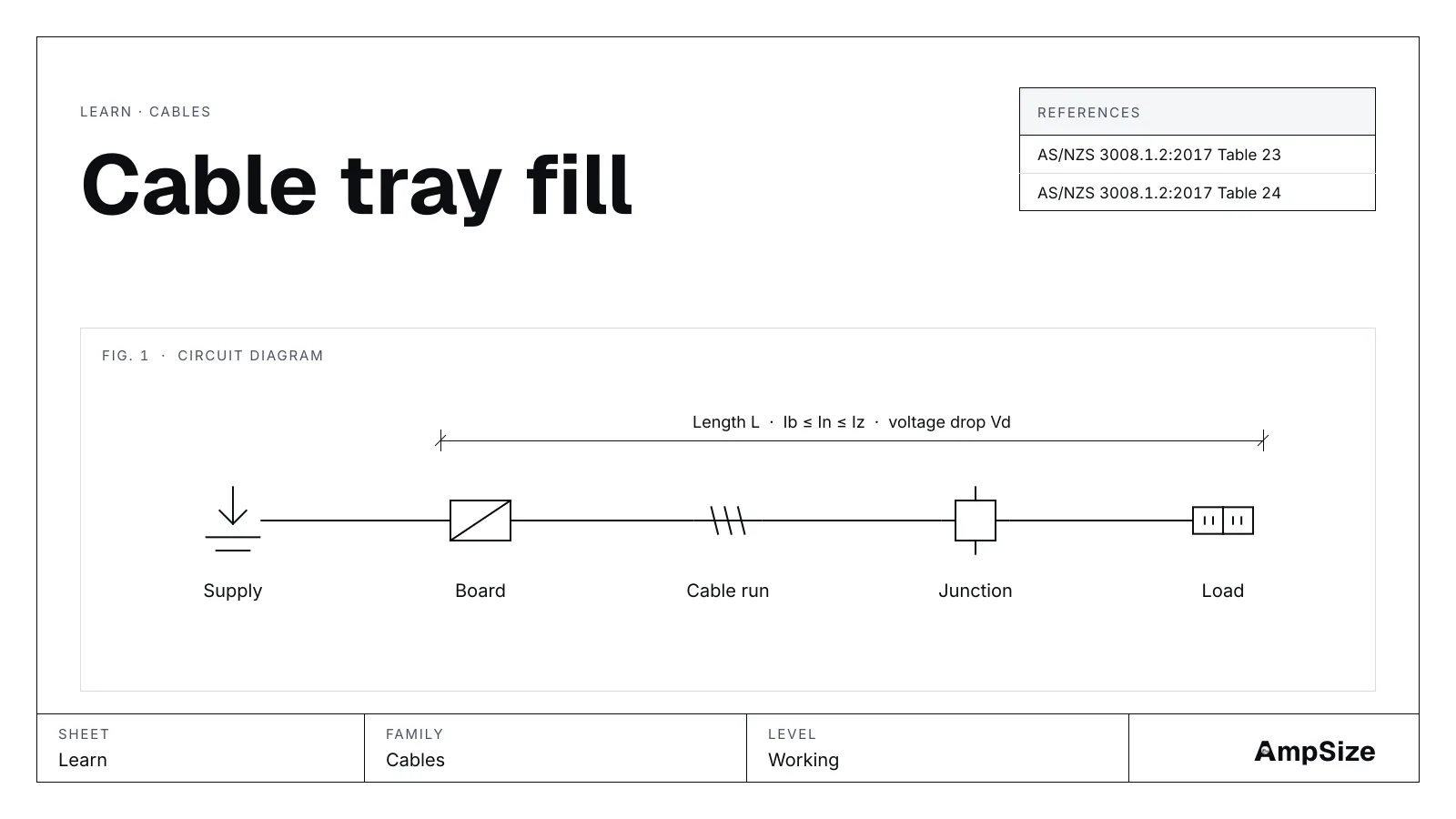
- 4 मिनट पढ़ने मेंCable tray fill: one layer, tiers and groupingHow cables lie on a tray or ladder for AS/NZS 3008.1, touching or spaced, when a run needs another tier, and why there is no fill percentage to work to.
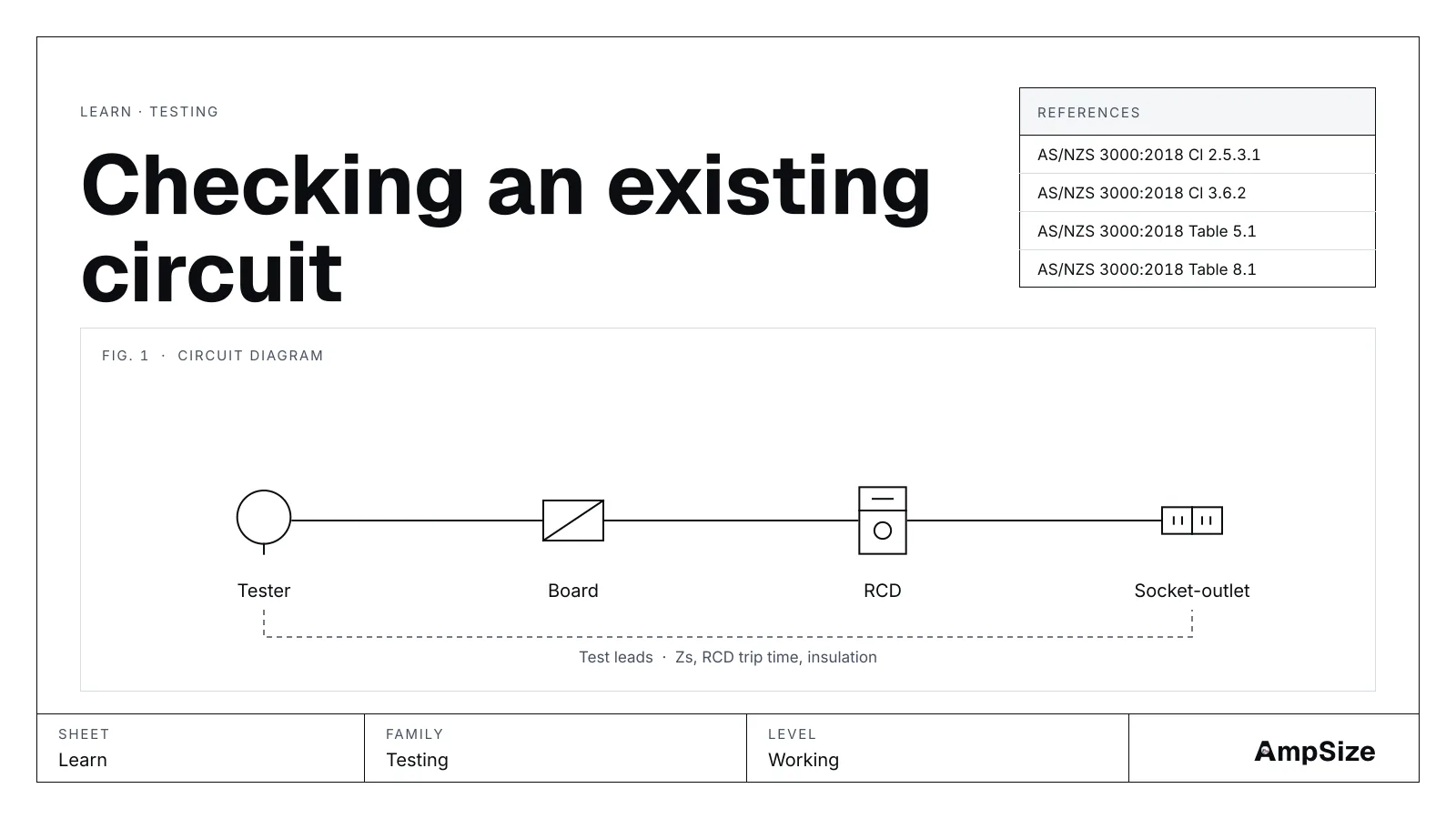
- 5 मिनट पढ़ने मेंChecking an existing circuitThe five checks AmpSize runs on an installed circuit, from Iz and voltage drop to Zs and fault withstand, and what a site test adds that a calculation cannot.
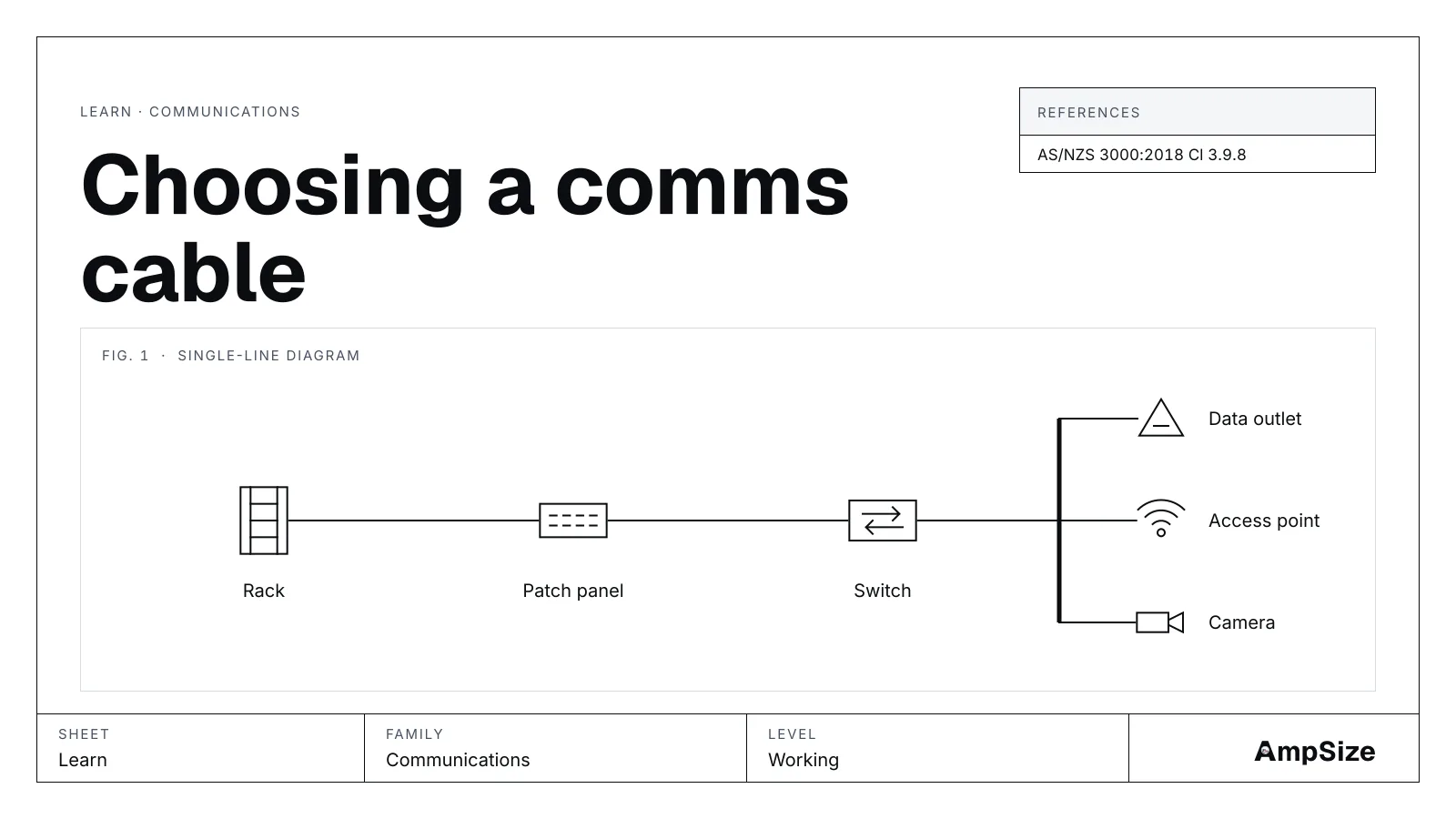
- 4 मिनट पढ़ने मेंChoosing a comms cable: length and screenCheck a comms cable run before you order it. Length limits for RS-485 and Ethernet, the 4-20 mA loop and the screen rule, with three worked runs.
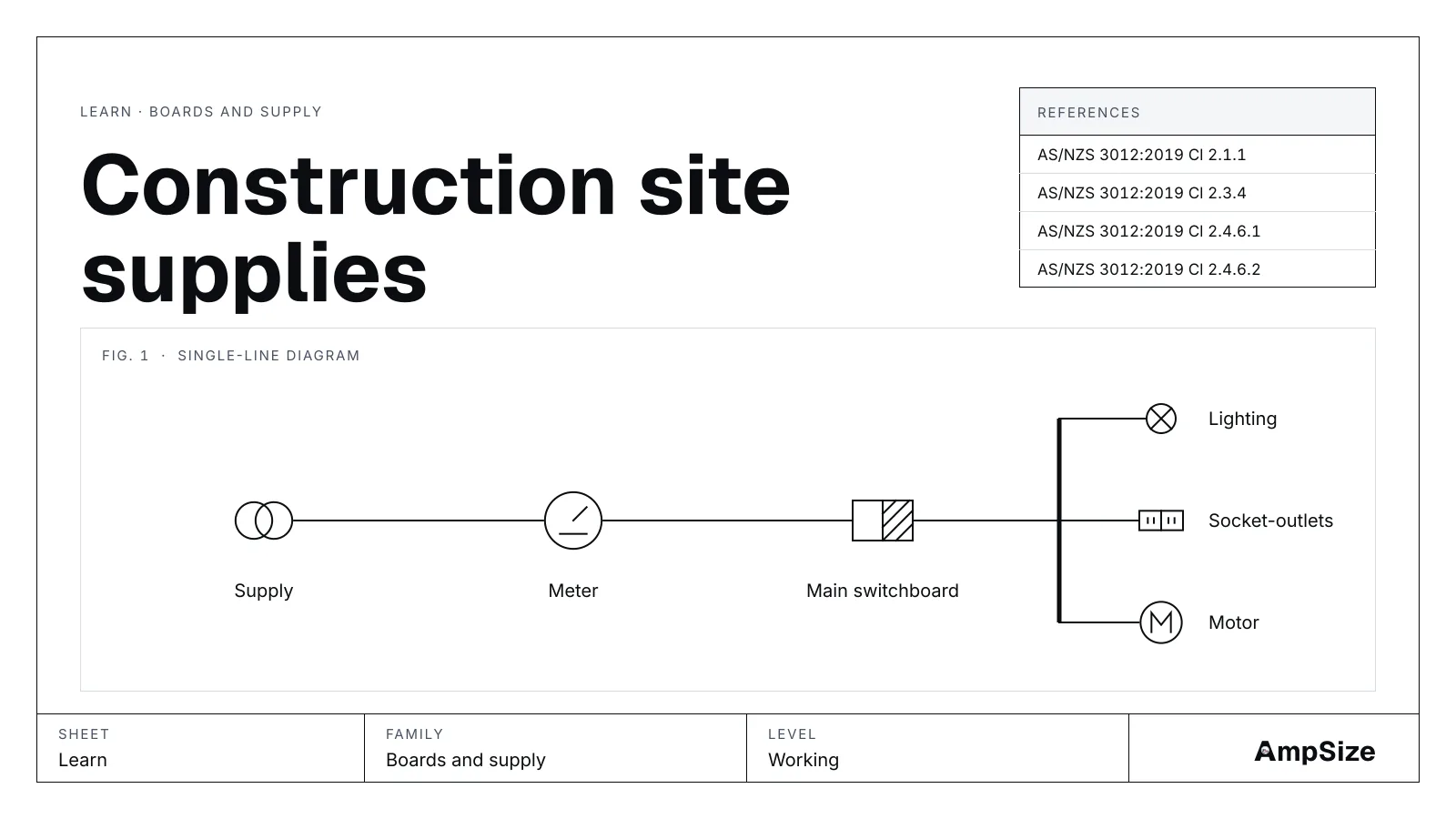
- 6 मिनट पढ़ने मेंConstruction site supplies: AS/NZS 3012What AS/NZS 3012:2019 asks of the electrical supply on a construction or demolition site, from the supply and the RCDs to cords, generators and testing.
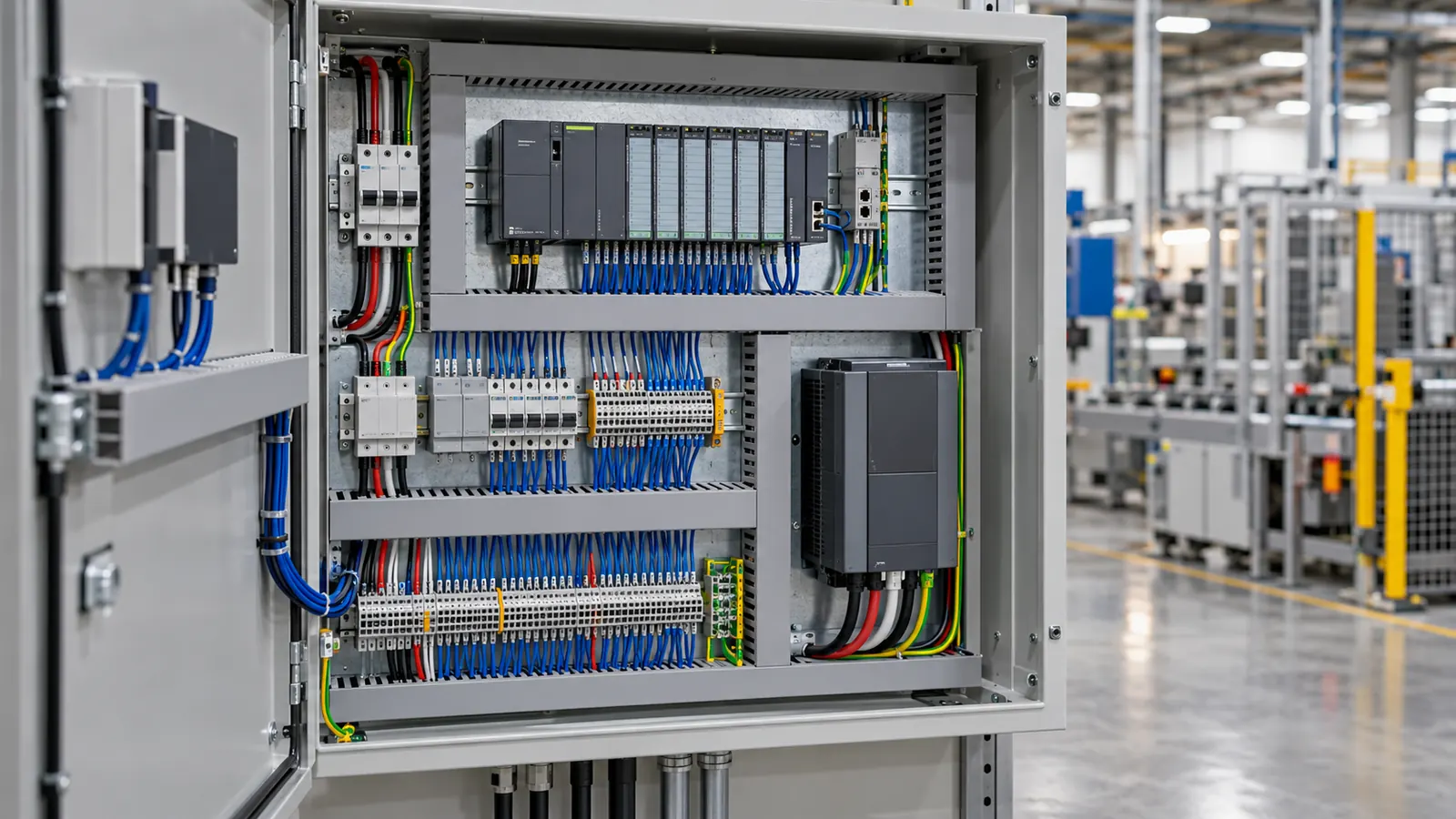
- 4 मिनट पढ़ने मेंControl panels and PLC wiringSegregation of LV and ELV in a control panel, terminal and numbering practice, panel earthing, and the 24 V DC voltage drop that long instrument loops fail on.
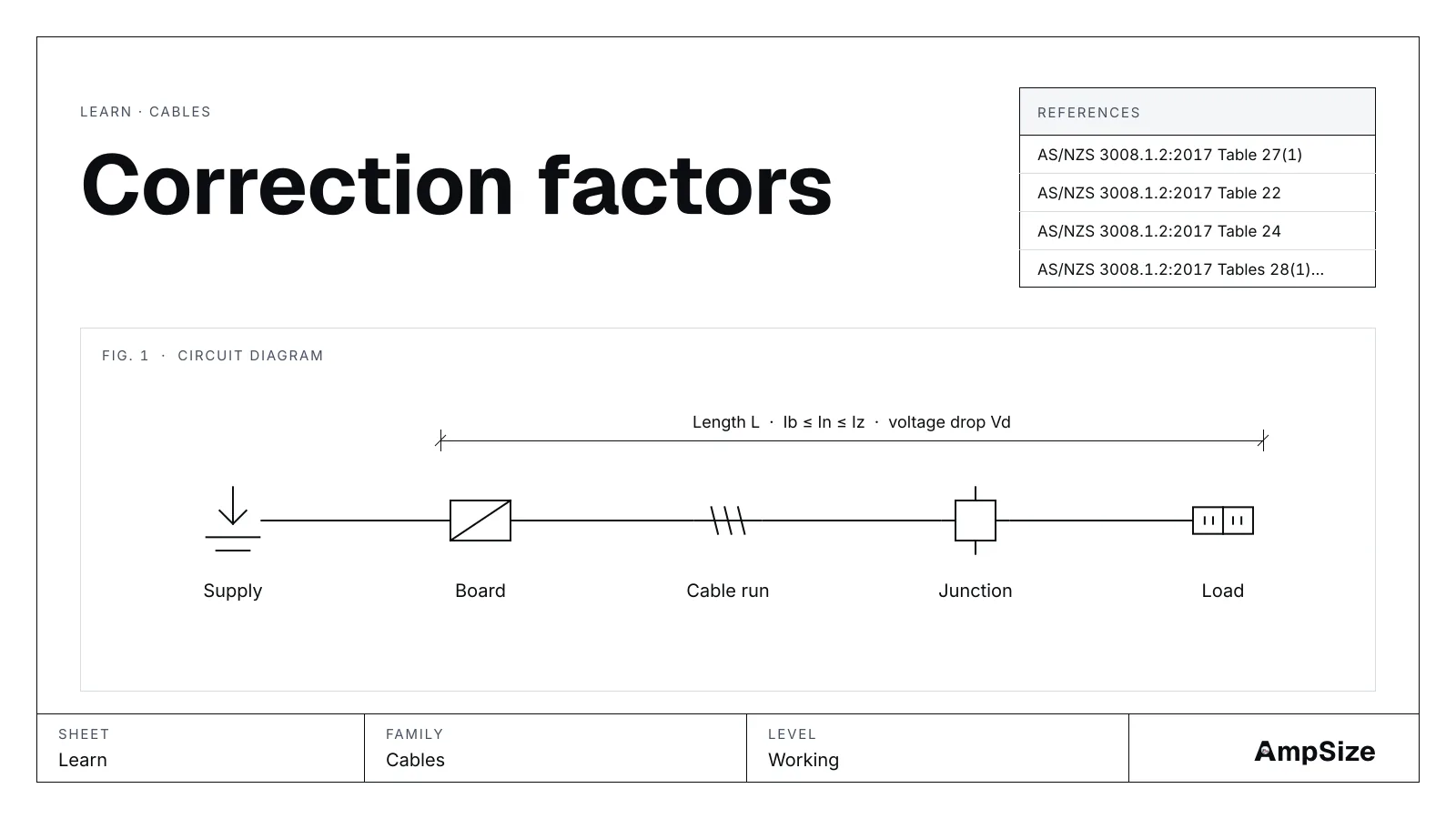
- 5 मिनट पढ़ने मेंCorrection factors in the 2017 and 2025 editionsWhat each AS/NZS 3008 correction factor does, how the factors multiply, and which values changed when AS/NZS 3008.1.1:2025 replaced the 2017 tables.
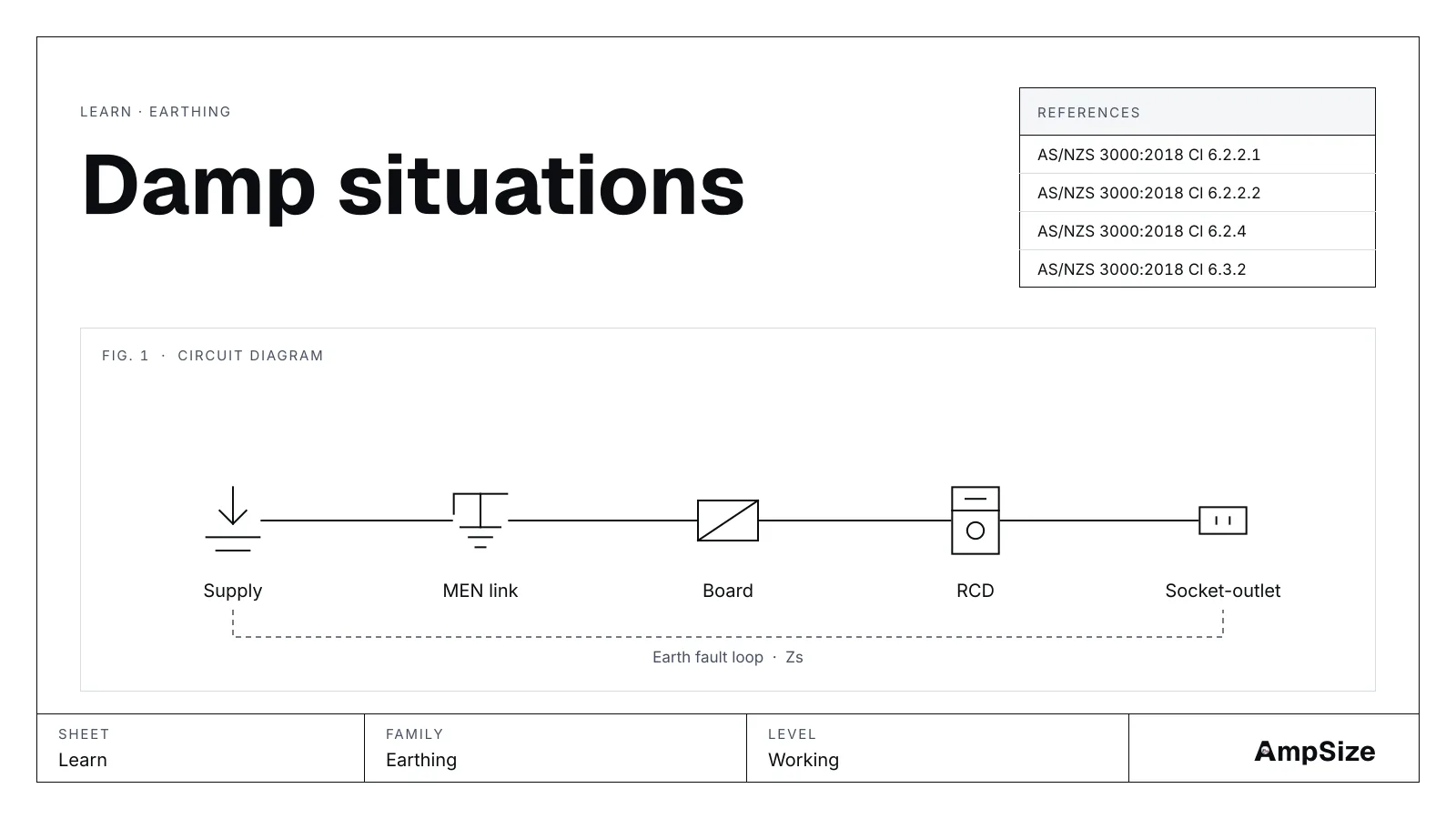
- 5 मिनट पढ़ने मेंDamp situations: the Section 6 zonesHow AS/NZS 3000 Section 6 zones the space around baths, showers, basins, spas, pools, fountains and saunas, how to read an IP code, and what A2 changed.
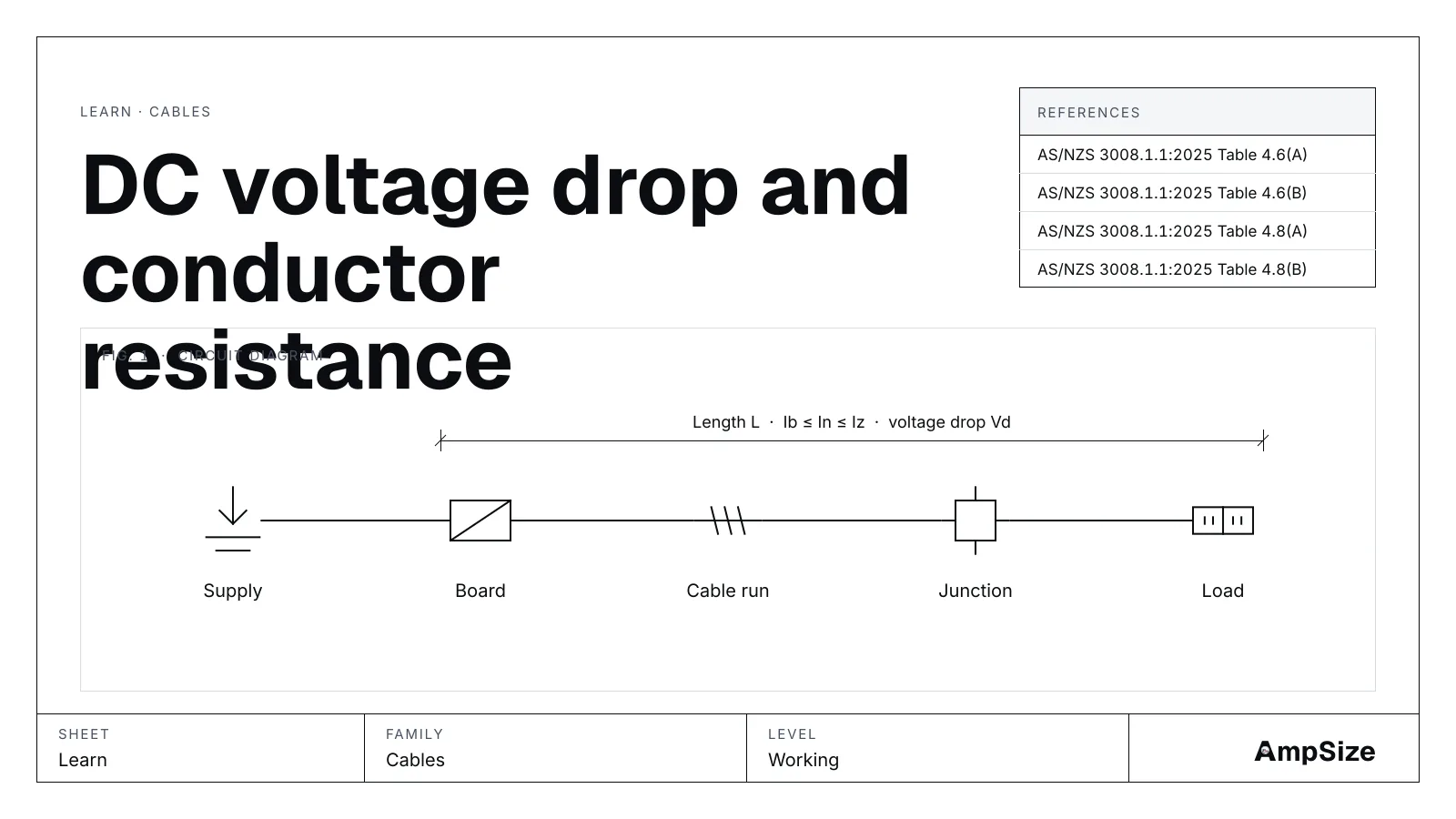
- 5 मिनट पढ़ने मेंDC voltage drop and conductor resistanceWhy d.c. drop is 2 × I × R × L, why it has no reactance or power factor, and how the hot resistance, the cable tables, the limit and parallel cables change it.
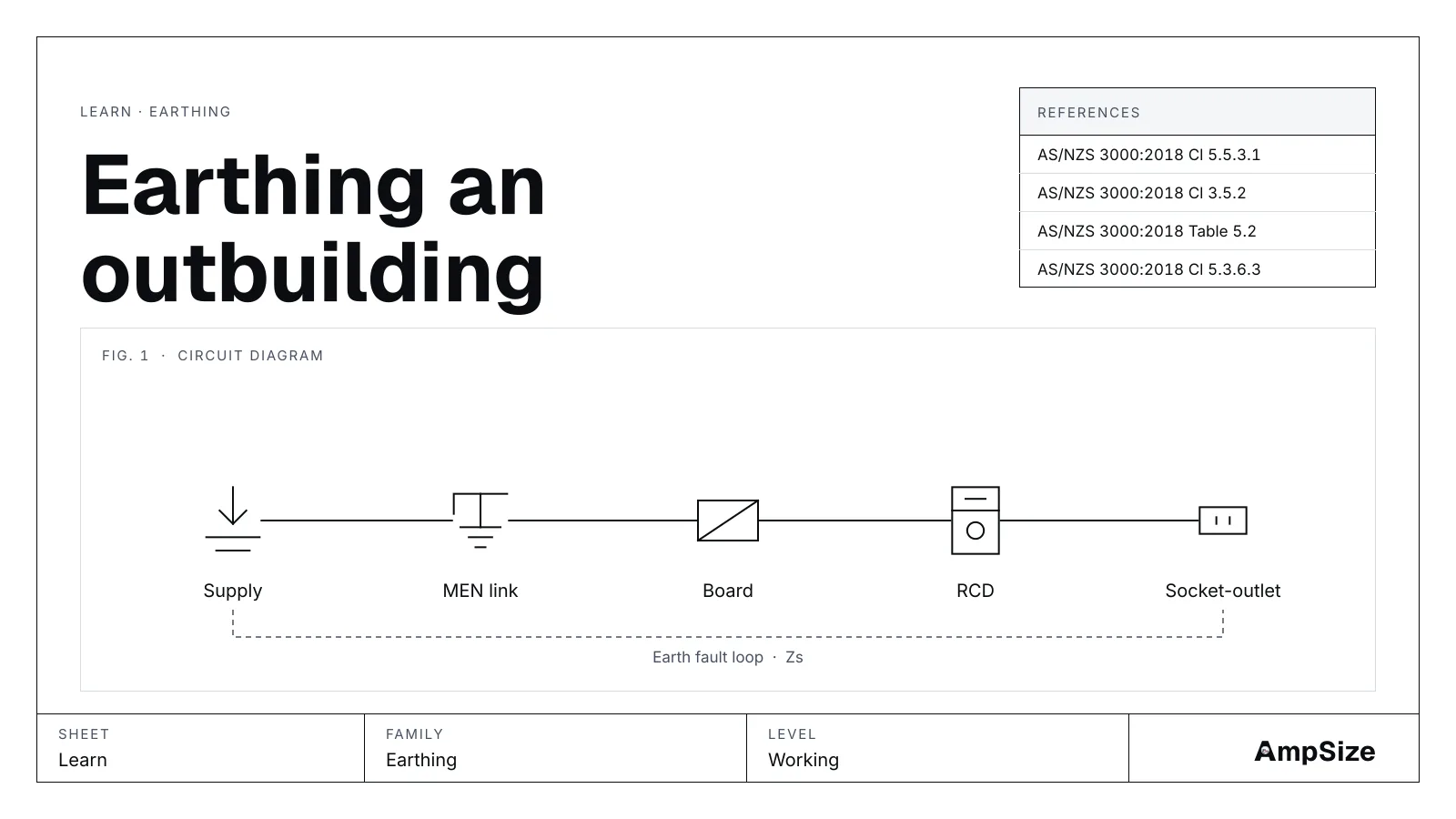
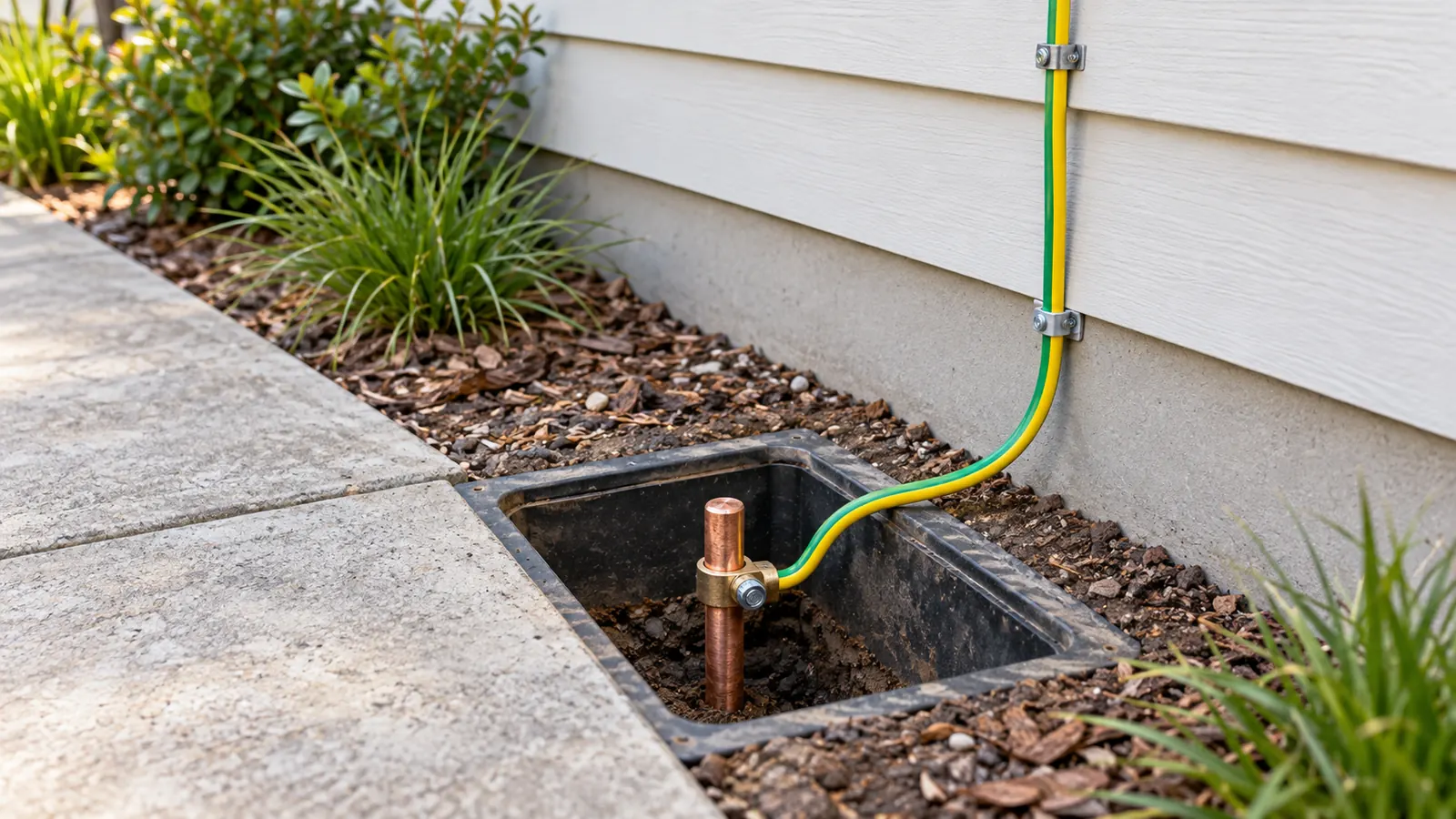
- 3 मिनट पढ़ने मेंEarthing an outbuilding: earth or its own MENWhen a shed or sleep-out takes an earth with its submain and when it may have its own MEN link and electrode, the PEN size, and the electrode depths to use.
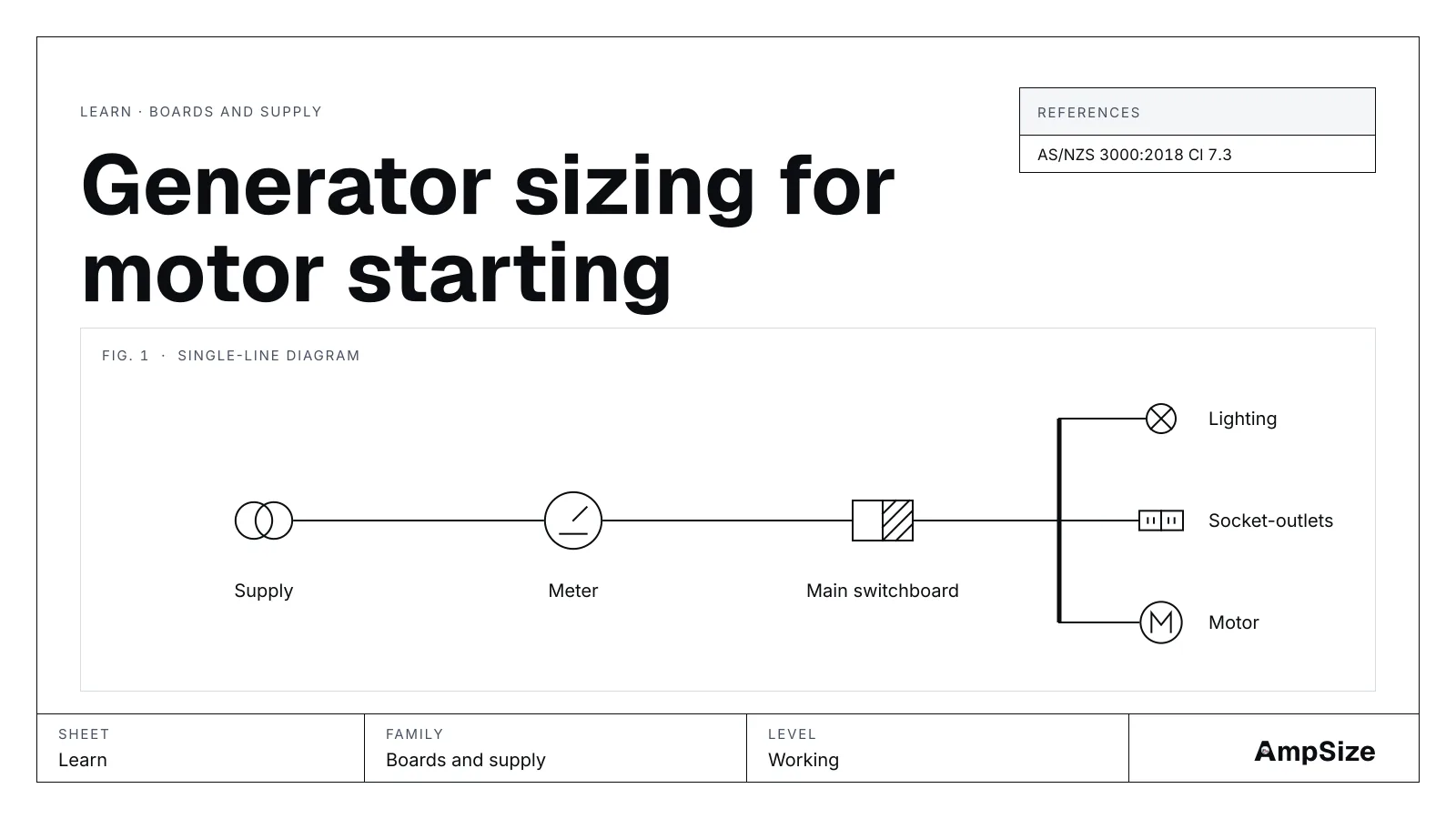
- 5 मिनट पढ़ने मेंGenerator sizing for motor startingWhy a motor's start, not its running load, often sets a generator's size. Running and starting kVA, voltage dip, starting methods and derating.
- 3 मिनट पढ़ने मेंIB ≤ IN ≤ IZ: the overload rule on a 32 A circuitThe overload rule is IB ≤ IN ≤ IZ. A grouped 32 A circuit fails on 6 mm² and passes on 10 mm², with an IZ of 37.6 A. Why the order matters.
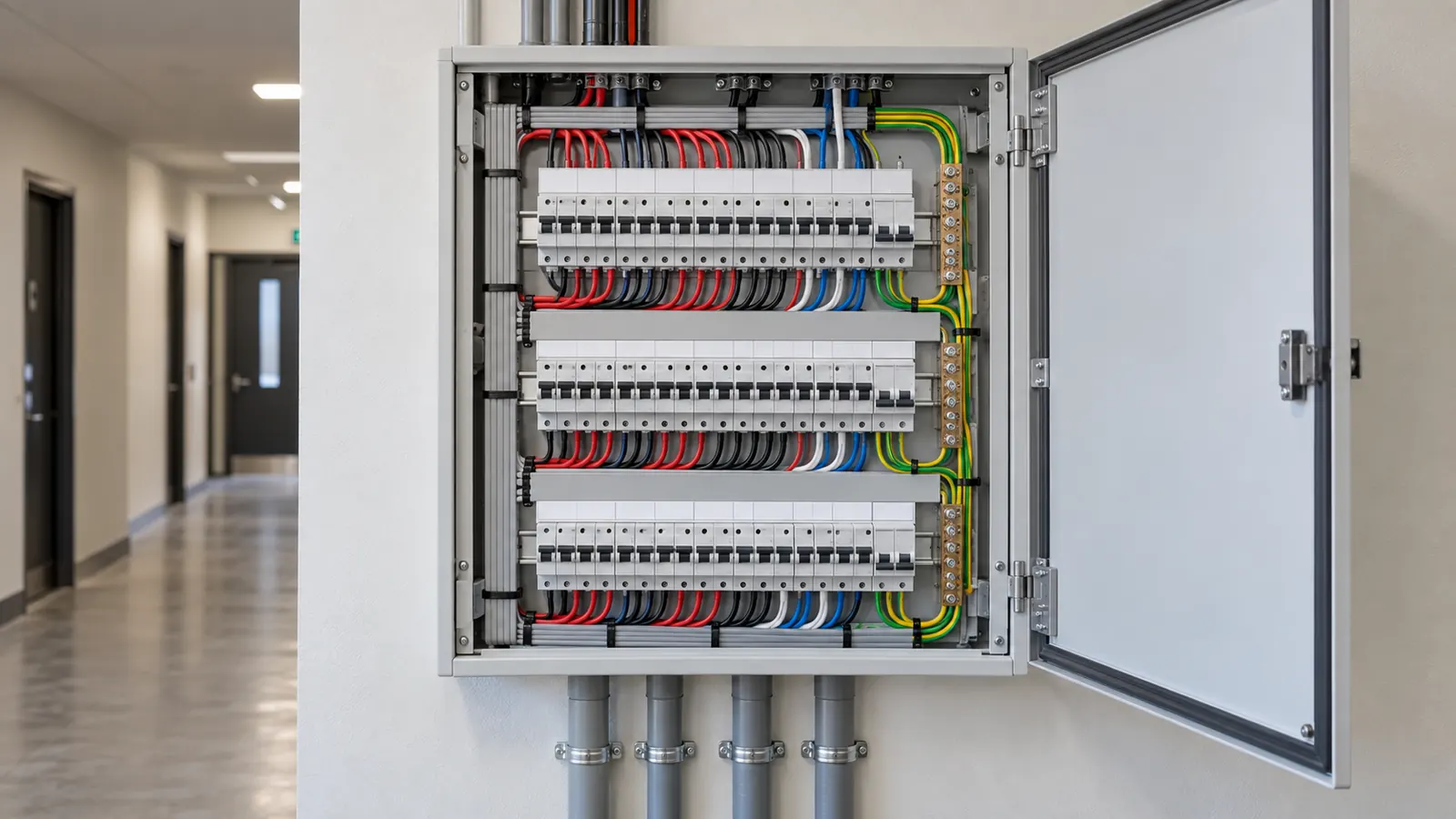
- 4 मिनट पढ़ने मेंIEC 60364 and the Wiring RulesIEC 60364 is the international series that AS/NZS 3000 stays aligned with. See how its parts are numbered, what TN-C-S, TT and IT mean, and where MEN fits.
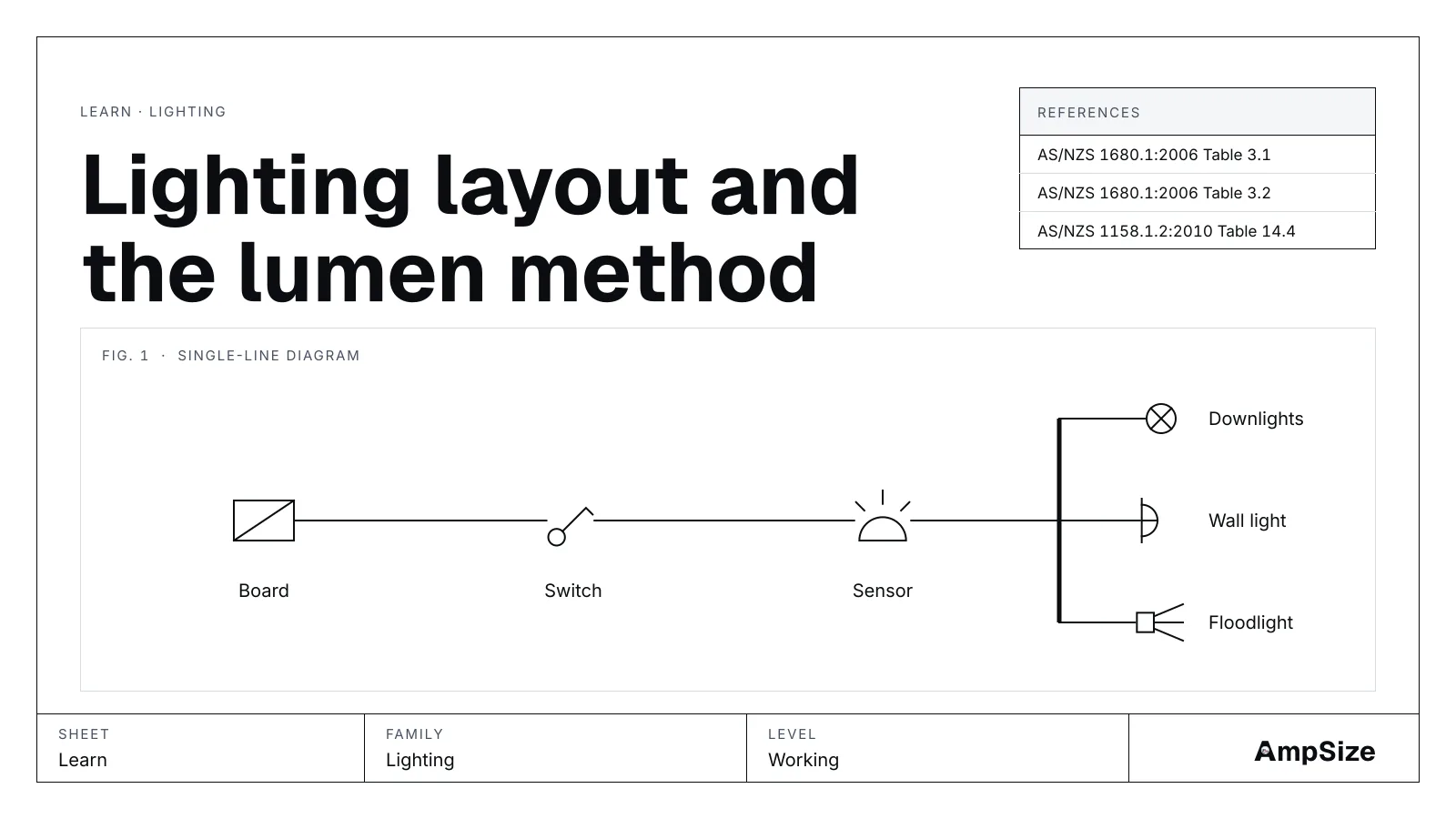
- 4 मिनट पढ़ने मेंLighting layout and the lumen methodHow many luminaires does a room need? The lumen method from target lux to a grid, worked on an 8 m by 6 m office, with the checks the tool applies.
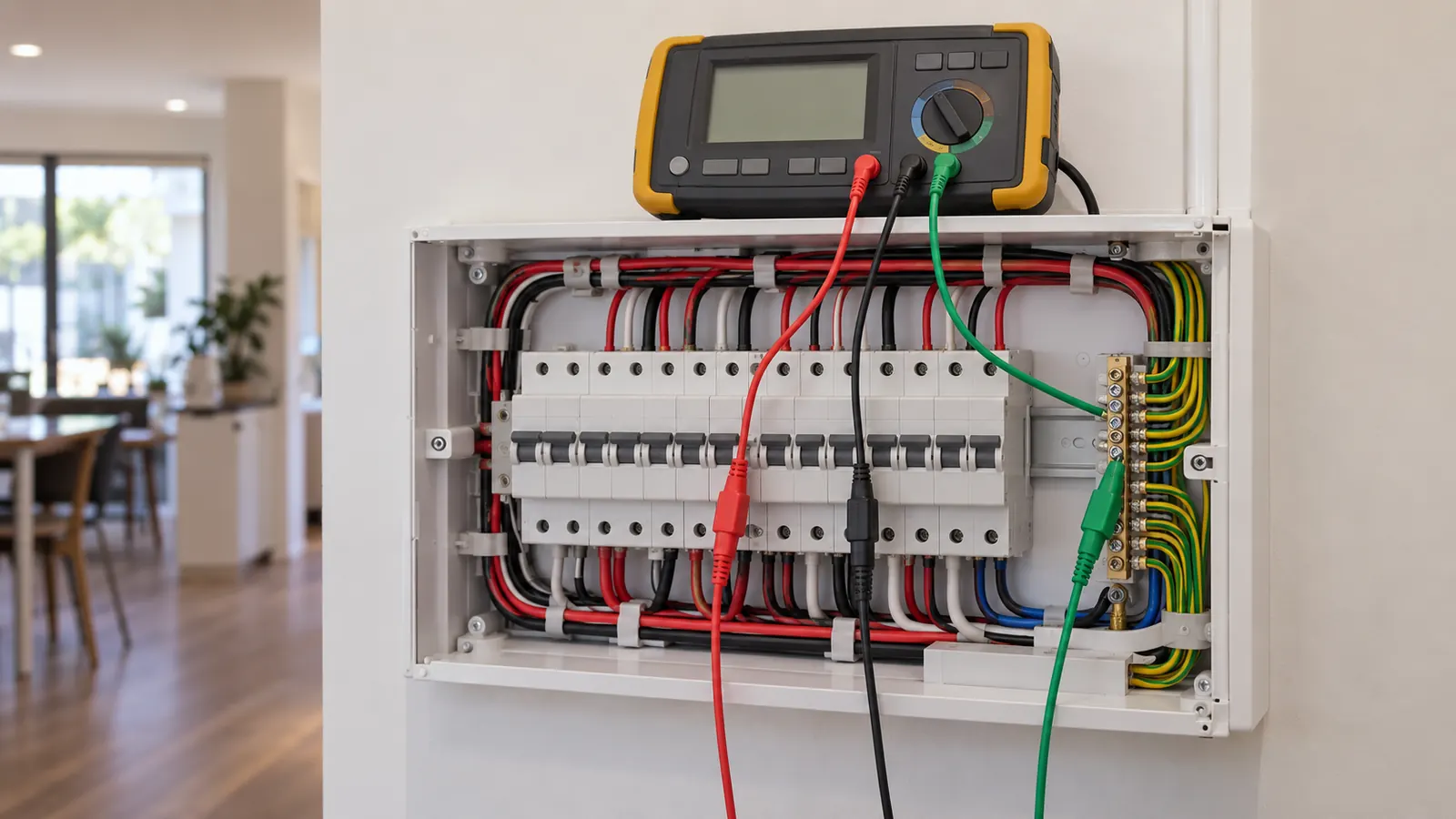
- 5 मिनट पढ़ने मेंLoop impedance and disconnection timeZe, R1+R2, Zs and Ia, and the two disconnection times, worked on a 32 A curve C circuit over 30 m that returns 0.79 Ω against a 0.96 Ω limit.
- 4 मिनट पढ़ने मेंMaximum demand and diversityWhy consumer mains are smaller than the sum of the loads. The four methods of Cl 2.2.2, the Table C1 groups, and a house that lands on 70.18 A.
- 4 मिनट पढ़ने मेंMotor circuits and startingHow full load current sizes the cable and starting current sizes the device on a motor circuit, with a worked 22 kW 400 V motor and the cable the tool selects.
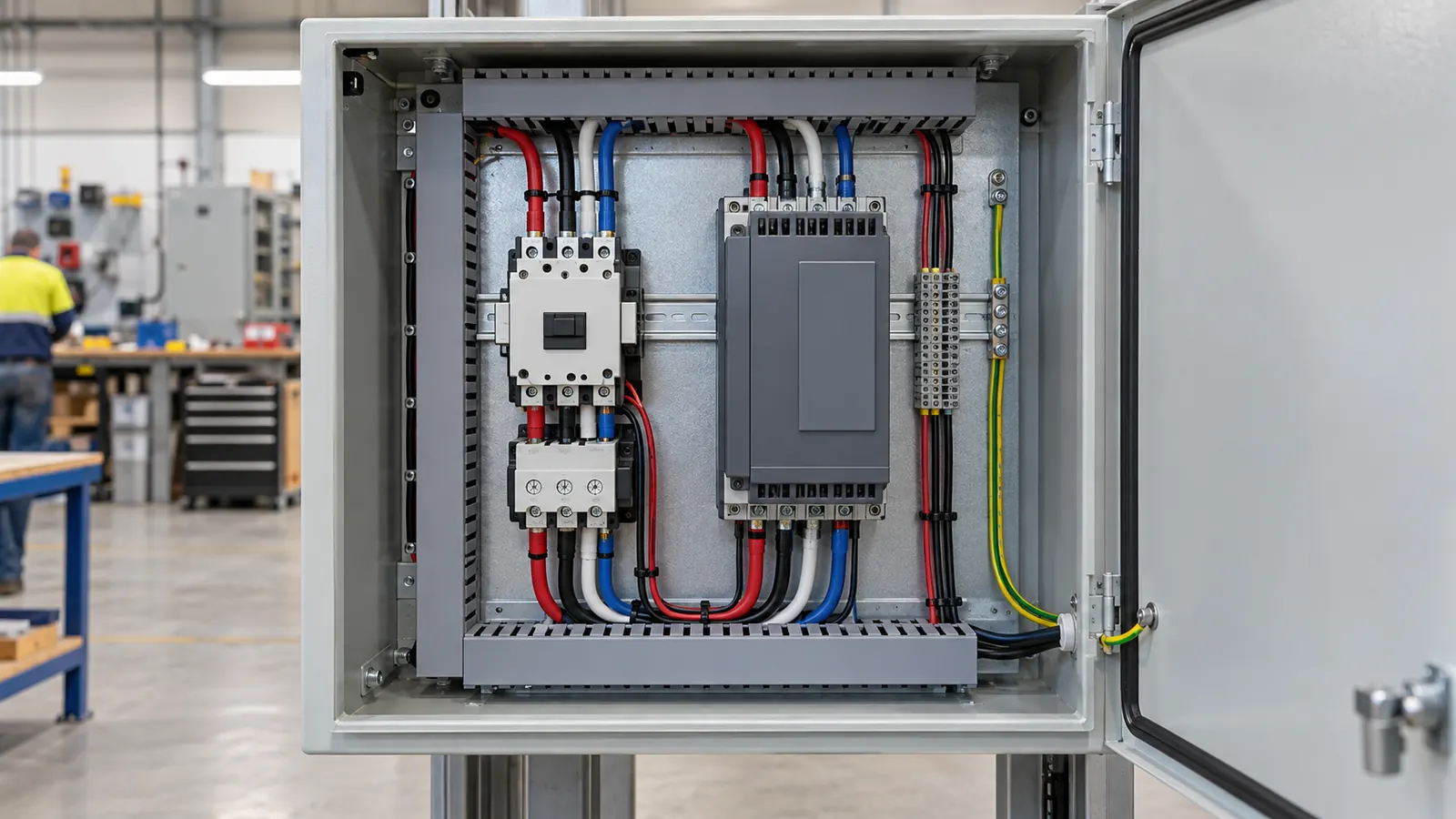
- 4 मिनट पढ़ने मेंMotor starters, contactors and overload relaysHow to choose a motor starter: locked-rotor current, star-delta, soft starters, AC-3 and AC-23 duty, the overload relay and when motor protection applies.
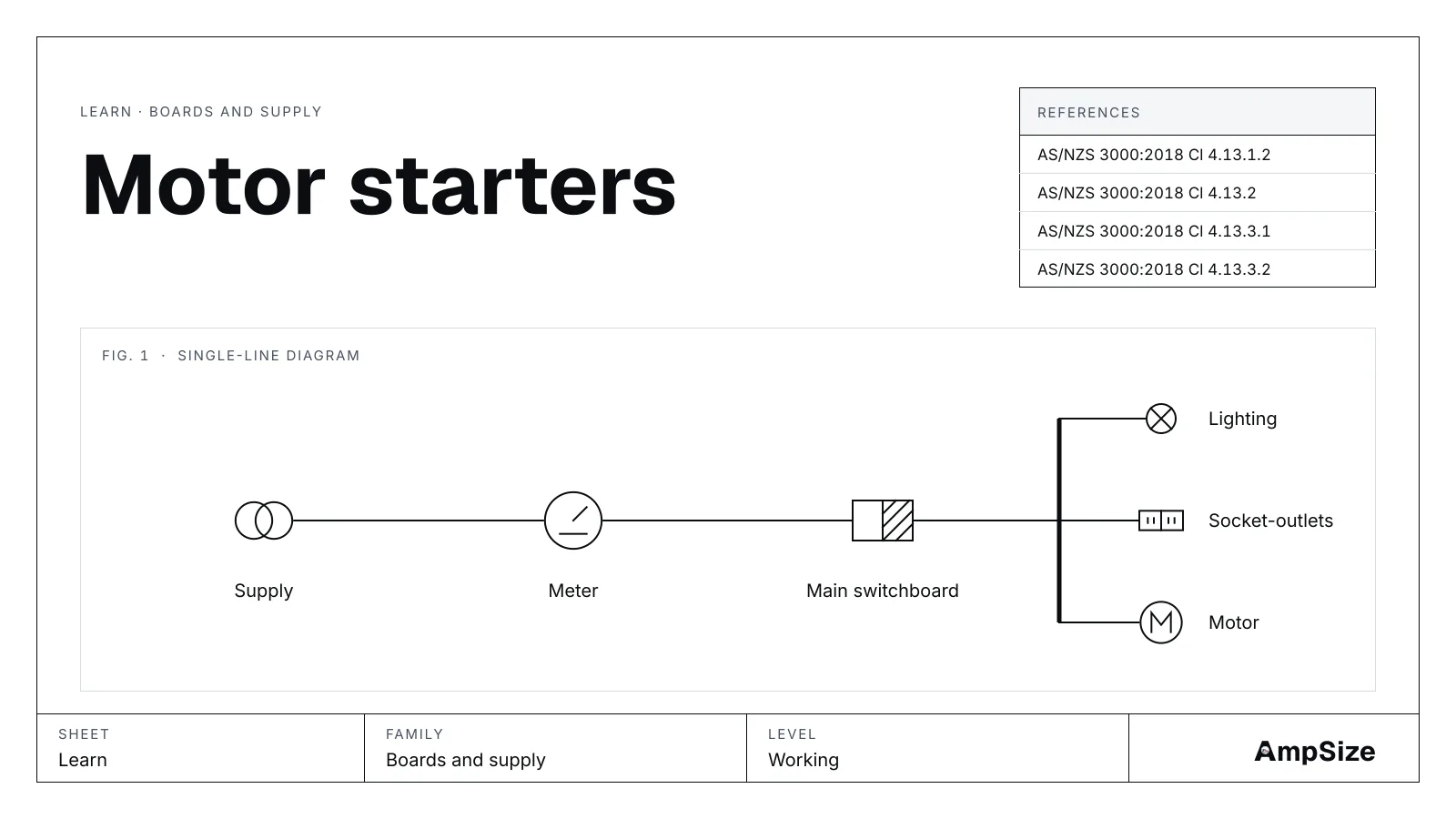
- 3 मिनट पढ़ने मेंMotor starting methods: current and torqueWhy a cage motor draws six or seven times full load current at start, and how star-delta, an autotransformer, a soft starter and a drive trade it for torque.
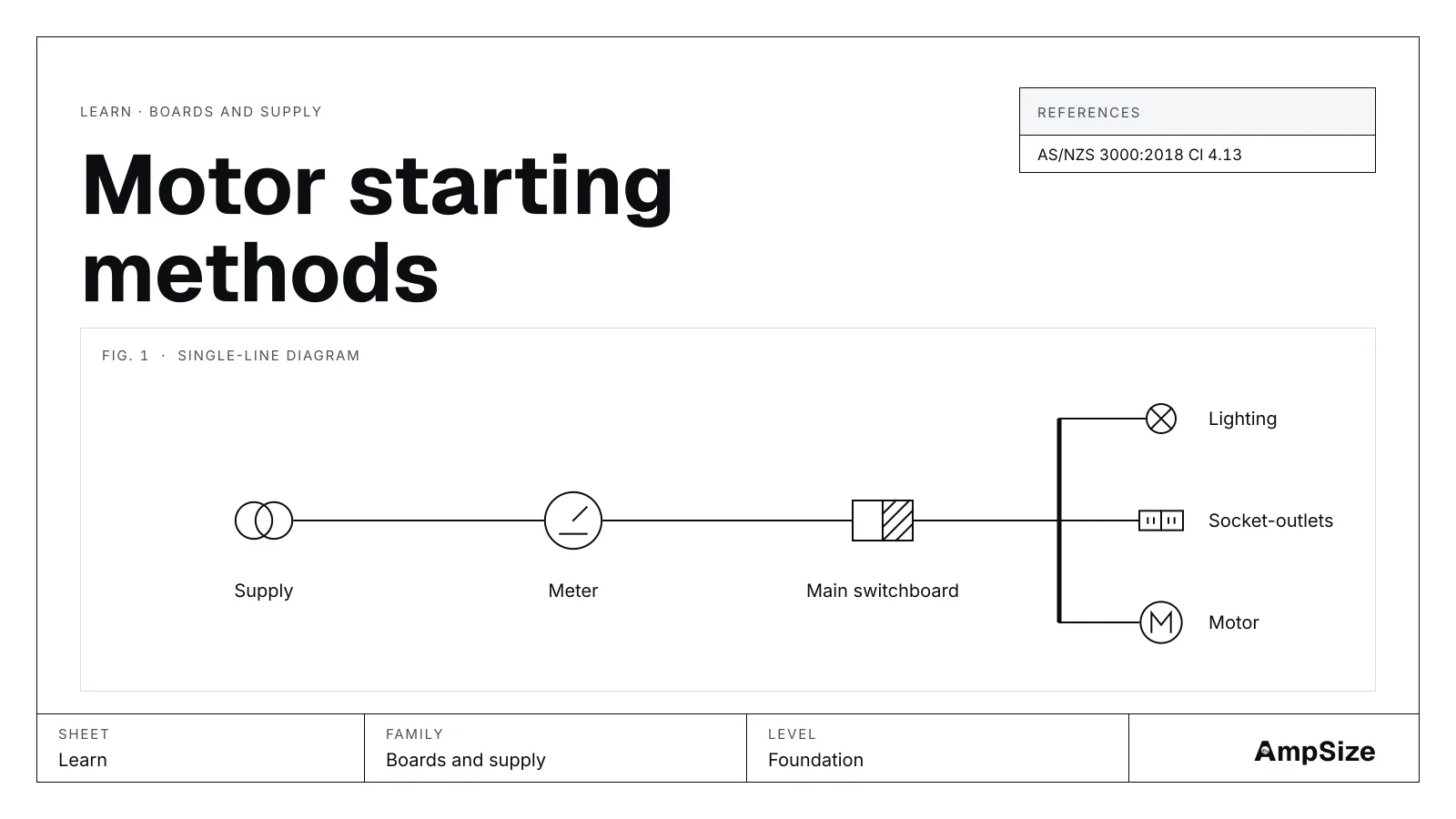
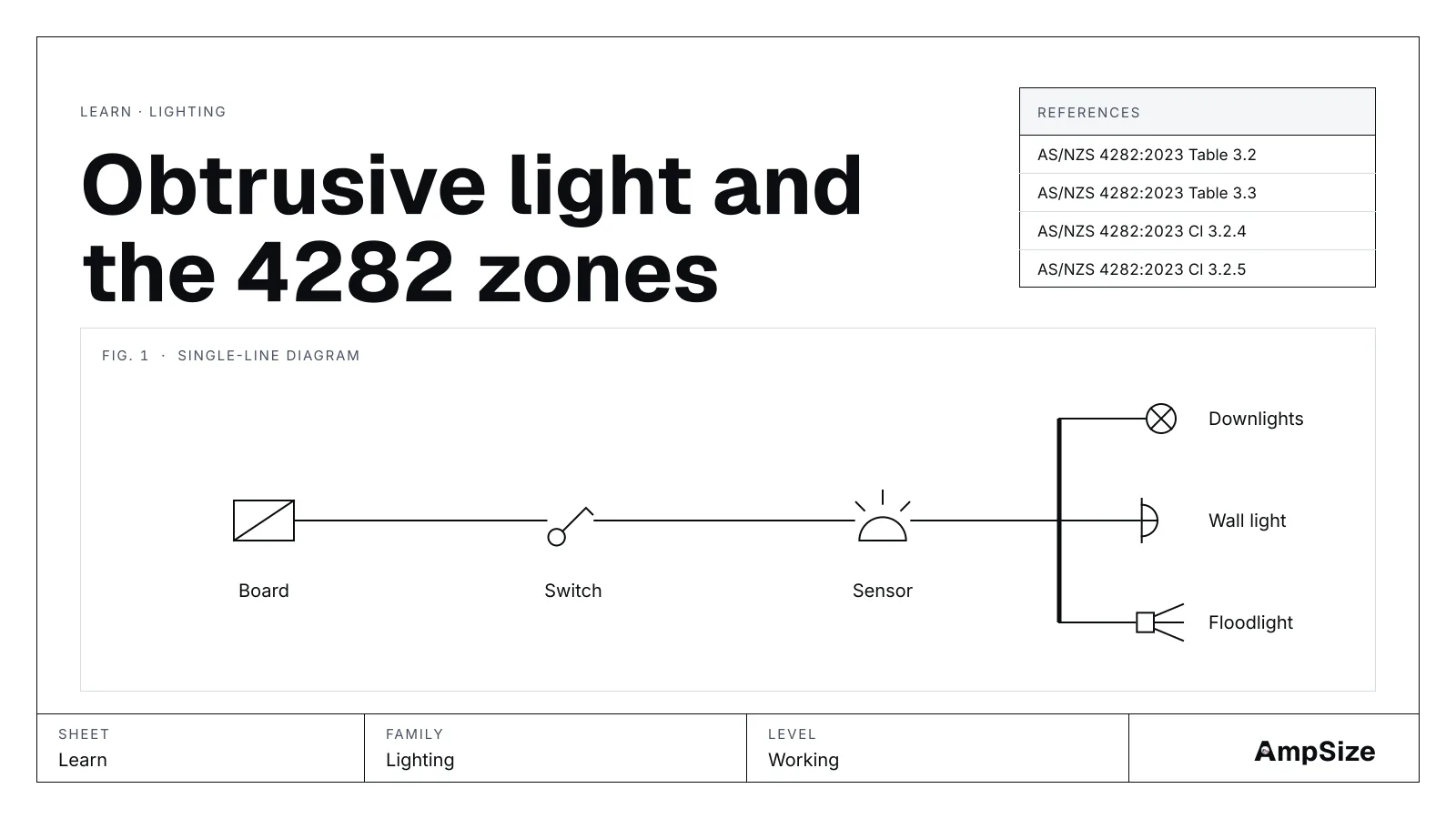
- 4 मिनट पढ़ने मेंObtrusive light and the 4282 zonesHow AS/NZS 4282 limits spill light from outdoor lighting at a neighbour's window, by environmental zone A0 to A4, curfew, intensity and upward light ratio.
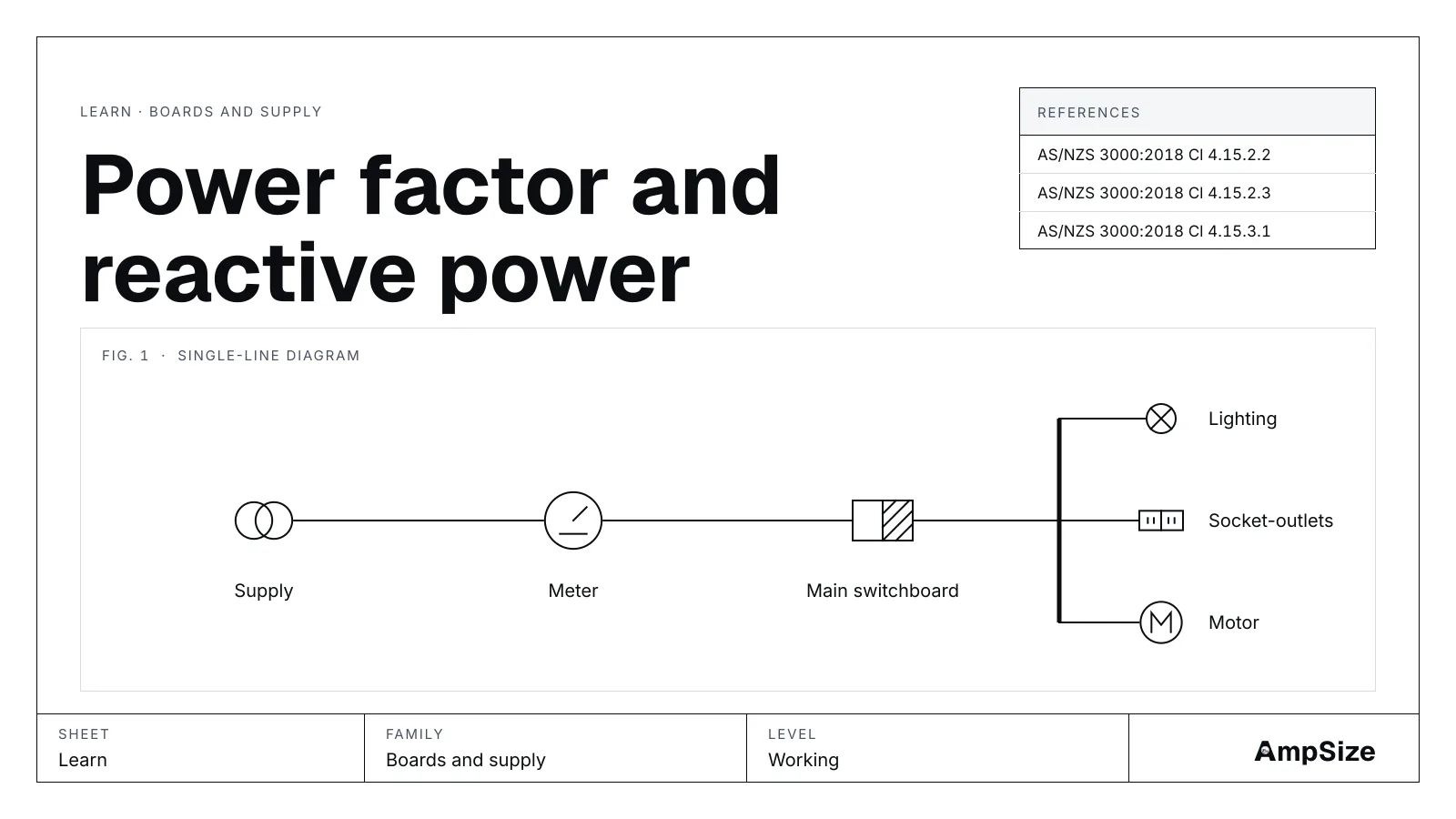
- 4 मिनट पढ़ने मेंPower factor and reactive powerWhat power factor is, why a low one costs current and capacity, how a capacitor bank corrects it in steps, and when harmonics call for a detuned bank.
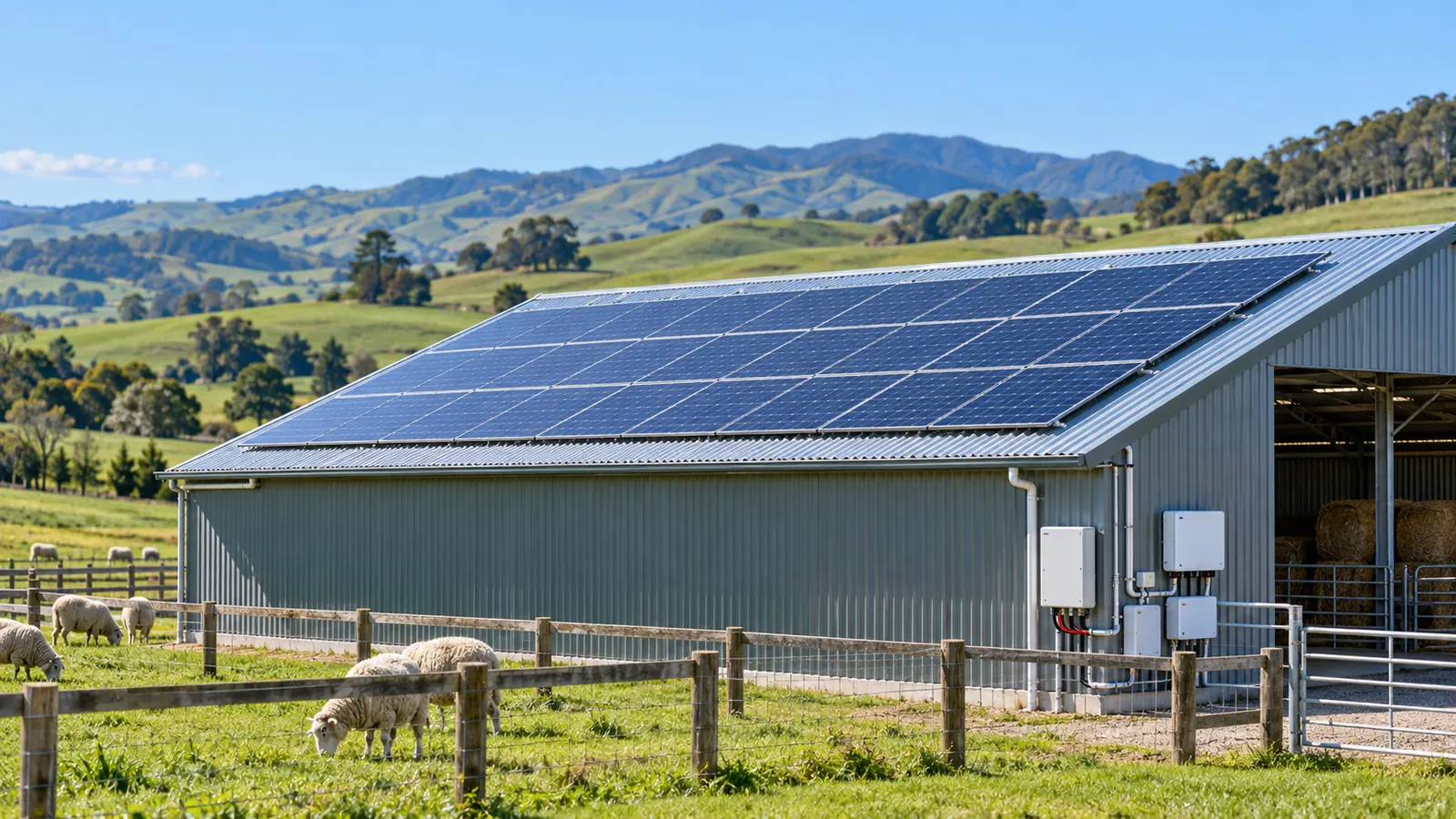
- 4 मिनट पढ़ने मेंPV and inverter basicsHow a grid-connected PV system connects to an installation, why voltage rise sets the inverter cable, and which standards the AmpSize tools cannot quote.
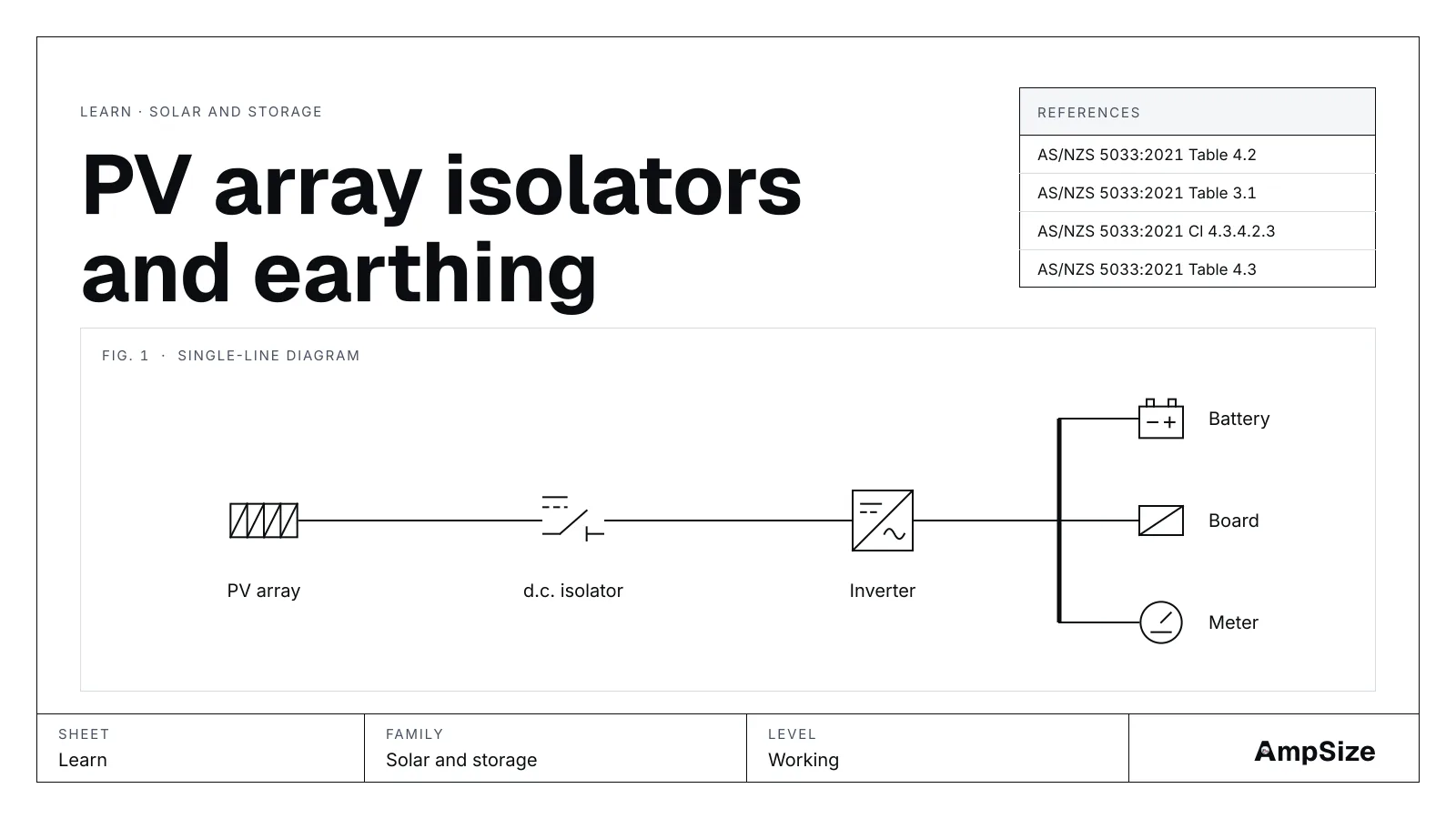
- 4 मिनट पढ़ने मेंPV array isolators and earthingHow parallel strings feed a fault, what Ithe, Ie and make and break mean for a d.c. isolator, and how AS/NZS 5033 earths and alarms a PV array.
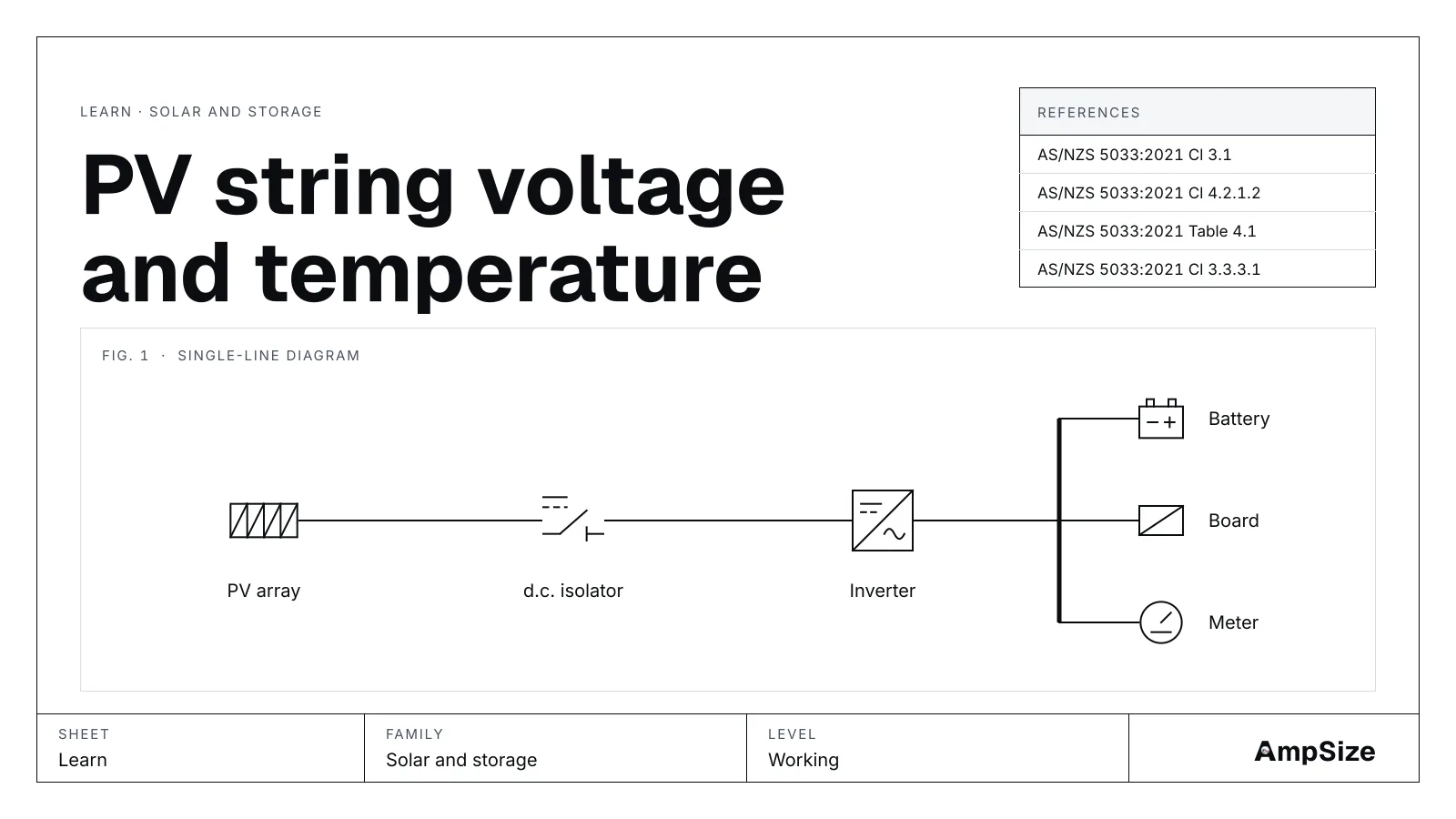
- 3 मिनट पढ़ने मेंPV string voltage and temperatureWhy a PV string's voltage rises in the cold and falls in the heat, how AS/NZS 5033 limits it, and how the string current, fuses and isolator follow.
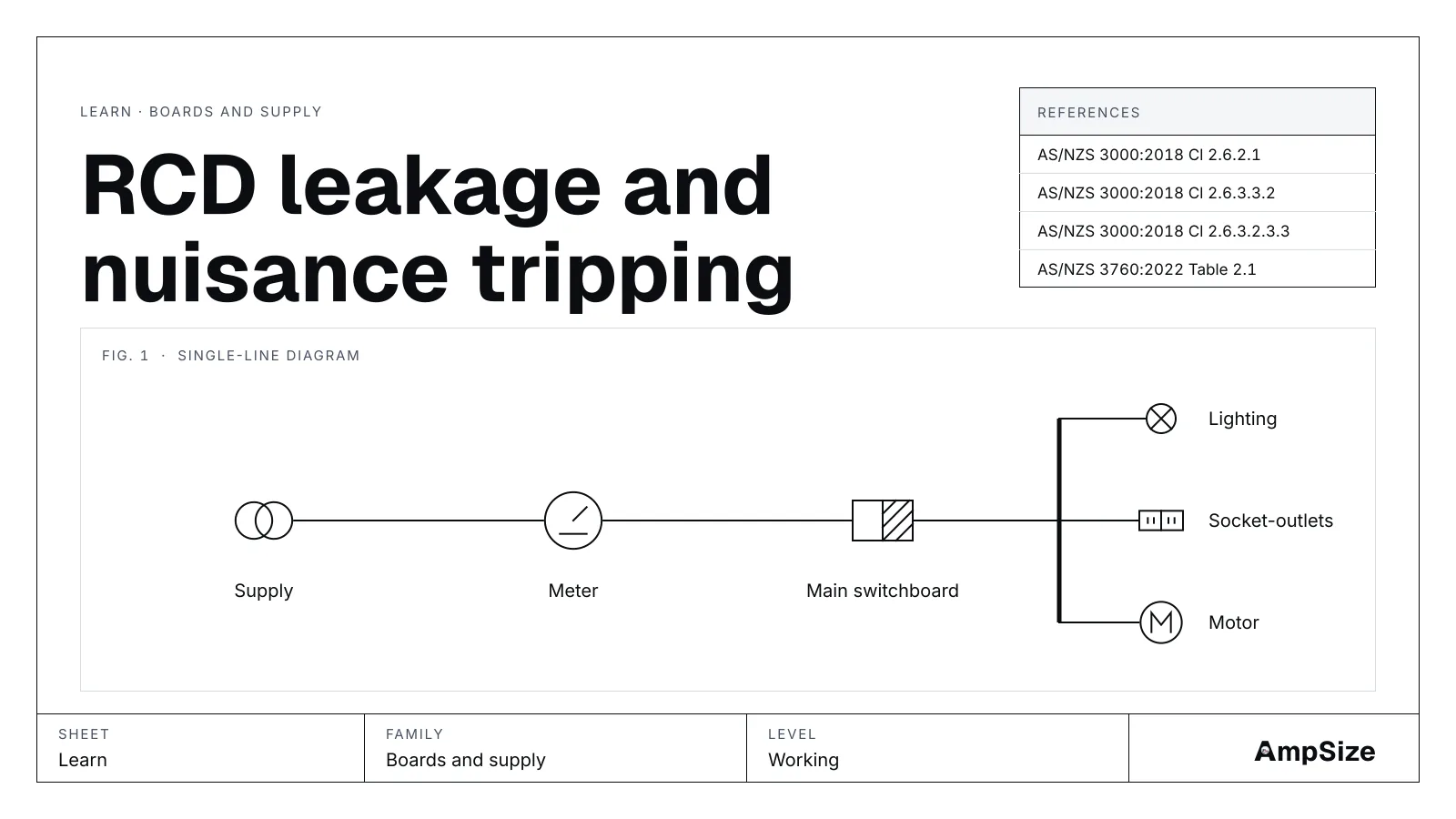
- 4 मिनट पढ़ने मेंRCD leakage and nuisance trippingWhy an RCD trips with no fault. Where standing leakage comes from, the one-third and one-half points of Cl 2.6.2.1, class limits against measured figures.
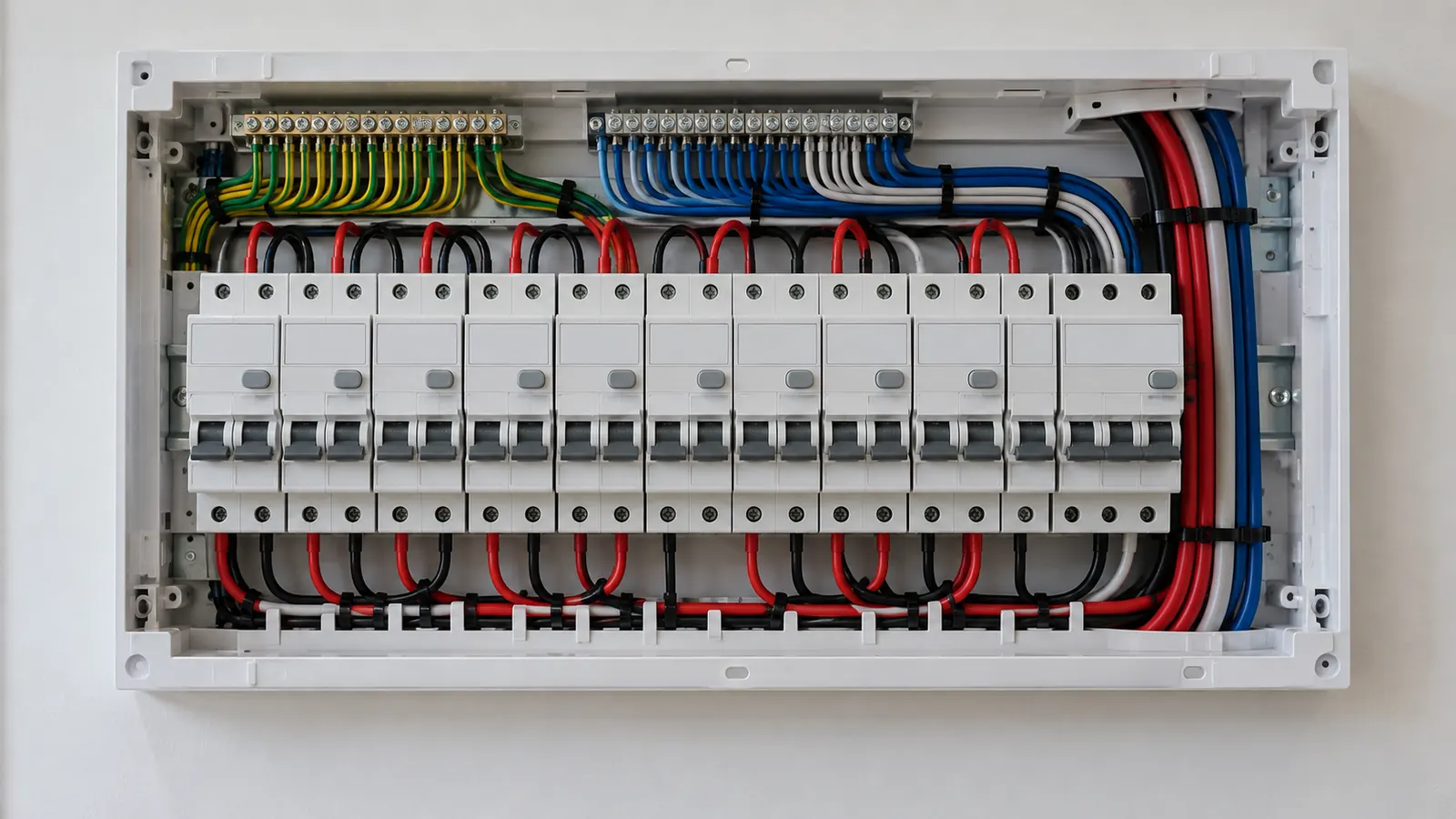
- 5 मिनट पढ़ने मेंRCD types and where they are requiredType AC, A, F and B, what each one detects, and the clauses that place them. The fault path behind them, worked on a 20 A circuit over 25 m.
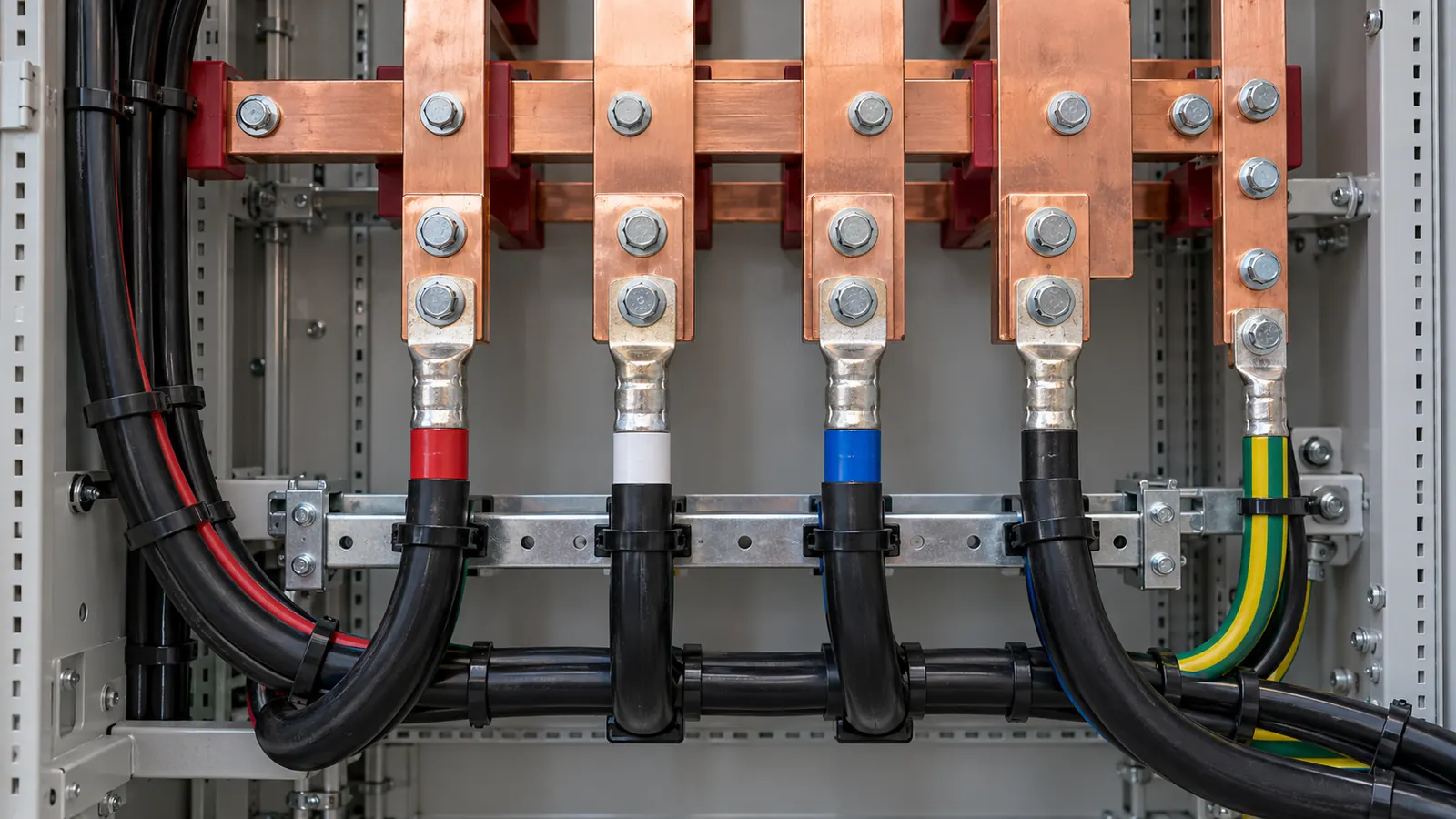
- 4 मिनट पढ़ने मेंShort-circuit withstand and the k factorThe adiabatic check in plain terms: prospective fault current, clearing time and k, worked on 25 mm² copper XLPE at 10 kA for 0.1 s.
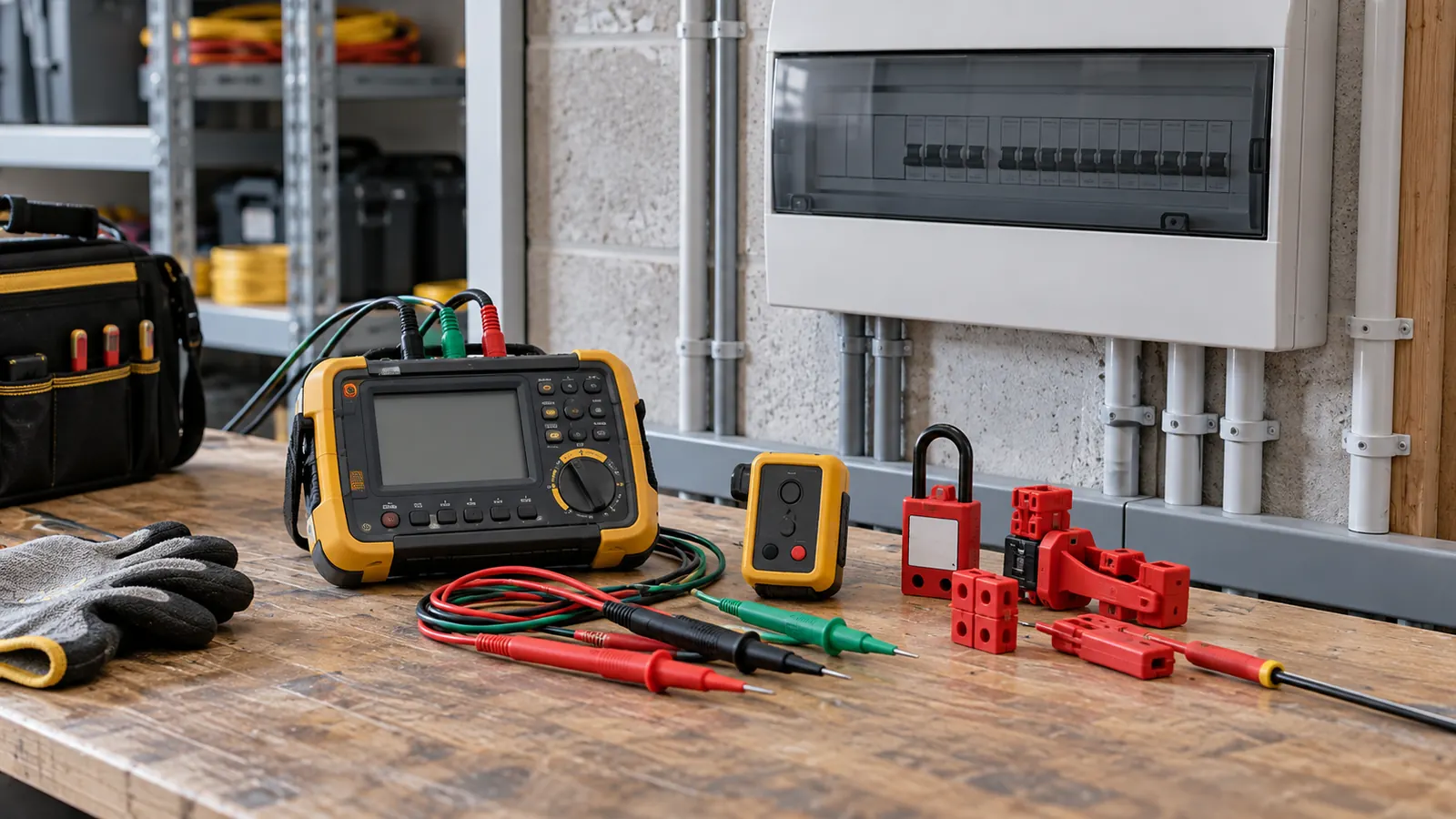
- 4 मिनट पढ़ने मेंTesting to Section 8: what each test provesThe Section 8 test sequence, what each test shows, and how a calculated earth fault loop impedance compares with the value a tester reads on site.
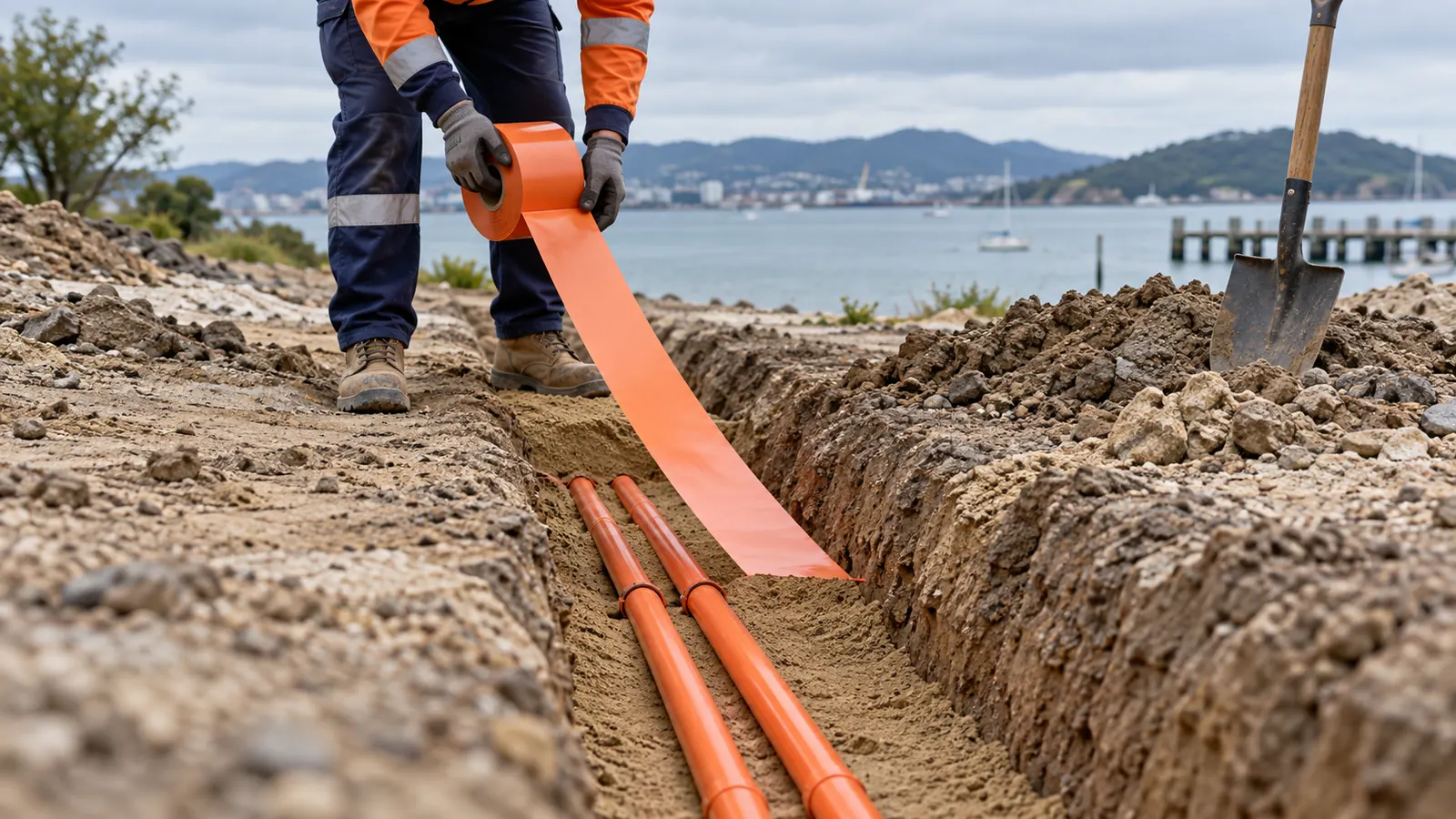
- 4 मिनट पढ़ने मेंUnderground cables and civil interfacesBurial categories, depth of cover, bedding and separation for underground cables, with a worked 100 A submain that changes size when the trench changes.
ये गाइड जिन कैलकुलेटरों का उपयोग करती हैं
- केबल आकार कैलकुलेटरसबसे छोटा केबल आकार खोजें जो हर जाँच पास करे।
- DC केबल आकार कैलकुलेटरकरंट और वोल्टेज ड्रॉप के लिए 1500 V तक के d.c. केबल का आकार निर्धारण करें।
- बैटरी आर्क फ़्लैश और क्लासबैटरी DVC, हैज़र्ड क्लास, आर्क फ़्लैश एनर्जी और PPE लेवल।
- सोलर बैटरी कैलकुलेटरसोलर शाम के लोड के लिए होम बैटरी का आकार निर्धारण करें।
- आर्क फ़्लैश कैलकुलेटरआर्क फ़्लैश की एनर्जी और उसकी PPE कैटेगरी का आकलन करें।
- केबल ट्रे और लैडर फ़िलट्रे या लैडर की चौड़ाई, टियर, kg/m और ग्रुपिंग फ़ैक्टर।
- करेक्शन फ़ैक्टर कैलकुलेटरहर करेक्शन फ़ैक्टर और केबल के लिए ज़रूरी रेटिंग पढ़ें।
- मौजूदा सर्किट जाँचलगे हुए सर्किट की जाँच करें: केबल, डिवाइस, ड्रॉप और Zs।
- अर्थ फ़ॉल्ट लूप इम्पीडेंस कैलकुलेटरअर्थ फ़ॉल्ट लूप इम्पीडेंस को अधिकतम Zs के मुकाबले जाँचें।
- कॉम्स केबल सिलेक्टरएक कॉम्स केबल चुनें और रन की लंबाई जाँचें।
- 4–20 mA लूप के लिए लूप पावर बजटट्रांसमीटर से 4–20 mA लूप को कितना वोल्टेज बचता है, जाँचें।
- निर्माण स्थल सप्लाई कैलकुलेटरनिर्माण स्थल के लिए सप्लाई, RCD और टेस्ट नियम।
- साइट कॉर्ड लंबाई कैलकुलेटरनिर्माण स्थल पर कॉर्ड या केबल सबसे लंबा कितना चल सकता है।
- टेस्ट और टैग अंतरालपोर्टेबल उपकरणों के लिए रीटेस्ट अंतराल और पास सीमा।
- हैंड-हेल्ड उपकरण सप्लाईregs 88 से 89A तक की सप्लाई व्यवस्था सूची पढ़ें।
- शो और कार्निवल वायरिंग चेकरशो वायरिंग की RCD जाँच, साथ में साइट वायरिंग की गहराई और ऊँचाई।
- वोल्टेज ड्रॉप कैलकुलेटरकेबल रन पर वोल्टेज ड्रॉप की गणना करें और सीमा की जाँच करें।
- बैटरी बैंक कैलकुलेटरलोड के लिए बैटरी बैंक क्षमता और ऑटोनॉमी की गणना करें।
- फ़ुल लोड करंट कैलकुलेटरपावर, वोल्टेज और फ़ेज़ से फ़ुल लोड करंट की गणना करें।
- केबल स्क्रीन अर्थिंग सिलेक्टरस्क्रीन, ड्रेन वायर या आर्मर को कहाँ अर्थ करना है, खोजें।
- वेट एरिया ज़ोन चेकरपानी के पास Section 6 का ज़ोन, IP और RCD ज्ञात करें।
- RCD चयन कैलकुलेटरजाँचें कि RCD ज़रूरी है या नहीं, और ट्रिप समय का टेस्ट करें।
- आउटबिल्डिंग अर्थिंगशेड को अर्थ करें: सबमेन के साथ अर्थ, या उसका अपना MEN।
- अर्थिंग और बॉन्डिंग कैलकुलेटरअर्थिंग, मेन अर्थ और बॉन्डिंग कंडक्टर का आकार निर्धारण करें।
- लोड सूची से जनरेटर आकार निर्धारणमोटर स्टार्टिंग के साथ लोड सूची से जनरेटर का आकार निर्धारण करें।
- जनरेटर करंट कैलकुलेटरउसके kVA से जनरेटर का फ़ुल लोड और फ़ॉल्ट करंट।
- मोटर कैलकुलेटरमोटर का फ़ुल लोड करंट, स्टार्टिंग करंट और टॉर्क खोजें।
- केबल फ़ॉल्ट रेटिंग कैलकुलेटरजाँचें कि कंडक्टर फ़ॉल्ट करंट को विदस्टैंड कर सकता है।
- अधिकतम मांग कैलकुलेटरघरेलू या गैर-घरेलू लोड के लिए अधिकतम मांग का आकलन करें।
- लाइटिंग ल्यूमेन विधि कैलकुलेटरल्यूमेन विधि से एक कमरे के लिए ल्यूमिनेयर की गिनती और ग्रिड।
- थ्री-फ़ेज़ पावर कैलकुलेटरपावर, करंट, वोल्टेज और पावर फ़ैक्टर के बीच बदलें।
- मोटर सर्किट कैलकुलेटरएक मोटर के लिए केबल, ब्रेकर, कॉन्टैक्टर और ओवरलोड।
- मोटर स्टार्टिंग विधि की तुलनाDOL, स्टार-डेल्टा, सॉफ़्ट स्टार्ट और ड्राइव स्टार्ट की तुलना करें।
- ऑब्ट्रूसिव लाइट चेकरAS/NZS 4282 के अनुसार बाउंड्री खिड़की पर बाहरी रोशनी जाँचें।
- पावर फ़ैक्टर करेक्शन कैलकुलेटरपावर फ़ैक्टर बढ़ाने के लिए कैपेसिटर kvar खोजें।
- वोल्टेज राइज़ कैलकुलेटरएम्बेडेड जनरेशन या PV के लिए वोल्टेज राइज़ की गणना करें।
- PV आइसोलेटर और अर्थिंग कैलकुलेटरPV ऐरे केबल, d.c. आइसोलेटर और अर्थिंग की रेटिंग तय करें।
- PV स्ट्रिंग कैलकुलेटरPV के लिए प्रति स्ट्रिंग मॉड्यूल, स्ट्रिंग करंट और आइसोलेटर।
- RCD स्टैंडिंग लीकेज बजटएक RCD कितना स्टैंडिंग लीकेज ले जा सकता है।
- RCD व्यवस्था जाँचहर RCD पर सर्किट और लाइटिंग के बँटवारे की जाँच करें।
- ट्रांसफ़ॉर्मर कैलकुलेटरट्रांसफ़ॉर्मर का फ़ुल लोड करंट और इम्पीडेंस की गणना करें।
- टेस्ट परिणाम चेकरमापे गए टेस्ट परिणाम Section 8 की सीमाओं से जाँचें।
- भूमिगत केबल डेप्थ कैलकुलेटरएक भूमिगत केबल के लिए कवर की गहराई और सेपरेशन।
- कंड्यूट फ़िल कैलकुलेटरजाँचें कि केबल बंडल कंड्यूट में फ़िट होता है।