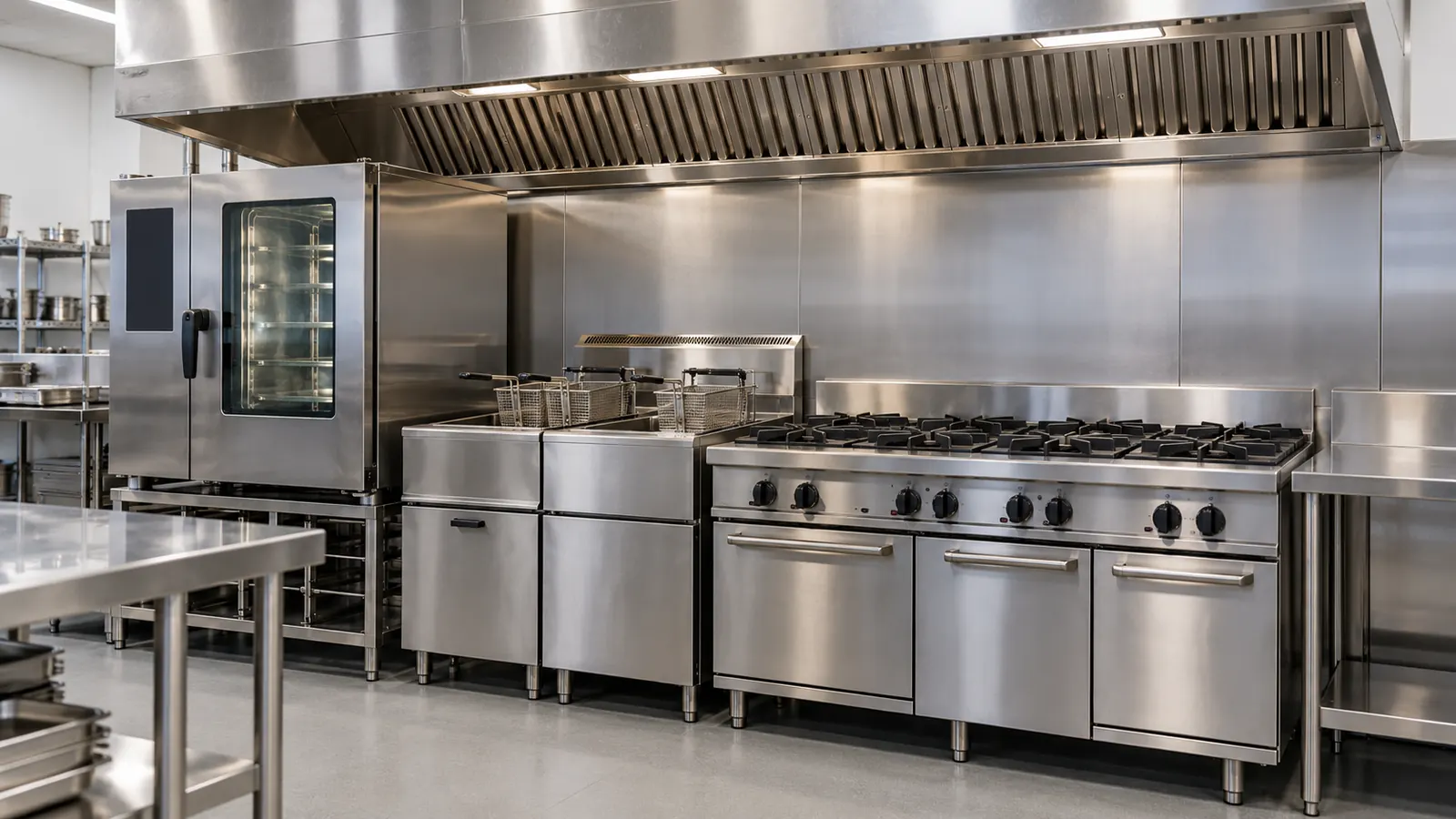
A kitchen fitout arrives as an equipment schedule. Combi ovens, fryers, a dishwasher and a pass through unit, each with a kilowatt figure on the data sheet. The maximum demand sheet and the submain both want amps.
The inputs
The connected cooking load for this tenancy totals 30 kW. The supply is 400 V three phase. The schedule power factor is 0.95. That suits a mix of resistive elements and a few small motors. The efficiency is set to 1.
Efficiency belongs in this calculation only where the data sheet gives an output rating. A motor data sheet gives shaft power, so a motor needs the efficiency. A heating element data sheet gives the drawn power, so it does not. A kitchen data sheet usually gives the drawn power already.
The clause
Cl 2.2.2 of AS/NZS 3000:2018 is the maximum demand requirement for the installation. Table C2 group C(i) of AS/NZS 3000:2018 holds the cooking appliance entry. It applies to a non‑domestic installation. Group C(i) works from the connected load, so the current below is the figure that feeds it.
The steps
The engine converts the real power to apparent power with the power factor. It then divides by the line voltage and by root three.
- Output power: 30 kW
- Apparent power drawn: 31.58 kVA
- Full load current: 45.58 A
The result
The connected kitchen load draws 45.58 A per phase at full output. The step that a plain kW to amps sum leaves out is the 31.58 kVA line. Skip the power factor and the current comes out low. On a schedule with several tenancies that shortfall compounds.
Note what this current is and what it is not. It is the current the equipment draws when everything runs at once. It is not the maximum demand for the tenancy. It is not the submain design current either.
A kitchen rarely runs every appliance at full output at the same moment. The group C(i) entry in Table C2 applies a factor for that. Take 45.58 A into the maximum demand tool as the connected load, then read the demand figure there.
The power factor deserves a second look at the pricing stage. A schedule built on 0.95 across the board flatters a kitchen with several refrigeration compressors. Read the figure off each data sheet where the sheet gives one. Use the worst case where it does not.
Phase balance is the other thing this single figure hides. A 30 kW three phase total divides evenly only when the equipment does. Single phase appliances sit on one phase each, and the submain sizes on the heaviest one.
Run the conversion again for each phase group where the equipment splits unevenly. Then take the demand figure into the cable size tool with the real route length. A kitchen submain often runs a long way from the main board, so check the voltage drop as well.
This page is a design aid. Verify every value against the current edition of the standard.
See also: Three‑phase power: kVA to amps at 400 V, Commercial maximum demand with Table C2 and Maximum demand and diversity.